Resilience of communities in malarious and Cholera areas in Amhara region, Ethiopia


In April 2026, Haile Fenta, a postdoctoral researcher at the Center for Environmental and Respiratory Health Research, university of Oulu, visited Bahir Dar University in Ethiopia and the Amhara Public Health Institute (APHI) for three weeks. During his visit, he discussed the distribution and transmission dynamics of Malaria and Cholera, particularly in the context of climate change, as well as community resilience to these outbreaks.
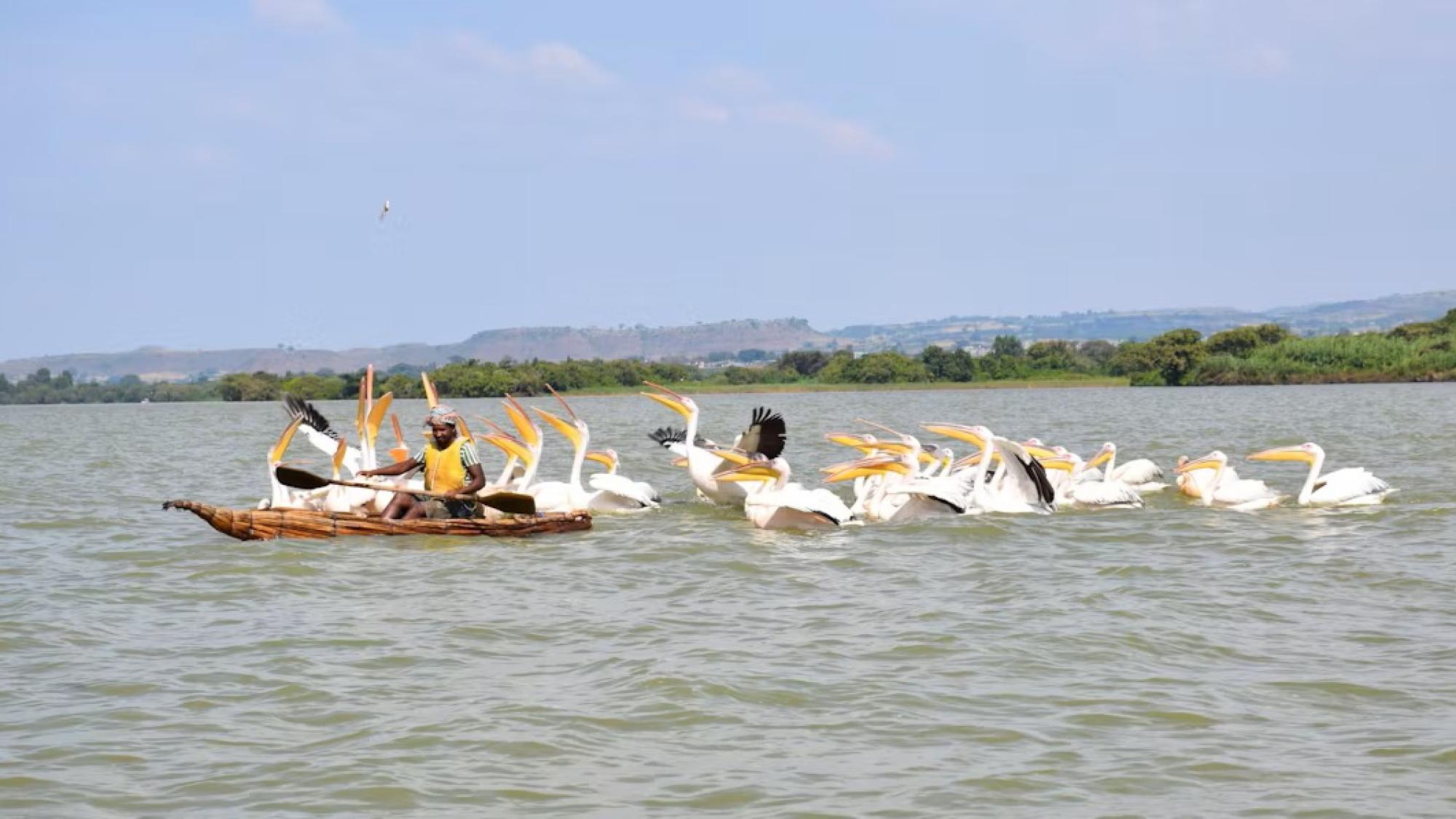
Pelicans swimming round a rowboat in Ethiopia.
The traditional papyrus boat (tankwa) navigating Lake Tana near Bahir Dar, Ethiopia, accompanied by a flock of pelicans. Lake Tana is Ethiopia’s largest lake and the largest lake in the country, covering approximately 3,000 km².

During my visit to Ethiopia, I met with the Bahir Dar University’s academic V/President, Professor Essey Kebede, along with the Director General (DG) of the APHI (Amhara Public Health Institute), Mr. Belay Bezabih Beyene, and academic staff and researchers from both institutions. Their discussions focused on potential areas of collaboration, including developing predictive models to assess the impacts of climate change on malaria and cholera outbreaks in the region.

Malaria and Cholera distributions in Amhara region, Ethiopia

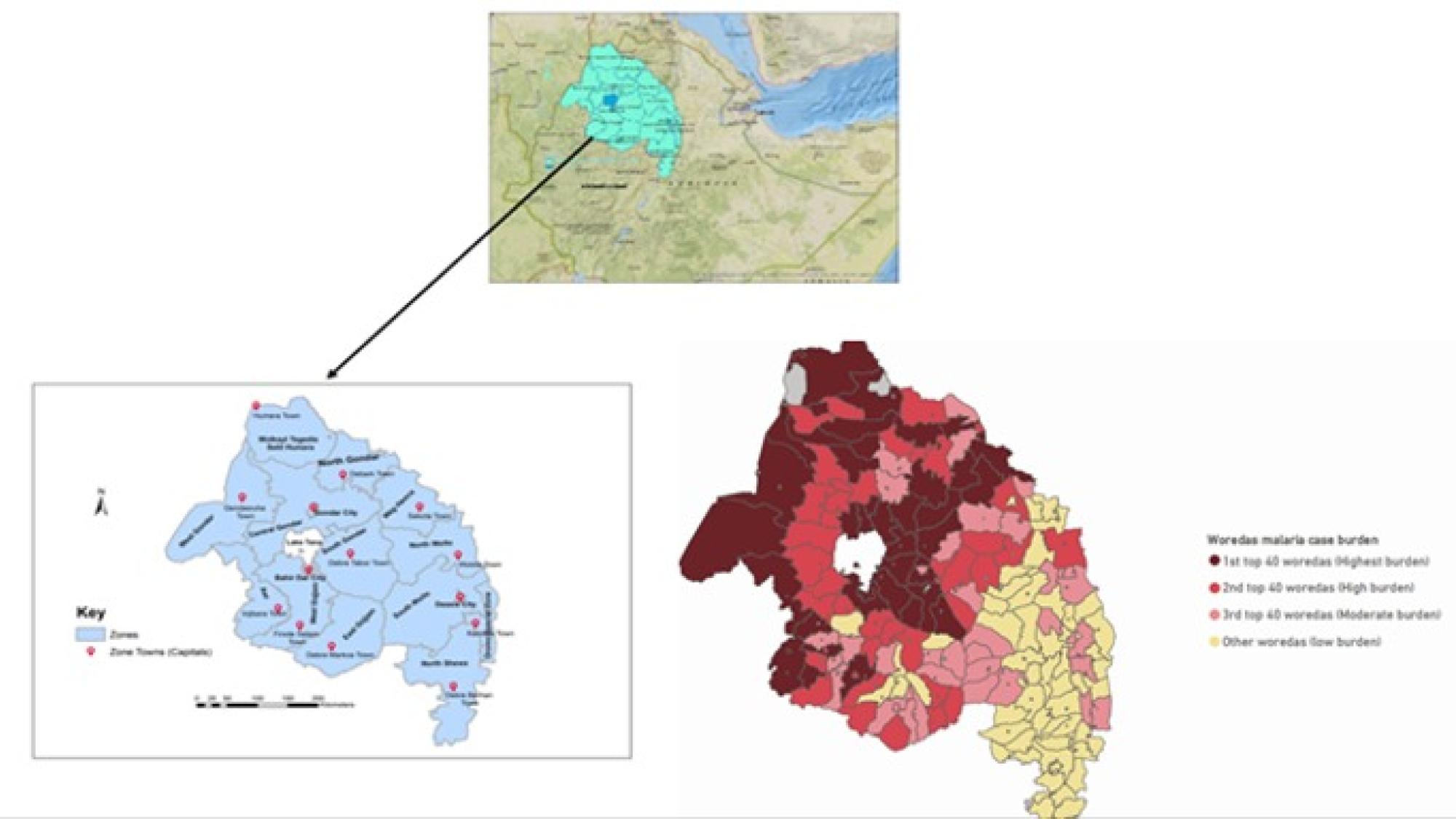
Malaria and cholera are the top priorities of epidemic-prone diseases, significant and recurring public health problems in Ethiopia, particularly in the Amhara regional state. The region is characterized by a high malaria burden, with 80% of the regional landmass being favorable for malaria transmission, and 80% of the region's population is at risk of Malaria. In 2025/26, the region contributed 20-43% of the national malaria burden. In 2026, a total of 931,478 malaria cases and 19 deaths have been reported in the region. A total of 13,092 cholera cases were reported between July 22, 2023, and September 13, 2025, with a male-to-female ratio of 1.4:1. The overall cholera incidence rate was 93 cases per 100,000 population, with the highest rates observed in Quara district (2,116/100,000) and West Armachiho district (981/100,000) districts, respectively (2023-2025 APHI’s cholera report).

Amhara region, 22 Zones and 235 districts: Malaria distribution in districts (woredas) of Amhara region, Ethiopia, 2026. Despite significant efforts by the Ethiopian government and partners to eliminate these infectious diseases, they remain persistent mainly due to limited infrastructure (long lasting impregnated nets-LLINs, access to safe drinking water), conflict-related displacement, and environmental changes.

Strengthening Community Resilience in high-risk areas: Insights from Discussions with Directors General and Researchers at the APHI and their Interventions

Malaria and cholera resilience in the Amhara Region is shaped by the capacity of communities and local health systems to sustain prevention measures while adapting to changing transmission dynamics driven by environmental and social conditions. Resilience is strengthened through community awareness and health education delivered via schools, religious institutions, women’s groups, and community meetings. These platforms help to improve early recognition of infection symptoms, encourage timely care-seeking, and promote preventive behaviors such as consistent net use, Oral Cholera Vaccine (OCV) campaigns, and environmental management around targeted areas for minimizing disease transmission, such as breeding sites for mosquitoes and the bacteria causing cholera. Building on community-based approaches, emerging evidence highlights the potential of participatory surveillance and citizen science to further strengthen malaria resilience by transforming communities from passive recipients of interventions into active contributors to data generation and response

A key finding from the discussions is that infection control becomes more sustainable when communities are actively involved in planning, implementation, and monitoring. Local volunteers help identify prevention gaps, and community participation ensures that interventions remain responsive to seasonal and localized transmission risks. However, declining risk perception and reduced engagement can weaken these gains, highlighting the need for continuous mobilization and adaptive strategies.

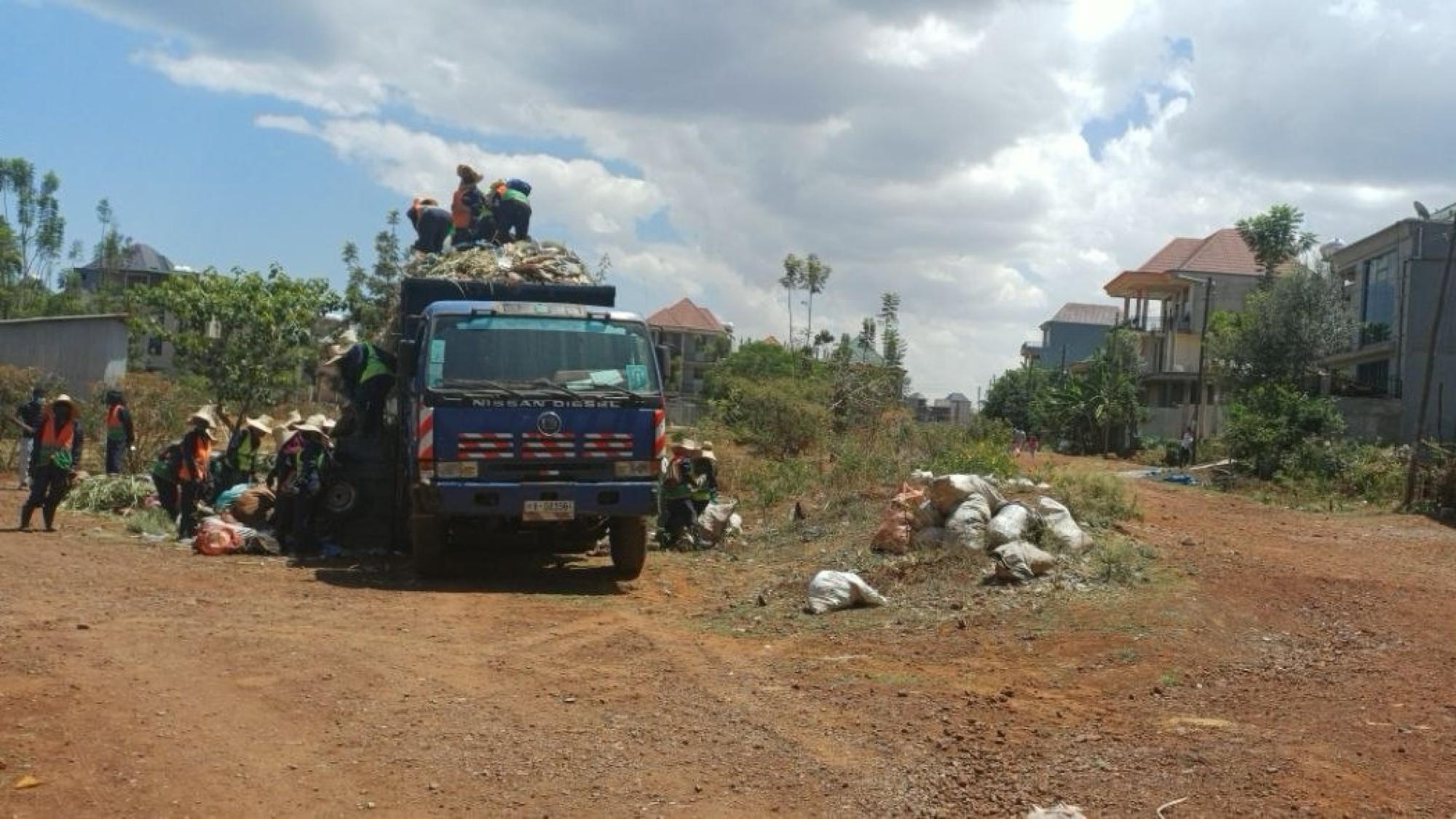
A truck with trash and people standing next to it in Ethiopia.
Community-based waste material collection and environmental sanitation activities in one of the administrative areas of Bahir Dar city, Ethiopia: local waste collectors sorting, handling, and loading recyclable and solid waste materials to reduce environmental pollution and potential disease risks through improved waste management, drainage, and sanitation systems.

Advancing Early Warning Systems for Malaria and Cholera: Combining Predictive Modeling with Local Adaptation Strategies

Infectious diseases such as malaria and cholera remain major and increasingly complex public health challenges in Ethiopia, particularly in the Amhara Region, where environmental, climatic, and socio-political factors strongly shape transmission. Seasonal peaks linked to heavy rainfall and flooding create ideal conditions for mosquito breeding and water contamination, while conflict-driven population displacement disrupts access to clean water, sanitation, long-lasting impregnated nets (LLINs), and healthcare, amplifying vulnerability.

These challenges are further intensified by limited health infrastructure, such as limited real-time surveillance digital tools, prevention, and response capacities. Scientifically, growing evidence shows that climate change is altering infectious disease dynamics by modifying temperature profiles, precipitation patterns, and the frequency of extreme weather events, which can expand transmission zones, prolong seasonal exposure, and increase outbreak risks.

However, a critical gap persists in the Ethiopian context: predictive models that accurately capture these complex, localized interactions between climate variables, environmental conditions, and epidemiological trends remain underdeveloped and insufficiently validated. Addressing this gap requires integrated, data-driven approaches that combine multisource datasets, including meteorological, geospatial, and health data, with advanced modeling techniques to generate reliable forecasts.

A key solution pathway lies in the co-development of user-centered digital health systems, such as mobile health (mHealth) applications, that translate predictive outputs into actionable, location-specific insights for both communities and decision-makers. By embedding early warning systems, real-time surveillance, and hotspot detection into accessible digital platforms and by engaging researchers, public health institutions, NGOs, and local communities in their design, these tools can strengthen preparedness, enable targeted interventions, and enhance adaptive responses to the evolving impacts of climate change on infectious disease transmission.

As a postdoctoral researcher in Data4Healthcare at the University of Oulu, I have been given a valuable opportunity to observe and understand how the healthcare system operates and evolves in Finland. This experience has also enabled me to build networks with researchers working on the development of resilience mechanisms, healthcare system early warning techniques, and mobile applications, particularly for use in developing countries such as Ethiopia, especially the Amhara region.

References

1. Lake, M.W., et al., Resurgence of malaria in the Amhara Region, Ethiopia (2014–2024): trends, spatial expansion, and control challenges. Malaria Journal, 2025. 24(1): p. 425.

2. Abate, A., M. Azage, and A. Munshea, National and Subnational Burden of Cholera in Ethiopia, 2019 to 2023: Findings From the Global Burden of Diseases Study 2023. INQUIRY: The Journal of Health Care Organization, Provision, and Financing, 2026. 63: p. 00469580261437013.

3. Simegn, G.L., et al., Spatiotemporal distribution of climate-sensitive disease incidences in ethiopia: a longitudinal retrospective analysis of Malaria, Meningitis, Cholera, Dysentery, Leishmaniasis and Dengue fever between 2010 and 2022/2023. BMC public health, 2024. 24(1): p. 697.

Writer of this blog post is Haile Fenta, a postdoctoral researcher at the Center for Environmental and Respiratory Health Research, University of Oulu. His visit was supported by FRONT ROAM, which facilitated his collaboration with both institutions.

Created 31.8.2026 | Updated 31.8.2026