Oulu Business School
OBS staff and students discuss activities in the business school. Welcome!
The course was designed and delivered by Astrid Huopalainen (Aalto University), Linda Tallberg (University of Lapland), Marjo Siltaoja (University of Jyväskylä School of Business and Economics), José-Carlos García-Rosell (Oulu Business School), and special guest Lindsay Hamilton (University of York), with invaluable coordination support from Julia Autio (Oulu Business School).
Over three intensive days, the course participants engaged in rich theoretical and methodological discussions. Through lectures, case discussions, interactive workshops, and nature-based learning activities, participants were introduced to critical debates that challenge conventional understandings of organisations, organising, and business by bringing non-human species into the conversation. The course provided a unique opportunity for participants to deepen their understanding of multispecies perspectives and to position their own research within this emerging field. Equally important was the chance to engage in meaningful exchanges with fellow doctoral researchers and leading scholars working at the forefront of these debates. The course brought together doctoral researchers from universities across Finland and abroad, including participants from Belgium, Germany, and Italy.
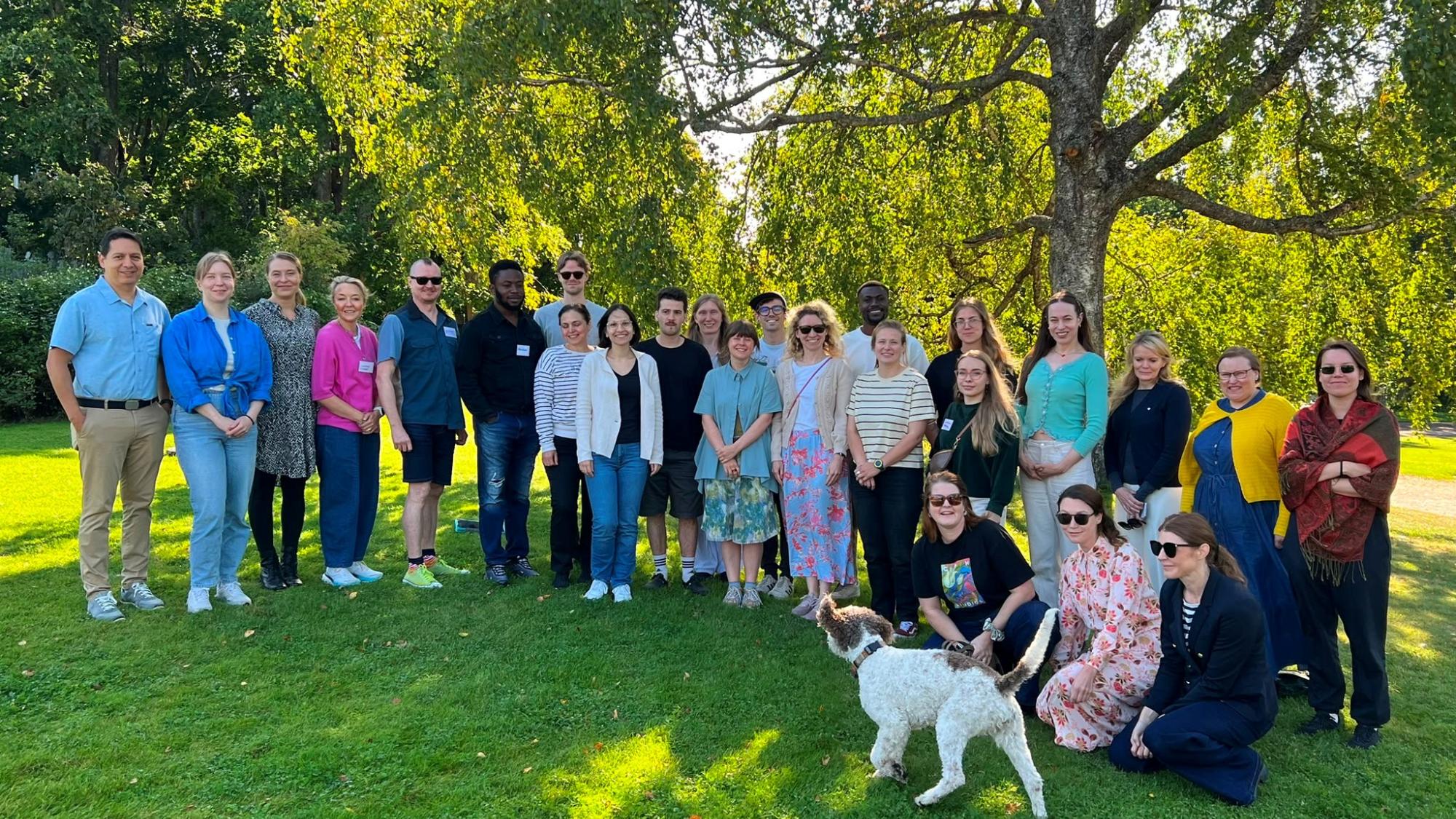
We were fortunate to spend three beautiful sunny days surrounded by the remarkable beauty of Nuuksio National Park and enjoying the warm hospitality of Hotel Nuuksio; participants were immersed in an environment that perfectly complemented the course theme. The natural setting encouraged reflection, dialogue, and a deeper appreciation of the interconnected relationships between humans and other species. The course participants especially complimented the welcoming and warm atmosphere of the course, stating they felt safe expressing their thoughts and pondering the course topics together.
The programme combined lectures, indoor and outdoor workshops, and a variety of discussion formats that fostered interaction, critical reflection, and collaborative learning. A particular highlight was the visit of Markus Jäskäri, a conservation expert from Metsähallitus. Markus introduced participants to biodiversity conservation, which could be seen as a form of multispecies organising, within the context of a national park. He also guided us through Nuuksio, offering first-hand insights into the diverse species that inhabit the area and demonstrating how multispecies perspectives can inform both conservation practices and organisational thinking. This brought a valuable practical example to complement the more theoretical perspectives introduced by the course instructors.
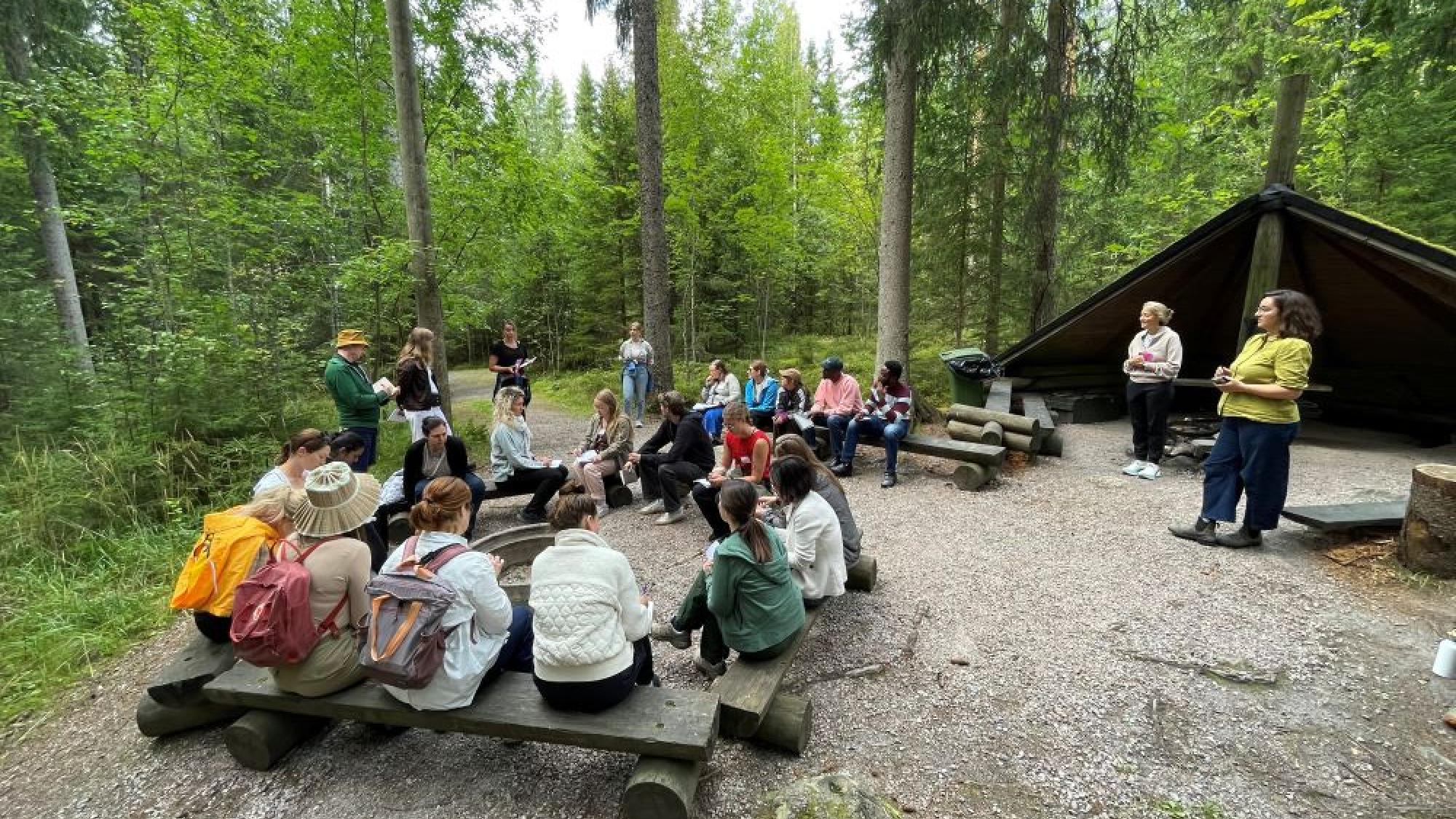
The course highlighted the growing relevance of multispecies approaches for understanding contemporary organisational and societal challenges. By bringing together scholars from different disciplines and backgrounds in a setting where participants could experience multispecies relations directly, the course created a stimulating space for learning, collaboration, and new research ideas.
As discussions continued well beyond the classroom and into the forests and trails of Nuuksio, the course demonstrated how academic inquiry can benefit from engaging not only with different human perspectives but also with the more-than-human world that surrounds us. The participants left the course equipped with a diverse set of multispecies methodologies and theoretical tools, new connections to fellow academics, and a broadened understanding of the growing field of multispecies studies in business and organisation studies.
Julia Autio, Doctoral researcher
José-Carlos García-Rosell, Professor, Business Ethics
Department of Marketing, Management and International Business
Oulu Business School, University of Oulu.
OBS staff and students discuss activities in the business school. Welcome!