Oulu Business School
OBS staff and students discuss activities in the business school. Welcome!
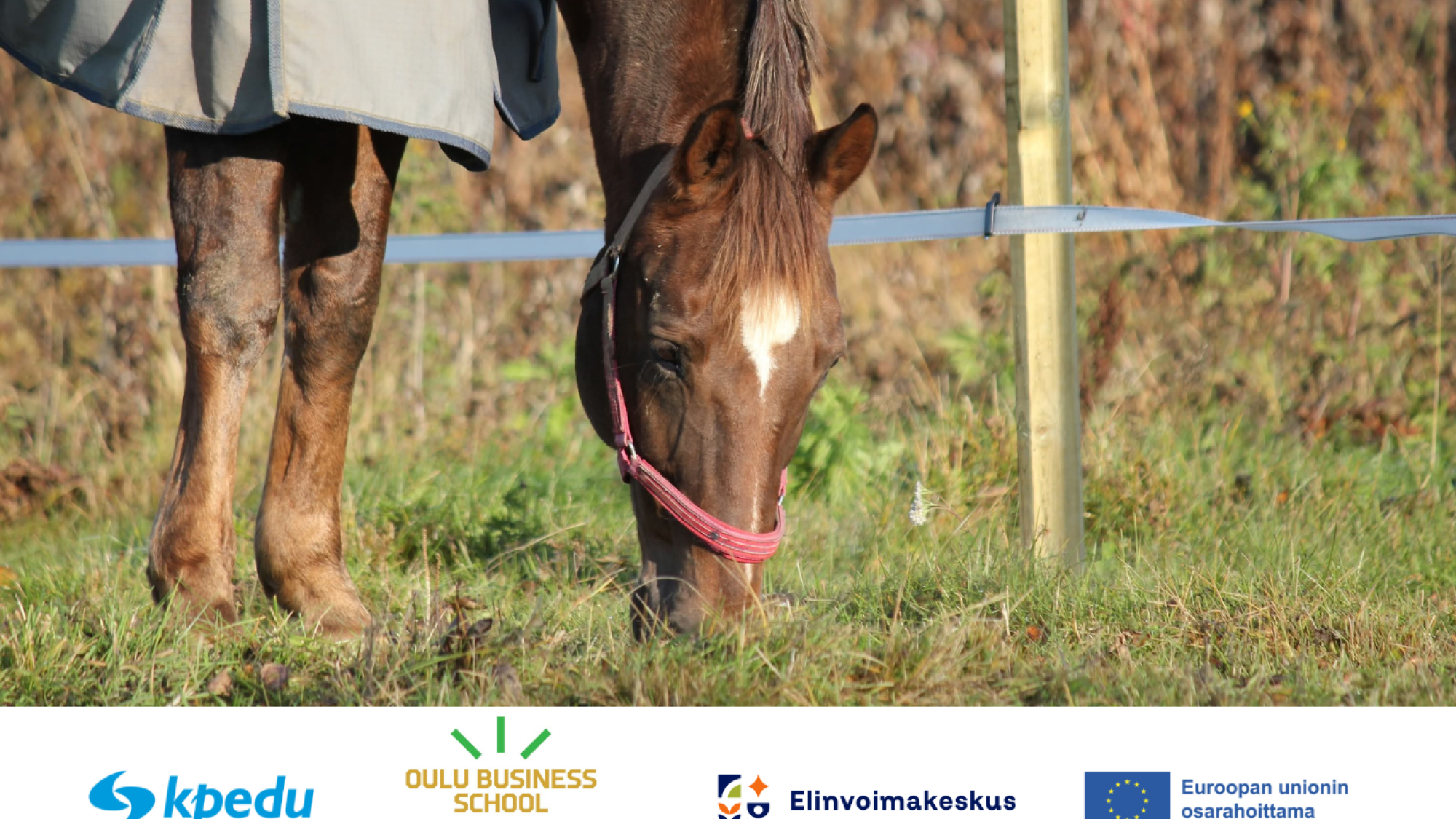
The project will run from 2026 to 2028. In this blog post, we will provide insights into equine-related services in Finland, discuss the importance of animal welfare as a part of responsible business practices, and outline the project’s objectives.
There are millions of horse enthusiasts across Europe, and activities like trail riding are gaining popularity, indicating significant growth potential for horse tourism. Currently, there are around 200 horse tourism businesses in Finland, mostly located in rural areas. As international tourism and leisure activities continue to expand, there is a growing demand for high-quality and responsible services. International standards increasingly emphasize sustainability, transparency, and animal welfare. Demonstrating strong horse welfare practices can serve as a competitive advantage for businesses in this sector.
Equine-assisted services are growing in Finland, with applications in social care, healthcare, and education. These services include equine-assisted therapy and social pedagogy, which support mental health, promote inclusion, aid rehabilitation, and help prevent social exclusion. The sector comprises several hundred businesses, mainly rural, and is expected to play an increasingly significant role in well-being and rehabilitation services.
Since these services often involve vulnerable clients, it is essential to maintain high standards of safety, quality, and animal welfare. Self-monitoring and independent auditing can enhance transparency and credibility, providing a reliable way for businesses to demonstrate their commitment to responsible practices while meeting regulatory and customer expectations.
The main aim of the project is to strengthen equine welfare management, improve entrepreneurs’ expertise, and enhance the competitiveness and long-term sustainability of the equine sector. It focuses primarily on horse tourism and equine-assisted service providers in Northern Finland and Central Ostrobothnia. However, the results will be openly accessible to the entire Finnish equine sector and can therefore also benefit riding schools, trotting stables, and other equine businesses.
The project will develop practical, openly accessible tools, including online training on equine welfare, quality management, and responsible communication; a digital competence badge; a quality manual; and a self-monitoring model for equine welfare. These tools will build on an existing horse welfare assessment protocol developed in 2022-2024. Customer expectations and experiences will also be studied to support better practices and communication.
Overall, the project will strengthen responsible business practices, improve service quality and customer satisfaction, and promote equine welfare, sustainable tourism, and the vitality of rural areas.
José-Carlos García-Rosell, Professor, Business Ethics
Matilda Moilanen, Research Assistant
Department of Marketing, Management and International Business
Oulu Business School, University of Oulu.
Link to HUMMAVA project: https://maaseutuverkosto.fi/projects/hummava-hevosten-hyvinvoinnin-laatutyota-hevospalveluihin/
Link to the horse welfare assessment protocol (in Finnish): https://hevostenhyvinvointi.fi/koko-mittariston-kuvaus/
OBS staff and students discuss activities in the business school. Welcome!