Transdisciplinary approaches in biodiversity monitoring and habitat ecology: Integrating science, society, and technology

Loss of biodiversity and alterations of natural habitats are among the most pressing environmental challenges worldwide. Traditional ecological research has provided valuable information on species presence, habitat condition, and biodiversity patterns through methods such as field surveys, taxonomic identification, long-term ecological monitoring, and land-cover mapping. While these approaches have established important ecological baselines, they are often constrained by spatial and temporal limitations and can depend heavily on specialized expertise.
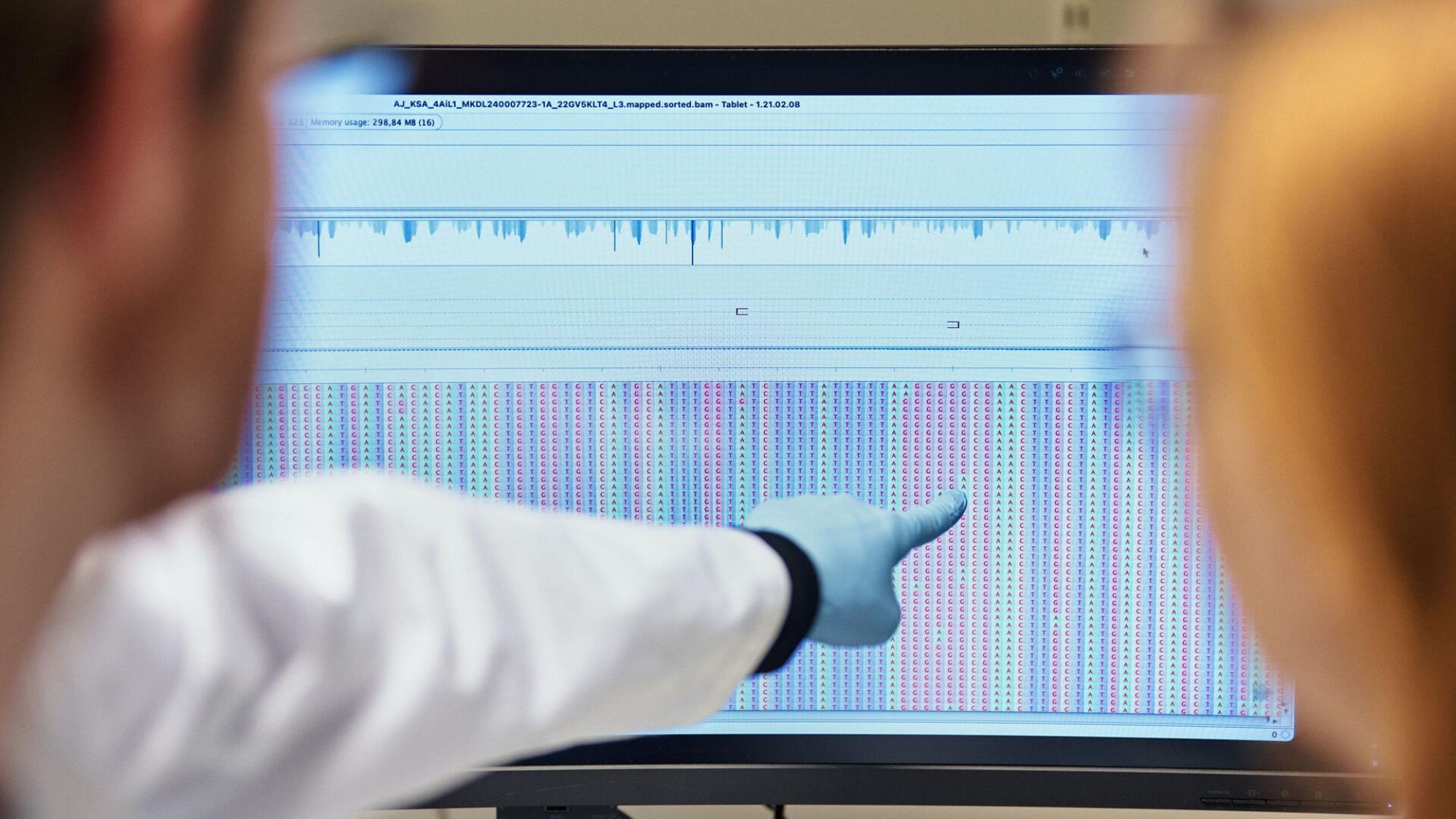
Scientist is pointing on the screen on which an ancient DNA can be seen.

In recent decades, biodiversity monitoring has undergone a significant transformation driven by technological advances and a growing emphasis on integrative socio-ecological approach. Modern approaches increasingly combine traditional ecological methods with remote sensing, molecular tools, artificial intelligence, citizen science, and stakeholder participation.

This shift towards more cross-disciplinary and transdisciplinary research enables scientists to generate more comprehensive evidence, validate findings across multiple data sources, and better understand the ecological, social, economic, and political dimensions of biodiversity conservation.

As a result, biodiversity research is becoming more relevant to decision-making processes and can provide stronger support for conservation policies with tangible impacts on the ground.

Current trends: Towards data-intensive and integrated ecology

Recent developments reflect a rapid expansion in both technological capacity and conceptual frameworks. These advances are enabling more continuous, scalable, and integrative approaches to understanding ecosystems and their responses to environmental change.

Digital and automated monitoring systems are increasingly being deployed in ecological research. Camera traps enhanced with machine learning can automatically identify species, while acoustic sensors help detect birds, bats, and insects across large areas. Environmental DNA (eDNA) metabarcoding approach is also being applied in aquatic and soil environments, allowing researchers to detect biodiversity signals from genetic material left behind by organisms.

At the same time, advances in Earth observation and spatial ecology have transformed habitat monitoring. High-resolution satellite imagery can track land-use and habitat change over time, while drones provide detailed ecosystem assessments at local scales. These tools are increasingly combined with landscape-scale models to evaluate habitat connectivity and fragmentation.

Another important trend is the growth of citizen science and participatory monitoring. Mobile applications allow members of the public to record biodiversity observations, while community-based monitoring initiatives contribute valuable local knowledge and ecological data. Such approaches can also improve the validation of species occurrence records and expand monitoring efforts across wider geographic areas.

Data-driven ecological modelling is also becoming central to biodiversity science. Machine learning techniques are increasingly used for species distribution modelling, habitat suitability assessments, and forecasting the impacts of climate change on biodiversity. Together, these developments are reshaping biodiversity monitoring into a more integrated, data-rich, and near real-time system that extends well beyond the limitations of traditional field-based approaches.

What transdisciplinarity means in biodiversity monitoring studies?

A transdisciplinary approach extends beyond conventional collaboration between academic disciplines by bringing together scientific, societal, and policy perspectives in the co-production of knowledge. Rather than treating ecological research as an isolated scientific activity, it integrates ecological understanding with socio-economic information, governance frameworks, and lived experience. In practice, this may involve working with Indigenous and local communities, engaging policymakers and stakeholders in shaping research questions, and designing studies that address real-world conservation challenges.

This approach offers several advantages for biodiversity monitoring. Local and Indigenous knowledge can provide valuable insights and early indicators of environmental change, while citizen science and participatory monitoring expand the spatial and temporal coverage of biodiversity data. At the same time, involving stakeholders throughout the research process increases the relevance of findings for environmental governance, land-use planning, and conservation policy.

By fostering trust, shared ownership, and long-term engagement, transdisciplinary research can also strengthen the societal impact of biodiversity conservation efforts.

Limitations and challenges to foresee

Despite these benefits, transdisciplinary biodiversity research faces several challenges. Integrating heterogeneous datasets from ecological, economic, and social systems is methodologically complex, while ensuring data quality and consistency across citizen-generated and multi-source datasets remains an ongoing concern. Institutional barriers also persist, as funding structures and academic systems are often still organized along disciplinary lines. Ethical considerations regarding the ownership, control, and use of Indigenous and local knowledge require careful attention, and effective collaboration demands sustained coordination among diverse stakeholders over long timeframes.

These issues are particularly significant in high-latitude and other environmentally sensitive regions, including Arctic and sub-Arctic landscapes such as Northern Finland, where biodiversity monitoring is shaped by rapid climate change, low population density.

In such contexts, ecosystems are undergoing accelerated transformations, with warming driving shifts in species distributions, altered seasonal biological cycles, and increasing pressure on cold-adapted habitats.

At the same time, limited field accessibility makes remote sensing technologies and citizen science essential for achieving adequate spatial and temporal coverage. Resource-based land-use systems such as forestry, mining, agriculture, and pastoral livelihoods further shape landscape dynamics, meaning that biodiversity outcomes are closely linked to economic and policy decisions. Cultural and knowledge dimensions also play a critical role, as Indigenous and local ecological knowledge provide long-term environmental insights that complement scientific monitoring, while co-management approaches are increasingly important in conservation governance.

More broadly, socio-economic drivers including land tenure systems, subsidies, infrastructure development, urbanization, and market-driven resource use strongly influence biodiversity patterns across regions worldwide, not only in the Arctic.

For this reason, designing effective and impact-oriented biodiversity research requires early co-design with stakeholders, robust frameworks for integrating ecological and socio-economic data, long-term monitoring strategies that extend beyond project cycles, capacity building at local levels, and clear pathways for translating research into policy-relevant outputs such as spatial planning tools, biodiversity maps, and decision-support systems.

An essential element underpinning effective transdisciplinary biodiversity monitoring is the development of an integrative mindset supported by continuous, shared feedback loops between researchers, stakeholders, and decision-makers. An integrative mindset moves beyond disciplinary thinking and encourages the recognition of ecosystems as interconnected socio-ecological systems, where biological processes, human activities, and governance structures are tightly linked.

Within this framework, knowledge production is not a linear process but an iterative cycle in which data collection, interpretation, and application inform one another over time. Shared feedback loops are particularly important for ensuring that monitoring results are translated into meaningful action, while also allowing local observations, policy needs, and management outcomes to refine research questions and methodologies. This iterative exchange enhances adaptability in rapidly changing environments, improves the relevance of ecological indicators, and strengthens trust among involved actors. Ultimately, fostering such integrative and feedback-driven approaches is key to ensuring that biodiversity monitoring is not only scientifically robust but also socially responsive and capable of supporting long-term environmental sustainability.

Transdisciplinary biodiversity monitoring highlights that understanding and conserving ecosystems requires more than better technology alone. By combining scientific knowledge with local experience, policy perspectives, and stakeholder participation, it offers a more holistic and actionable approach to addressing biodiversity loss.

Created 26.8.2026 | Updated 26.8.2026

Authors

Shreya Pandey
Doctoral researcher
Ecology and Genetics
University of Oulu

Shreya Pandey is a Doctoral Researcher at the Ecology and Genetics research unit at the University of Oulu. Her research focuses on analyzing environmental DNA (e-DNA) from coniferous plant samples to investigate arthropod and fungal diversity within forest and peatland ecosystems.