Does the treatment actually help? Associate Professor Markus Haapanen studies how best to care for older people
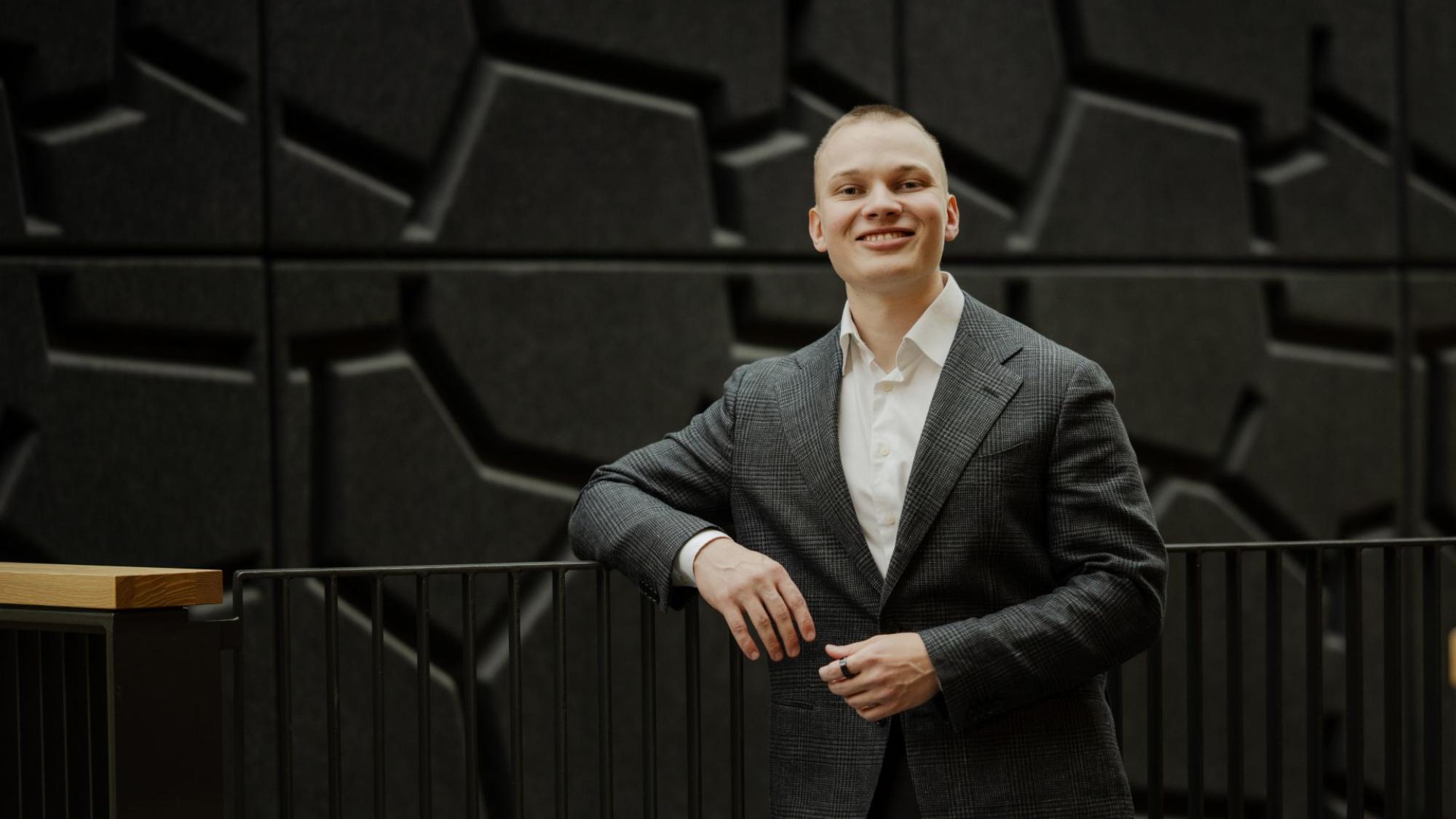
Finland has an ageing population. A growing number of older people need care, while the resources available are becoming increasingly limited. Markus Haapanen, Associate Professor at the University of Oulu, is working to address this challenge by helping to ensure that the range of treatments and practices used in healthcare is demonstrably effective.
His field is healthcare implementation research, which examines how new treatments that benefit patients and have been shown to be effective can be successfully introduced into healthcare.
As a doctor specialising in geriatrics, he is particularly interested in the care of older people, an area in which there is a clear need for new research evidence.
“Most healthcare patients are older people, who are treated to the best of our understanding. However, the treatments currently provided are based on studies conducted with younger and healthier people,” Haapanen says.
Haapanen is fascinated by the care of older people because illnesses present differently in them than in people of working age. Caring for older people requires consideration of the life they have lived and seeing the person as a whole. The subject is also personally important to him.
“Older people need advocates who promote their best interests,” Haapanen says.
What works and what could be cut back?
What prevents practices that have been shown to work from becoming established in doctors’ everyday work? According to Haapanen, typical barriers include time and money. Healthcare professionals may also feel that establishing new ways of working is not part of their role.
As someone who also works with patients in home care and residential care for older people, he understands the realities of healthcare.
“Because I understand the day-to-day work of healthcare, I do not fall into the trap of idealism. Through my research, I aim to develop ways of making it easier for new treatments to become part of everyday healthcare practice,” Haapanen explains.
Haapanen’s research topic is particularly timely as the adequacy of healthcare funding is being intensely debated. One way to ease the situation is to discontinue low-value care. Rather than implementation, this is known as de-implementation.
“Giving up a familiar procedure, even one that has been shown to be of no benefit, is not as easy as people might think. Human behaviour is complex, and established ways of working are difficult to change.”
Haapanen would like the treatments and practices currently in use to undergo the same kind of assessment that is required, for example, before a new medicine is introduced.
“There are designated bodies for assessing new medicines. But what about the things that have been done for years and years? Who assesses whether they are beneficial?” he asks.
Greater attention to the care of patients with frailty
Haapanen has studied frailty, meaning a person’s vulnerability and susceptibility to various health problems, since he was a medical student. He is interested in how events throughout a person’s life, beginning at birth, determine who will become frail in old age.
“Frailty tells us what a patient will benefit from and what they can tolerate. For a patient with frailty, even something that seems minor, such as a new medicine, a urinary tract infection or a fall, can be serious and lead to hospitalisation and a dramatic decline in their condition.”
Frailty is assessed during medical appointments, but Haapanen would like to see a more systematic way of identifying it. Patients in poor health are often treated without taking their individual resources and resilience into account.
“I want to make the assessment of frailty during medical appointments more systematic. For example, medicines prescribed to an older patient may be too strong and lead to a fall, hospitalisation and a further decline in their condition,” Haapanen says.
When treating older patients, it is particularly important to assess which treatments are worthwhile. Doctors have to weigh up what needs to be treated immediately and what can be dealt with later.
“Older people come to a doctor’s appointment with a long list of different ailments. A frail older person, in particular, must be seen as a whole rather than treated for individual, separate ailments,” Haapanen says.
A new role brings new challenges
Haapanen is an Associate Professor in the Health Dimensions research programme, which examines how diseases develop and how healthcare can be improved to better meet the needs of people living with multiple conditions.
Haapanen says that he encounters multimorbidity in practically every older patient. He points out that patients with multiple conditions differ greatly from one another, and believes that healthcare should take this into account more effectively.
“There is a considerable difference between a patient who has allergic rhinitis and asthma and is about to undergo gallbladder surgery, and a patient who has heart disease as well as advanced cancer. Their treatment and rehabilitation need to be planned in very different ways.”
Leaders of Finland’s wellbeing services counties, as well as doctors and other healthcare professionals are important stakeholders for Haapanen, and he wants to communicate research evidence to them. One of his aims is to improve understanding of the significance of frailty in healthcare.
The researcher, who is only 30 years old, is now building his own research group in Oulu and enjoys the opportunity to challenge himself in his new role.
“I am immensely grateful to have been given this opportunity to raise the profile of healthcare implementation research through Finland’s first professorship in the field and to contribute to the national debate,” Haapanen says.
Who?
Markus Haapanen
- Associate Professor of Healthcare Implementation Research in the University of Oulu’s Health Dimensions research programme.
- Qualified as a physician and completed his doctorate in medical science at the University of Helsinki in 2020. In his doctoral thesis, he examined how factors from early childhood to adulthood influence the development of frailty in old age.
- Has worked as a researcher at Folkhälsan, Karolinska Institutet in Stockholm and the University of Queensland in Australia.