Experimental drug offers new hope for coeliac disease treatment – protects the whole body from the harmful effects of gluten
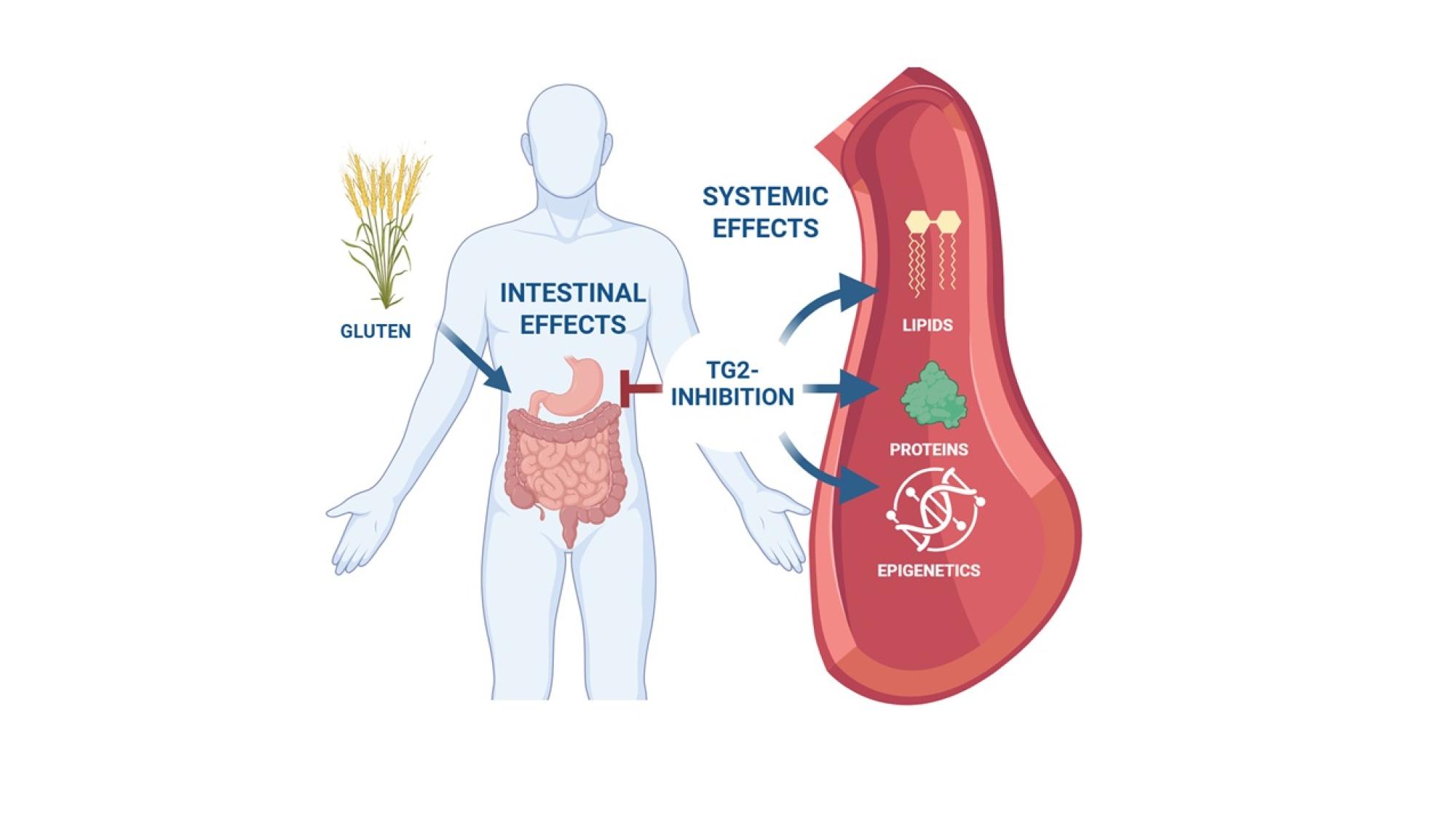
The drug examined in the study, ZED1227, inhibits the activity of the body’s transglutaminase 2 (TG2) enzyme. This enzyme modifies gluten in a way that triggers an inflammatory response in coeliac disease. By blocking the enzyme’s activity, the drug reduces the harmful immune responses initiated by gluten.
The new study has been published in the journal BMC Medicine and expands on earlier findings. In a study published in Nature Immunology in 2024, the same research group showed that a TG2 inhibitor effectively protects the small intestinal mucosa from gluten-induced damage. The latest work examines, for the first time, the effects at the level of the whole body.
The study involved adults with coeliac disease who had long adhered to a gluten-free diet. They were exposed to small amounts of gluten for six weeks, either in combination with the drug or with a placebo.
Blood samples were analysed for lipid metabolism, proteins and DNA methylation. These were compared with tissue samples taken from the small intestine. The results showed that gluten caused clear changes in lipid metabolism in the placebo group, whereas in those receiving the drug the changes were almost completely suppressed. The experimental drug also restored blood protein and epigenetic profiles towards the state seen during a gluten-free diet.
The findings suggest that TG2 inhibition has effects beyond the gut and dampens the whole-body immunometabolic responses triggered by gluten. This represents a new and scientifically significant discovery.
“Our study published in 2024 showed that the drug effectively protects the intestinal mucosa. We now demonstrate that its effects extend to the whole body,” says the corresponding author of the study, Associate Professor Keijo Viiri from the University of Oulu.
According to the researchers, the drug could in future complement dietary treatment, particularly in patients who are inadvertently exposed to gluten or whose symptoms persist despite a gluten-free diet.
The research group led by Viiri is currently investigating how inflammation-induced epithelial damage could be prevented or repaired through drug therapy in people with coeliac disease. The aim is to strengthen the protective effect of treatment, especially in high-risk patients.
Coeliac disease is an autoimmune condition in which gluten triggers an inflammatory response in genetically susceptible individuals. At present, the only treatment is a lifelong gluten-free diet, which can be challenging to maintain. In Finland, around 2.4 per cent of the population has coeliac disease, one of the highest prevalence rates in the world.
Research article: Dotsenko, V., Le, H.H., Rajić, S. et al. Therapeutic TG2 inhibition reverses systemic multiomic dysregulation in celiac disease. BMC Med (2026).
The study is part of an international clinical trial and has been funded, among others, by the pharmaceutical company Dr. Falk Pharma GmbH. It is also part of the University of Oulu’s Profi8 Health Dimensions research programme, funded by the Research Council of Finland.