“Methane decomposition offers a promising route to hydrogen and valuable carbon” - Meet H2FUTURE postdoctoral researcher Karhan Özdenkci
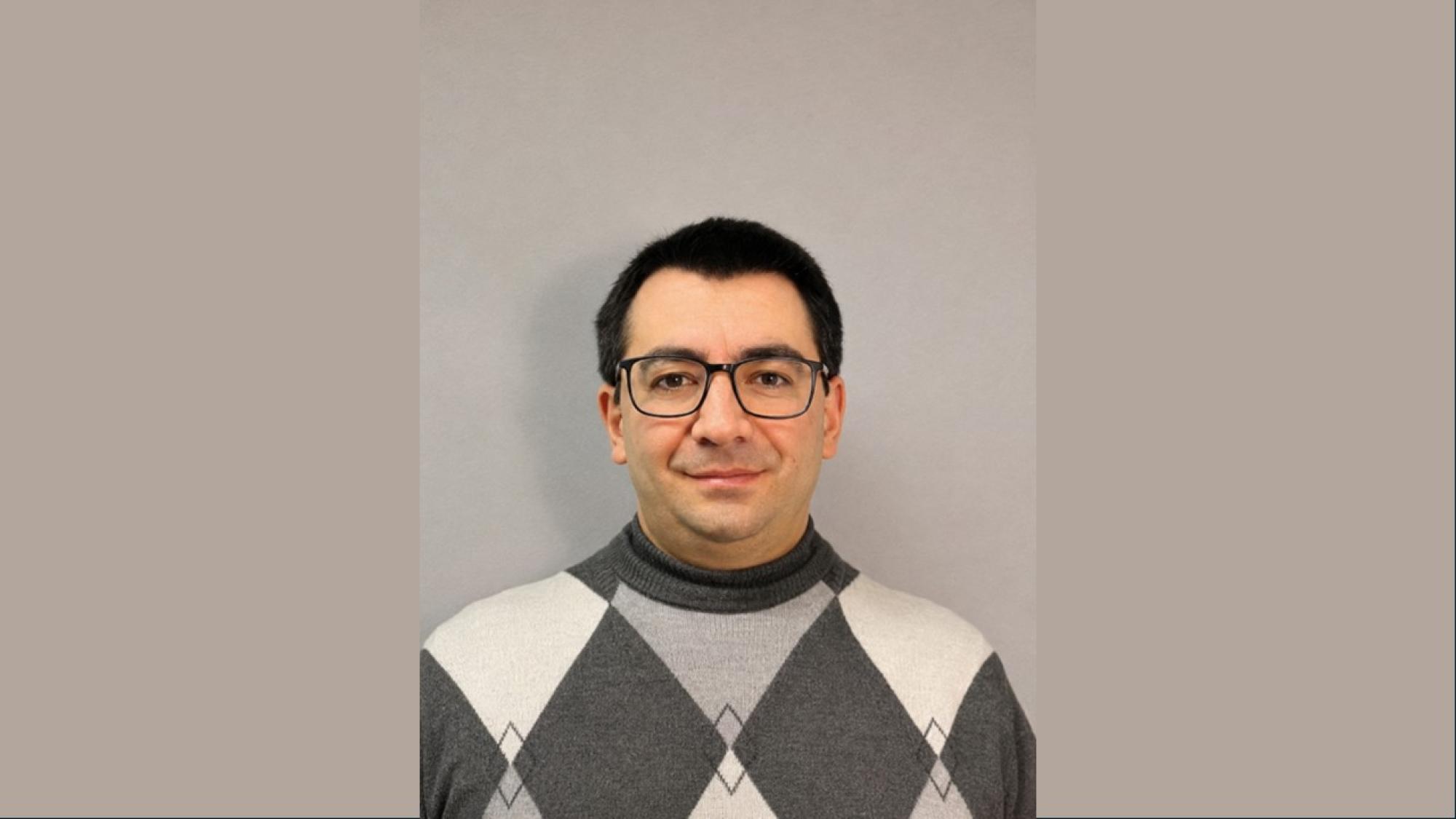
Postdoctoral researcher Karhan Özdenkci first came across H2FUTURE research programme on LinkedIn. Yet it was no coincidence, since he had collaborated earlier with Professor Ulla Lassi during his research at Åbo Akademi University, which made the move to the University of Oulu a meaningful next step. The programme’s focus fit as natural continuation of his previous work on sustainable energy, fuels and platform chemicals. H2FUTURE offers Özdenkci an opportunity to explore and compare different hydrogen production routes based on his different expertise:
“I previously investigated hydrogen production from biomass. In this project, we produce hydrogen via thermal decomposition of methane,” Özdenkci says.
From biomass conversion to methane decomposition into hydrogen and solid carbon
Much of Özdenkci’s earlier research has centered on second-generation biomass conversion and the development of integrated biorefinery concepts. His doctoral and postdoctoral work has included studies on black liquor conversion, supercritical water gasification, fast pyrolysis, thermal gasification and hydrothermal carbonization of digestates from biogas plants. This background now supports his contribution to H2FUTURE, where experimental chemistry and process engineering meet.
In H2FUTURE, Özdenkci studies the decomposition of methane into hydrogen and solid carbon. Together with his colleagues, he investigates different catalysts, mainly nickel and iron catalysts on various support materials. The experiments are conducted in Kokkola, while solid products are characterized in Oulu. In addition to the experimental work, Özdenkci focuses on thermodynamic and kinetic modelling of the reaction.
“My research in H2FUTURE project is on thermo-catalytic decomposition of methane into hydrogen and solid carbon. This subject is interesting since methane decomposition can be a promising alternative to produce hydrogen: requiring less energy than water electrolysis and steam reforming processes,” he explains.
Building circular process concepts: the chain that links hydrogen all the way to battery materials
Özdenkci’s expertise lies especially in process design, techno-economic assessment, thermodynamic modelling and kinetic modelling. In H2FUTURE, this expertise can help evaluate how methane decomposition could be integrated into broader circular concepts. One example is the possible integration of methane decomposition with biogas plants, where methane, hydrogen, graphite-like carbon and hydrochar could all become part of a more diverse product spectrum.
“I have chemical engineering background. Therefore, my skills include process design and techno-economic assessment as well as thermodynamic and kinetic modelling. Consequently, I can configure process integration concepts involving the conversions investigated in this group,” Özdenkci says.
The solid carbon produced in methane decomposition also opens possibilities beyond hydrogen production. In the Sustainable Chemistry research group, one potential application area is batteries, creating further links between hydrogen research, material development and circular economy.
Sustainable energy links to variety of sectors and needs more than one solution
For Özdenkci, one of the most interesting aspects of sustainable energy research is its diversity. Different regions, industries and resources require different solutions, and the most suitable pathway depends on available feedstocks, desired products and local energy systems. This makes the field especially relevant for chemical engineering, where process design, integration and assessment can help connect laboratory-scale findings with practical applications.
“Sustainable energy technologies are still under development; therefore, this subject introduces various research challenges. Furthermore, there is no single solution that can be applied in all situations,” Özdenkci says.
He sees important links between energy technologies and sectors such as forestry, agriculture, livestock production and pulp, and paper industry. These sectors can provide feedstocks for processes that produce energy, fuels, and platform chemicals. At the same time, wind and solar energy, together with storage concepts, can support more local and distributed energy systems.
"Sustainability is not only an environmental question - economic feasibility and social acceptance are essential"
Özdenkci emphasizes that sustainability is not only an environmental question. Economic feasibility and societal acceptance are also essential, especially when new energy solutions are expected to compete with fossil-based production. In his view, research and development play a key role in improving efficiencies, exploring new production methods, and assessing whether promising technologies can work at larger scales.
“Achieving this requires combined research into natural science, such as experiments and characterizations, and engineering, such as scale-up, process design and techno-economic assessments,” he says.
At the University of Oulu, he is especially looking forward to working in a large and multidisciplinary research group. The Sustainable Chemistry research group offers opportunities to collaborate across different topics and to develop new perspectives on sustainable energy systems.
“I am very glad to join this group and conduct research on subjects contributing to sustainable production of energy and fuels. My goals are to learn new subjects and to gain a wider perspective on sustainable energy aspects while contributing to the group through academic outcomes, such as scientific articles and project applications,” Özdenkci says.
Postdoctoral Researcher Karhan Özdenkci | At a glance
Original hometown: Izmir, Türkiye.
Education: Bachelor’s degree in chemical engineering from Izmir Institute of Technology; master’s and doctoral studies at Aalto University in Finland.
Before H2FUTURE: Postdoctoral researcher in the Laboratory of Energy Technology at Åbo Akademi University, working on biomass conversion processes, process integration and sustainable biorefinery concepts.
Outside research: Plays indoor volleyball as a setter and joins a traditional beach tournament in his hometown during the summers. Recently took up beach volleyball in Kokkola. Also enjoys swimming, chess and reading.
Fun fact: Finnish pronunciation feels surprisingly familiar to him because both Finnish and Turkish are phonetic languages, which gives him an unexpected superpower:
“I can read any text in Finnish even though I might or might not understand,” Özdenkci says.