Space waves reveal where Earth’s magnetic shield is under pressure
_viewed_from_Bly_Hollow_Road_in_Berlin,_Rensselaer_County,_New_York.jpg)
- A new study explains why wave activity at the edge of Earth’s magnetic shield is stronger in some regions than others. The cause is the uneven draping of the solar wind’s magnetic field around Earth’s own magnetic field.
- The phenomenon can be compared to waves meeting a breakwater: the water does not move in the same way on both sides.
- The results can help improve understanding of where the solar wind affects Earth most strongly and how these effects can be represented in space weather models.
What happens at the edge of Earth’s magnetic shield?
Earth is surrounded by a magnetic field that forms a protective region known as the magnetosphere. It shields the planet from particles and energy streaming from the Sun, a flow called the solar wind. But the shield is not sealed. At its outer edge, the solar wind constantly interacts with Earth’s magnetic environment.
These interactions help drive space weather. On Earth, their effects can appear as auroras, but strong solar storms can also disturb satellites, positioning systems, radio communications and power grids. The new study focuses on the wave motion that forms where the fast-moving solar wind brushes past the edge of the magnetosphere.
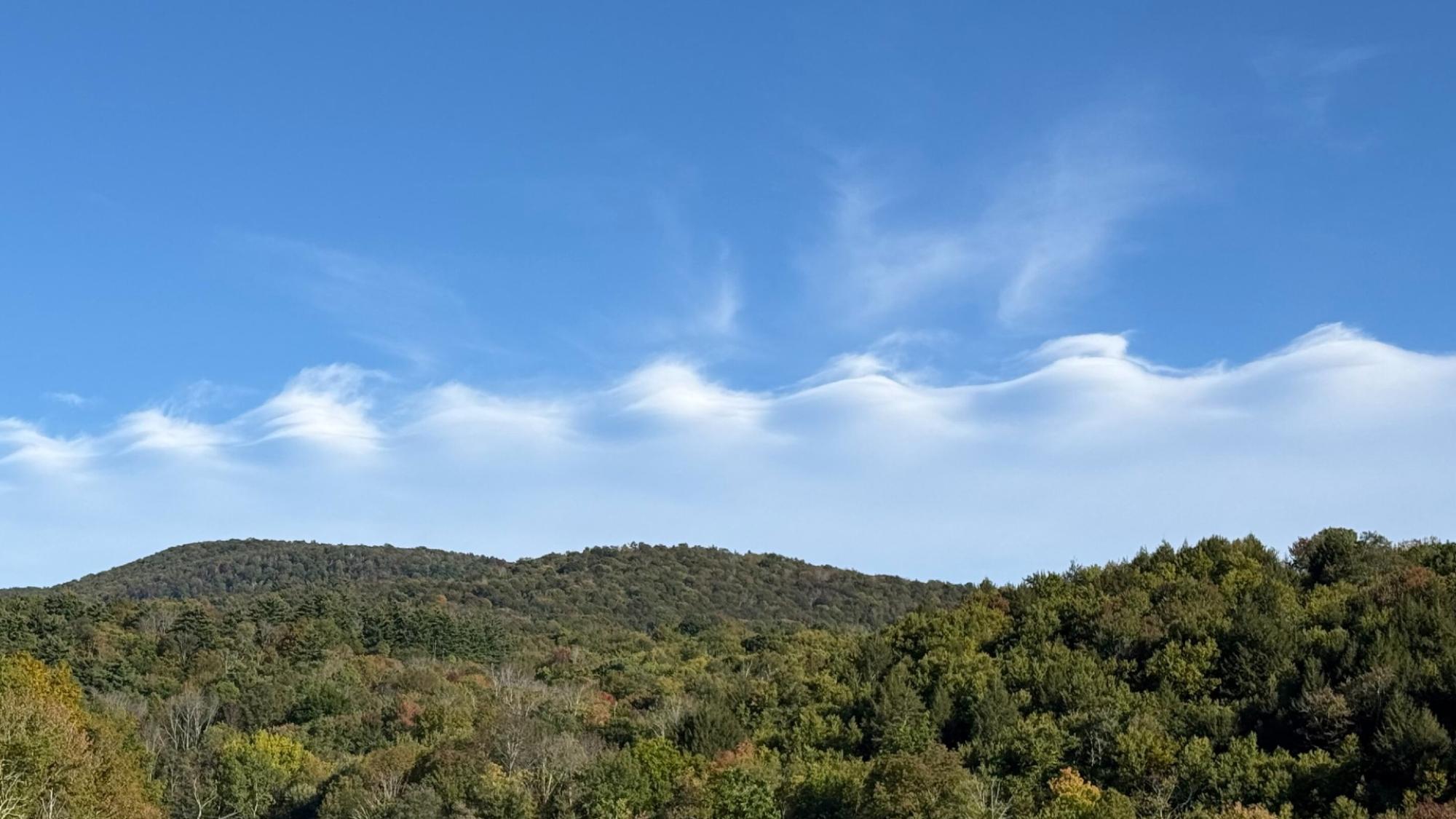
The waves are known as Kelvin–Helmholtz waves. Similar wave patterns can sometimes be seen in clouds, and related phenomena occur in the Sun’s atmosphere, at the edges of other planets’ magnetic fields and in interstellar space.
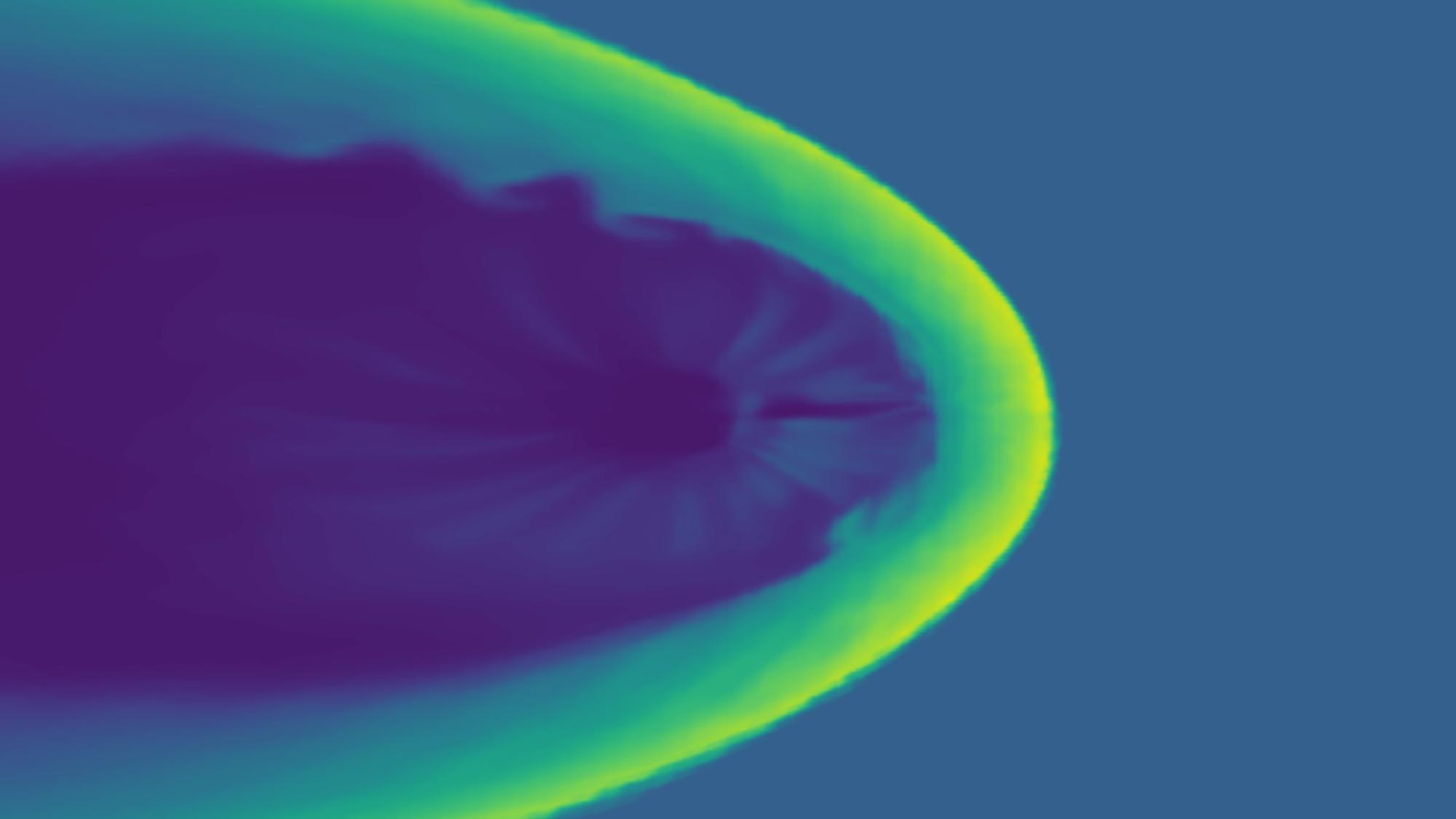
“This finding grew out of a long process of thinking through what I was seeing. In 2020, when I was visiting NASA as a postdoctoral researcher, I noticed unusual simulation images of the magnetosphere. I later realised that they showed Kelvin–Helmholtz waves at the edge of the magnetosphere, and that the different behaviour of the waves on different sides was part of the same phenomenon,” says Academy Research Fellow Lauri Holappa from the Space Physics and Astronomy research unit. The waves do not form as neat mirror images. Instead, they appear asymmetrically on different sides of the magnetosphere.
Studying these boundary waves is challenging because satellites pass through the most active regions only rarely. This has left researchers with limited information about how the waves behave under different solar wind conditions. In the new study, the researchers examined their formation using computer models of the entire magnetosphere.
“Asymmetries in the wave motion at the edge of the magnetic field have been observed before, but now we were able to show how they arise,” Holappa says.
The results show that the asymmetric wave activity is caused by the way the solar wind’s magnetic field meets Earth’s magnetic field. It does not flow around Earth evenly. Instead, it wraps and drapes around the magnetosphere in an asymmetric manner. This draped magnetic field can dampen the waves, but the damping effect is not the same everywhere.
The strongest wave activity was found to form in the winter hemisphere, which is facing away from the Sun. Depending on the direction of the solar wind’s magnetic field, it is concentrated either on the dawn side or the dusk side.
The study IMF By-Controlled Dawn–Dusk and Hemispheric Asymmetries of Kelvin–Helmholtz Waves and Reconnection Geometry Under Negative Dipole Tilt was published in September 2026 in the scientific journal Geophysical Research Letters.