Treatment developed by University of Oulu researchers boosts brain clearance and opens up new possibilities for preventing neurodegenerative diseases
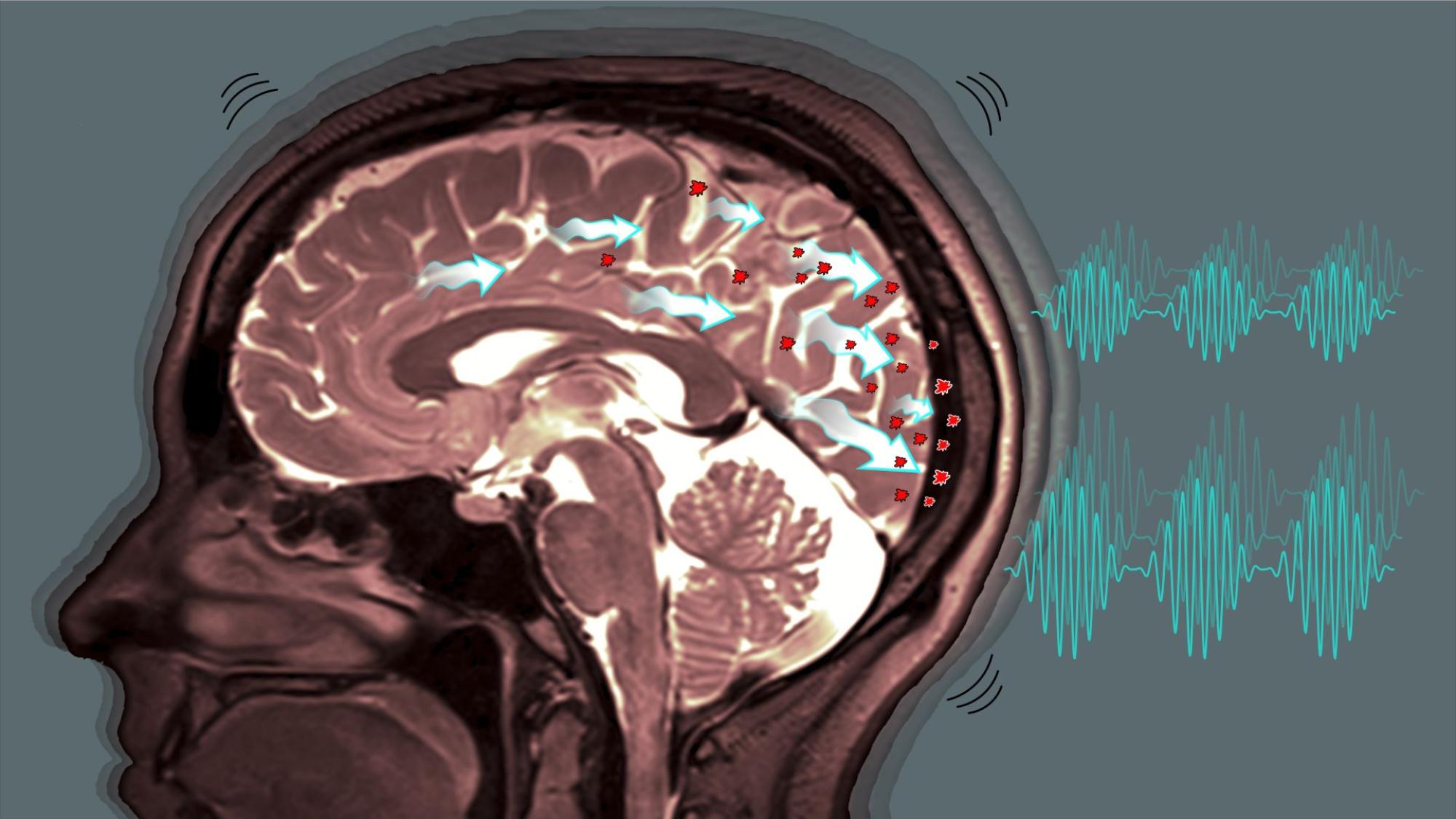
According to the researchers, the findings open up an entirely new avenue of research into harnessing the brain’s clearance mechanisms for the early diagnosis, prevention and treatment of neurodegenerative diseases that cause dementia.
“Alzheimer’s disease and many other diseases that cause dementia are characterised by the gradual accumulation of harmful proteins in the brain over decades. Now that we can safely enhance the brain’s own clearance system, which gradually becomes less effective with age, while people are still healthy, it may be possible in future to prevent these diseases, or at least slow their progression,” says Professor Vesa Kiviniemi, head of the Functional Neuroimaging Research Group at the University of Oulu.
Previous studies in mice have shown that temporarily lowering blood pressure can enhance the clearance of cerebrospinal fluid and the large molecules it contains from the brain. These findings provided the basis for a study combining blood pressure-lowering medication with Piezo1-targeted whole-body vibration stimulation.
The effects of the treatment were studied in 29 healthy adult volunteers using multimodal magnetic resonance imaging, physiological measurements and blood-based biomarkers originating in the brain.
The results showed that blood levels of harmful proteins implicated in dementia, such as beta-amyloid, increased significantly. Simultaneous MRI scanning combined with measurements using a wearable, MRI-compatible device incorporating fNIRS and dcEEG technology (also used in Glymphometer) to assess cerebrospinal fluid circulation revealed clear changes in brain fluid flow and protein concentrations.
“The results suggest that harmful proteins were cleared from the brain more efficiently than usual,” says the study’s lead researcher, Johanna Tuunanen, Doctoral Researcher at the University of Oulu.
Treatment strengthens slow brain pulsations
The brain’s clearance mechanisms are known to be active during sleep. As we fall asleep, blood pressure normally drops and slow vasomotor and respiratory pulsations in the brain become stronger, increasing the flow of cerebrospinal fluid through brain tissue and promoting the removal of waste products.
In this study, the researchers found that medication that temporarily lowers blood pressure strengthened the slow brain pulsations that drive fluid flow in the brain. This effect was due to the transient, nitric oxide-mediated dilation of blood vessels induced by the medication.
“The effect largely resembled the physiological changes we have previously observed during sleep. This makes the finding particularly interesting as a way of enhancing the brain’s own clearance mechanisms,” Tuunanen says.
Rhythmic whole-body vibration treatment, meanwhile, activates mechanosensitive Piezo1 channels in the vasculature, which are known to help regulate blood vessel function, particularly constriction. In previous animal studies, Piezo1 activation has been linked to enhanced meningeal lymphatic flow and has also been shown to reduce the brain’s beta-amyloid burden.
Harmful proteins cleared directly from the brain into the bloodstream
The researchers measured blood levels of several soluble brain-derived proteins, including beta-amyloid 40 and 42 and GFAP proteins, all of which increased in the bloodstream after treatment. MRI scans also revealed changes, particularly around the brain’s large veins, as well as in fluid content.
“For the first time, we obtained evidence that brain-derived proteins passed directly into the large veins at the back of the brain, something that has not previously been observed even in animal models. We can now also remove proteins while they are still soluble, before they form solid deposits. This is extremely important, as removing proteins from the brain once they have formed solid deposits in tissue may be virtually impossible,” Kiviniemi says.
Kiviniemi describes the new findings as highly promising. “The next step is to investigate what benefits the treatment might offer patients with early-stage memory impairment. We are currently planning follow-up studies in collaboration with other leading experts in the field.”
Research article in Nature Communications