Finding Resilience Across Continents: Reflections from a Chilean Researcher in Arctic Finland

Between June and December 2025, Tamara Hoffmann, a doctoral candidate at the University of Chile, undertook a research visit at the University of Oulu in the Frontiers of Arctic and Global Resilience (FRONT) research programme. During this period, she further developed her research on eco-anxiety under the supervision of Professor Maria Ojala, an internationally recognised scholar in psychological resilience and climate-related coping strategies. Beyond advancing the research itself, this experience also opened space to reflect on the socio-environmental context of Chile and on the broader global challenges posed by the climate crisis.
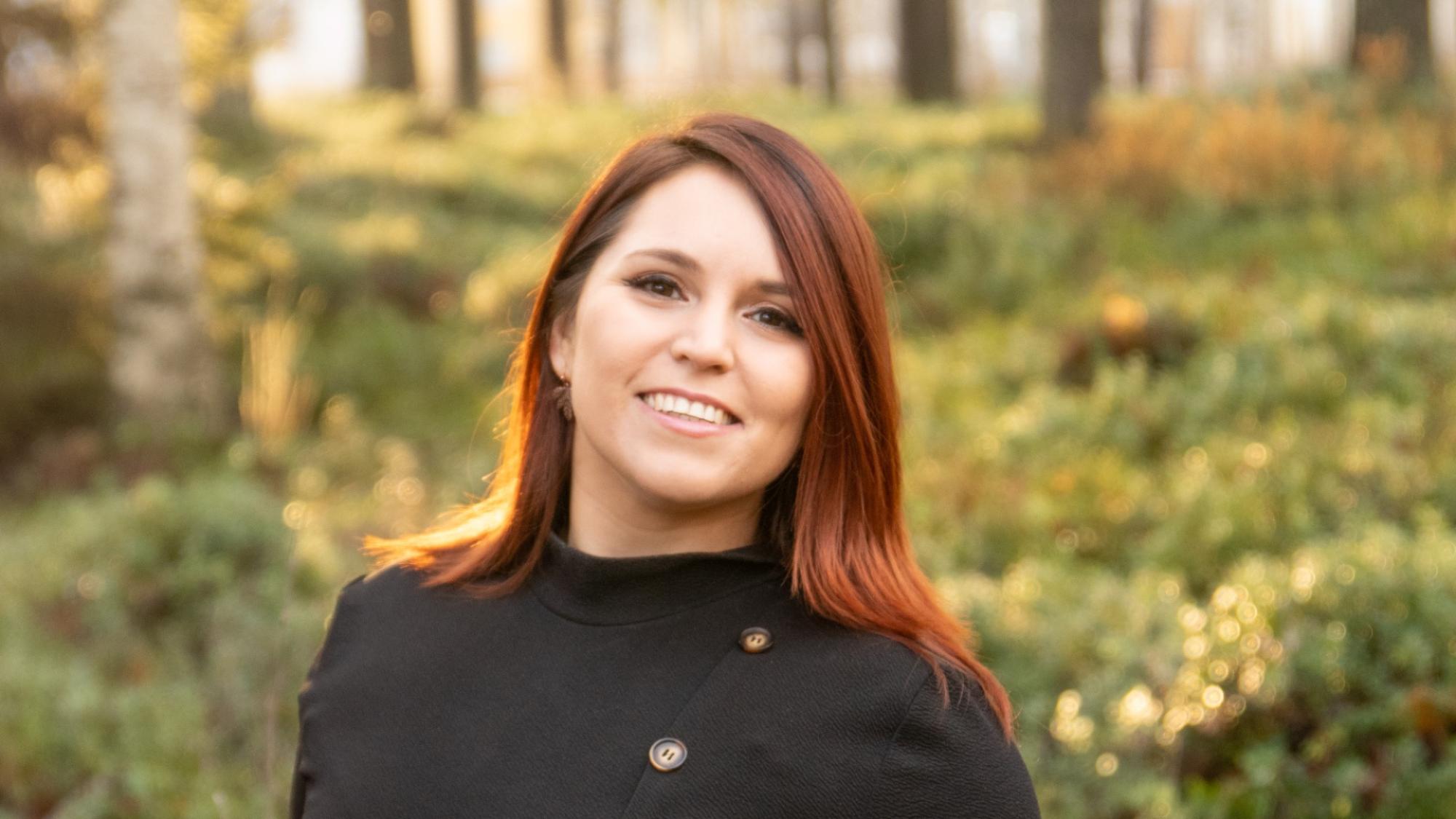
A portrait of Tamara Hoffman smiling with an autumn forest in the background

Chile stretches more than 4,300 kilometres from north to south and encompasses a remarkable diversity of landscapes and climates, ranging from the driest desert on Earth to Mediterranean valleys, temperate forests, and southern territories shaped by glaciers and sub-Antarctic ecosystems. This geographical diversity has long shaped how people inhabit and relate to their environments.

In Chile, 91% of young people reported that climate change affects their everyday lives

Chile is now facing significant socio-environmental challenges linked to climate change, including desertification, recurrent wildfires, biodiversity loss, glacial retreat, and the existence of environmental sacrifice zones. In this context, recent studies show that the climate crisis is also experienced at an emotional level. According to the 2024 National Youth Survey conducted by the National Youth Institute of Chile, 91% of young people report that climate change affects their everyday lives, while one in four reports experiencing frequent or very frequent emotional distress when thinking about climate change.

Against this backdrop, the doctoral research stay at the University of Oulu sought to deepen understanding of how individuals and communities experience and respond to these transformations, as well as the forms of resilience they develop in the face of the ongoing climate and ecological crisis. By exploring these dynamics, the research contributes to a broader understanding of the human dimensions of climate change and supports the development of more resilient responses within Chilean contexts.

The role of research for evidence-based public policy and examining the interactions between socio-ecological systems and human dynamics is highlighted

The interdisciplinary environment at FRONT programme further enriched these reflections. Dialogue with scholars from diverse disciplines, through seminars and academic exchanges, highlighted the role of research in informing evidence-based public policy and examining the interactions between socio-ecological systems and human dynamics. These discussions also encouraged reflection on geodiversity and its relationship with human societies, considering how different environments — such as deserts, coastal regions, forests, or sub-Antarctic territories — shape distinct ways of inhabiting and understanding nature.

Living in Finland also offered a different perspective on human–nature relationships. Everyday proximity to forests and lakes, together with pronounced seasonal cycles, appears to influence how people perceive and interact with their surroundings. Cultural traditions such as Juhannus, a midsummer celebration deeply connected to nature, illustrate the central role that natural environments play in Finnish social life.

Eco-anxiety particularly affects younger generations facing heightened uncertainty about the future

Within this broader context, eco-anxiety can be understood as a range of emotional responses to perceived ecological degradation, including worry, distress, sadness, anger, or fear. While often considered a reasonable response to environmental uncertainty, these emotions may become maladaptive when they intensify or persist, manifesting through sleep disturbances, recurring thoughts about environmental collapse, interpersonal tensions, and feelings of hopelessness.

Research indicates that eco-anxiety particularly affects younger generations, who face heightened uncertainty about the future and limited perceived control over environmental processes shaping their well-being. Understanding not only the manifestations of eco-anxiety but also the coping strategies people develop therefore becomes essential.

From the Arctic to the Antarctic — meaning-focused coping can strengthen psychological resources to face ecological challenges

In this regard, the work of Maria Ojala has been central to understanding psychological coping with climate change. From a resilience perspective, Ojala identifies three key strategies used by young people: emotion-focused coping, problem-focused coping, and meaning-focused coping, which enables individuals to integrate environmental concern into broader personal and collective narratives and strengthen psychological resources to face ecological challenges.

Finally, the research visit also encouraged a more cosmopolitan perspective on environmental crises. Interacting with individuals from diverse cultural contexts — including Finland, Pakistan, Bangladesh, India, China, Italy, and several African countries — highlights how societies experience and respond to a shared global challenge in different ways.

In this sense, dialogue among researchers can be seen as a symbolic bridge between two geographical extremes — from the Arctic to the Antarctic, from Finland to Chile — fostering a perspective of psychological resilience that transcends borders and connects continents.

Writer of this blog post is Tamara Hoffmann, a doctoral researcher in Psychotherapy at the University of Chile in collaboration with the Pontifical Catholic University of Chile. Her doctoral thesis project focuses on Eco-anxiety in Chilean youth.

Created 13.3.2026 | Updated 13.3.2026