
The need to make conservation more resilient - building bridges between researchers and policymakers

Throughout my career, I have conducted ecological research but also sought ways for researchers, stakeholders and policymakers to interact for the benefit of biodiversity. My organizational activities have also necessitated putting ecological ideas into broader contexts to address major societal challenges. I have been involved for a long time in the Society for Conservation Biology SCB Europe as a forum for networking with other conservation biologists and discussing ways of addressing the decline of biodiversity, writes Associate Professor Stephen Venn, from the Department of Invertebrate Zoology & Hydrobiology, Lodz University, Poland.
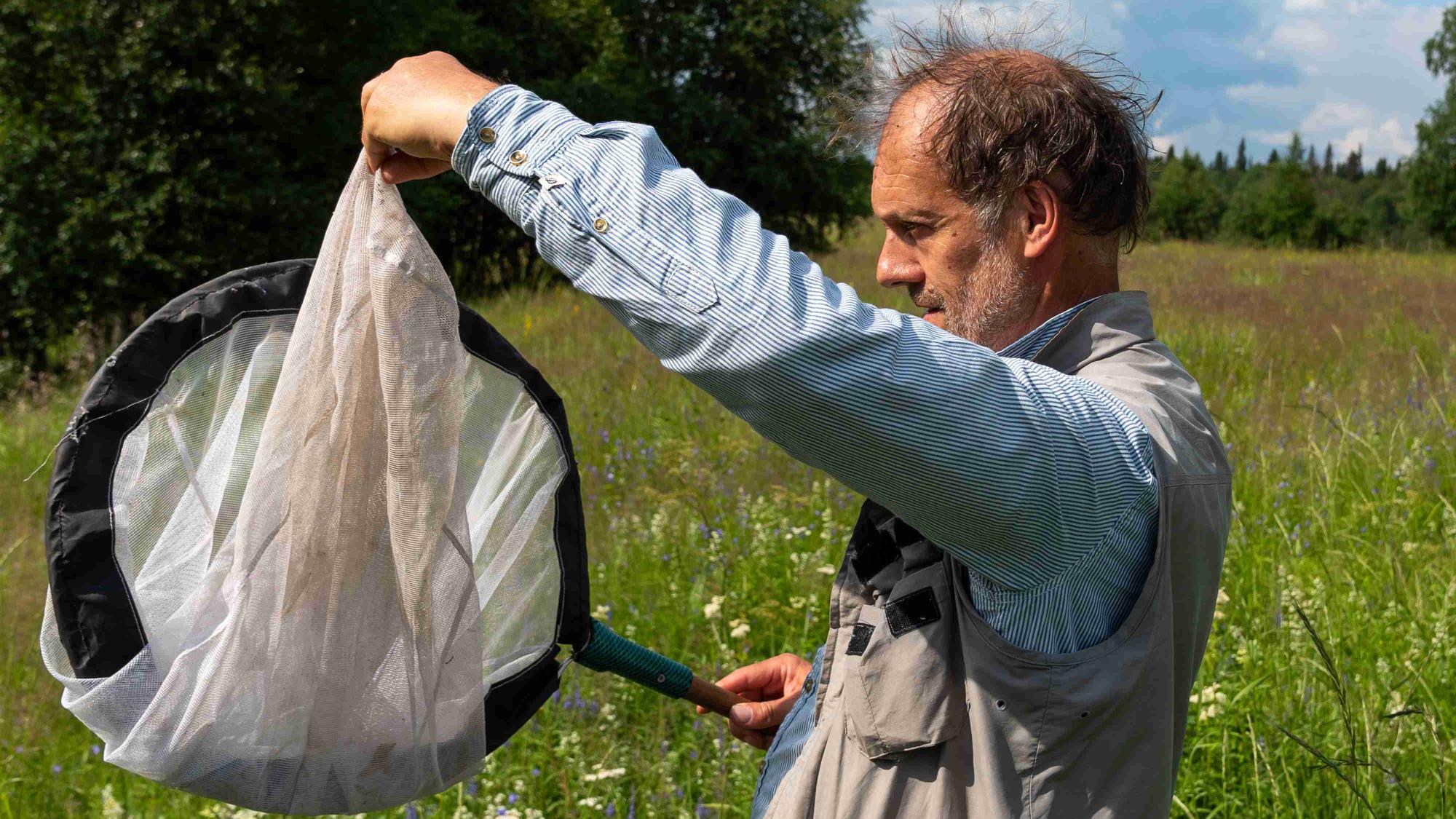
A man using a hand net in a flowery field
Author Stephen Venn sampling insects using a sweepnet on location in a riparian flood meadow in Oulanka. © Sini Salmirinne, Metsähallitus 2022

My academic background is in ecological and multidisciplinary research, teaching and communication, with a main emphasis on biodiversity and conservation. Throughout my career, I have conducted ecological research but also sought ways for researchers, stakeholders and policymakers to interact for the benefit of biodiversity.

My organizational activities have also necessitated putting ecological ideas into broader contexts to address major societal challenges. I have been involved for a long time in the Society for Conservation Biology SCB Europe as a forum for networking with other conservation biologists and discussing ways of addressing the decline of biodiversity. This year I was elected to the Governing Board and also took on the chair of the SCB Policy Committee, which brings me more opportunities and responsibility for advancing the cause of conserving biodiversity in Europe by influencing the activities of the society and communicating with regional policymakers and stakeholders.

Urban systems have also been a key focus of my research interests, which has led me to take an active role in the Urban Europe Research Alliance UERA since 2014. I joined the Steering Board in 2018, and since when I have also been joint coordinator of UERA’s Thematic Working Group on Resilience and Sustainability. Whilst both of these organizations, and my roles in them, are as different as night and day, they both involve facilitating exchange of knowledge between researchers, policymakers and stakeholders.

To bring about interaction between biological data and policymaking requires structures to transfer information and its utilization

My two-month sojourn in Oulu this autumn has given me a welcome opportunity to take time to explore the space that lies between ecologists, policymakers, stakeholders and the general public, and the concepts that have developed to facilitate interaction across that space, in collaboration with colleagues in the FRONT research programme, and to involve the University of Oulu community of researchers in that exploration. When viewed from the perspective of an ecologist, it may look like a simple gap requiring a bridge to connect the two parties. However, that space is broad and complex.

In the field of conservation biology, it has always been a major challenge to develop connections and channels between researchers, and policymakers and other actors. Many conservation researchers are focused primarily on studying organisms that are declining or endangered and may be entirely focused on biology and ecology. Biology is usually taught in biology departments of universities, and with the primary objective of generating researchers and teachers with expertise in biology. This is a valuable resource for doing effective ecological research and collecting the biological data that is essential for conservation, but it does little to advance communication beyond the field of biology and to prepare biologists to tackle the drivers of the decline in biodiversity.

To actually bring about interaction between the collection and analysis of biological data and policymaking requires structures to facilitate the transfer of information and its utilization in the policymaking process. In addition to the interpretation of biological data in the context of society, there need to be communication channels and a common language, or some kind of instrument to convert the raw biological information into something that can be used by policymakers. This exchange of information may succeed if there are biologists who have acquired the necessary interdisciplinary skills and a common language with policymakers. It can also be facilitated by policymakers with a background or training in biology. There are some people in both of these categories, and many individuals appreciate the need to develop such skills. However, both are quite rare and insufficient to ensure the efficient translation of biological data into policy, which is still recognised as a major barrier to effective conservation strategies.

Portrait of  E.O. Wilson, whose work in the 1980s was of fundamental importance for the development of the concept of biodiversity © Jim Harrison
Portrait of E.O. Wilson, whose work in the 1980s was of fundamental importance for the development of the concept of biodiversity © Jim Harrison

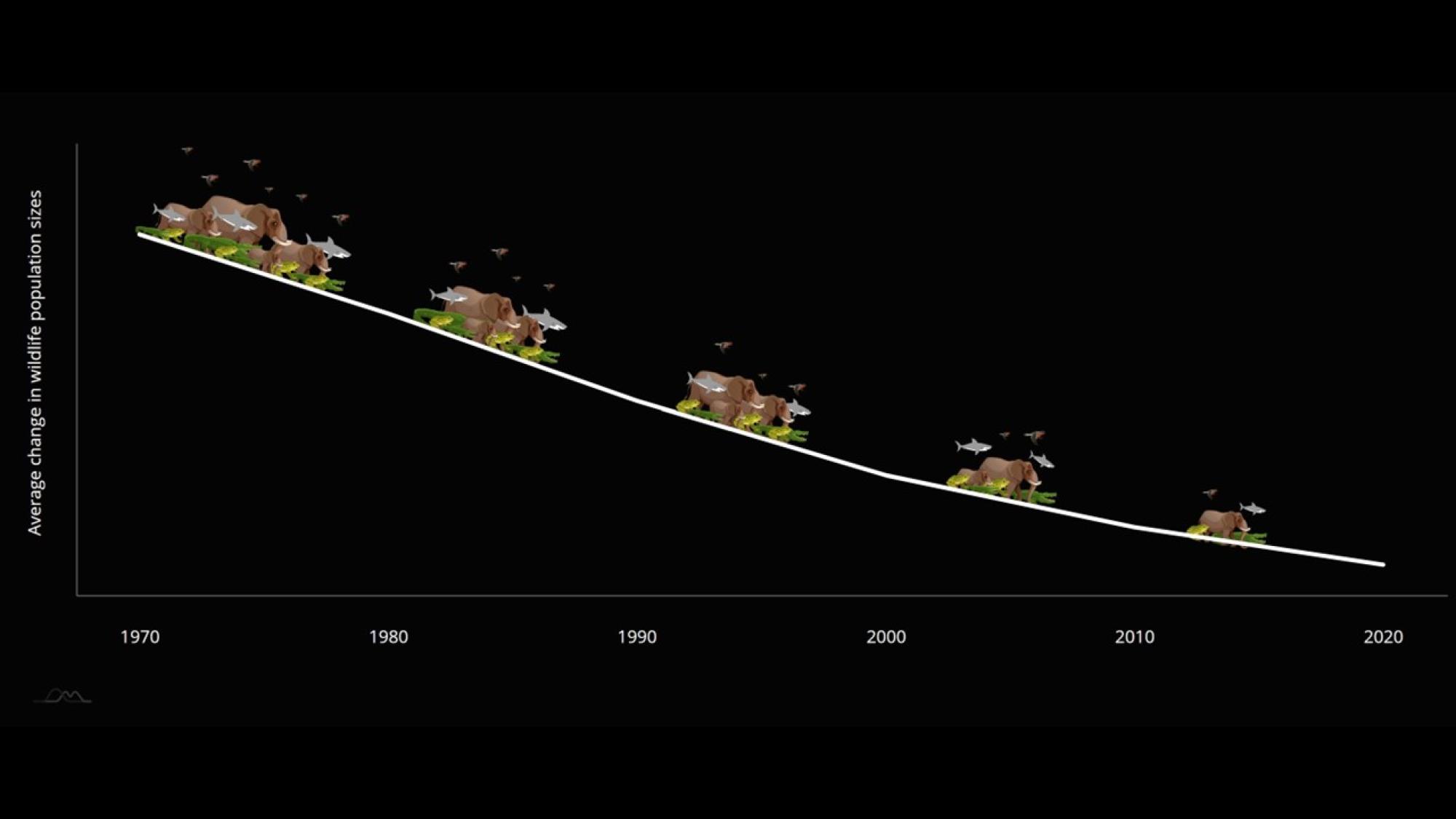
There are a number of concepts that have been developed to advance conservation, of which the foremost is the concept of biodiversity itself. The concept developed through the work of E.O. Wilson in the 1980s and focused on the need to conserve nature in all its diversity. It resonated with such global organizations as IUCN and the UN and became widely adopted into policy in Europe and beyond. As a term, it has been very successful, but whilst the idea behind it is relatively simple, it is commonly oversimplified, and whilst a considerable amount of land has been conserved as a result of such policy, there has been relatively little change in the ongoing decline in biodiversity. The WWF Living Planet Report 2024 reports a decline of 73% of monitored wildlife populations since 1970.

According to the WWF Living Planet Report 2024, monitored wildlife populations have declined by an average of 73% since 1970

The first Millennium Ecosystem Assessment brought us the concept of Ecosystem Services, which was intended to focus attention on safeguarding the provision of practical benefits we get from nature, rather than the organisms that provide them. This has resulted in a surge in measures to conserve some taxa, particularly pollinating insects, though also simplifications and generalizations that restrict the potential for having a major impact on the decline in biodiversity. Nature-based Solutions represent a more recent conceptual development intended to conserve nature for our benefit, but in my experience, the actual benefits for biodiversity are often negligible.

Ecological resilience focuses more on enhancing our capacity to withstand the impact of crises, disasters and extreme conditions, which all tend to have negative impacts on biodiversity.

My main conclusions from my reviews of these concepts are that they have all been helpful for making progress in the conservation of biodiversity, but they require rigour in their implementation. Resilience and sustainability have the benefit of being inherently general and understandable from the perspectives of different disciplines, and not dependent on an understanding of biology. However, a sound grasp of biological aspects is essential for the development and effective implementation of policy for the conservation of biodiversity. The recently published Horizon Europe Work Programme 2026-2027 includes numerous calls for transdisciplinary proposals to address declining biodiversity, and I hope that these will lead to real progress towards maintaining a resilient and healthy planet for us to inhabit.

The writer of this blog post is Associate Professor Stephen Venn, from the Department of Invertebrate Zoology & Hydrobiology, Lodz University, Poland. Venn was a visiting ROAM & FRONT scholar at the University of Oulu during the autumn 2025.

Created 13.1.2026 | Updated 13.1.2026