From research to public dialogue: why science communication matters for Arctic community resilience

Resilience has become one of the defining concepts of our time. Across the Arctic, communities are simultaneously responding to climate change, demographic shifts, geopolitical uncertainty, and rapidly growing tourism. These transformations create opportunities for regional development but also raise important questions about who benefits from change, who bears its costs, and how decisions are made. While resilience research often focuses on ecosystems or infrastructure, my doctoral research has increasingly led me to another conclusion: resilience is equally about people, governance, and public dialogue, writes Elias Rossinen, a doctoral researcher of tourism geography at the University of Oulu.
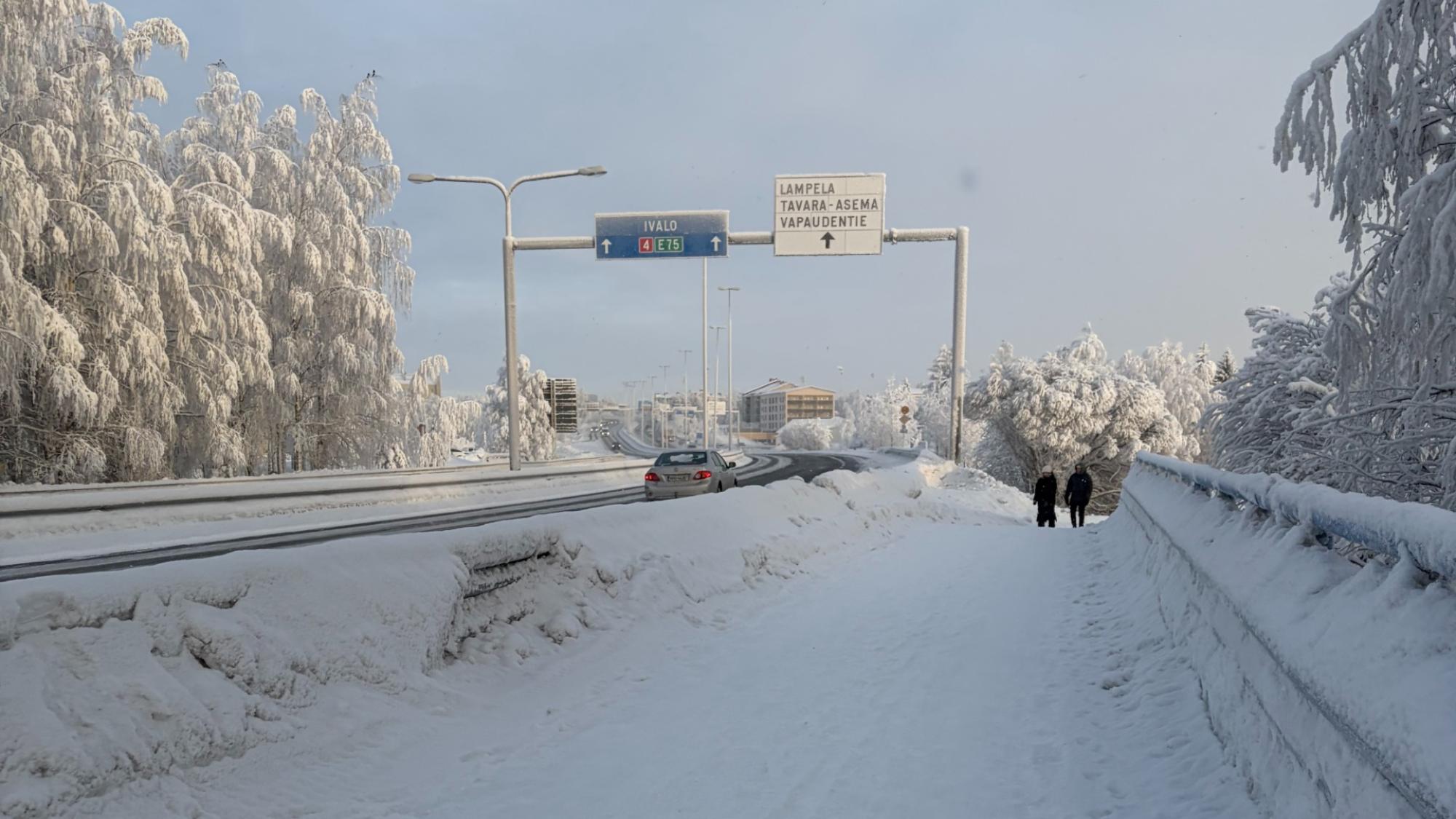
A road leading to Rovaniemi city center with some signs and very snowy landscape around

As a doctoral researcher at the University of Oulu, I study the limits to tourism growth in Northern Finland's national parks. My research explores how increasing visitor numbers influence governance, local communities, and visitor experiences. Tourism is widely recognised as an important driver of regional development in the Arctic. It creates employment, strengthens local economies, and supports services in remote regions. However, growth also creates pressures that are often less visible than environmental impacts alone. Crowding, changing land use, seasonal congestion, pressure on infrastructure, and tensions between different user groups all influence the resilience of Arctic communities.

These issues are becoming increasingly relevant. Northern Finland continues to experience record visitor numbers while climate change is reshaping both tourism demand and Arctic environments. Longer snow-free seasons, changing winter conditions, and increasing international visibility are transforming destinations that only a decade ago received far fewer visitors. These changes require not only ecological adaptation but also social and institutional resilience.

Looking beyond visitor numbers

When discussing tourism, public debate often concentrates on economic benefits or visitor statistics. My research suggests that this perspective is incomplete. Tourism growth is not simply about how many people arrive at a destination. It is also about how growth is governed, how different stakeholders experience change, and whether local communities have meaningful opportunities to participate in decisions affecting their everyday lives.

My first dissertation article examined governance within protected areas experiencing tourism growth. Rather than analysing ecological carrying capacity alone, the study focused on governance processes and legitimacy. The findings indicate that authorities often seek legitimacy by emphasising consensus, sustainability, and economic opportunities. While these goals are important, they may unintentionally reduce opportunities to openly discuss the social tensions that accompany rapid tourism growth.

This does not imply that governance institutions fail in their responsibilities. Instead, it illustrates how governance becomes increasingly complex when multiple objectives—nature conservation, regional development, recreation, local livelihoods, and international tourism—must all be balanced simultaneously. Building resilience therefore requires governance systems that remain transparent, adaptive, and responsive to changing local circumstances.

Community resilience begins with visibility

One of the strongest messages emerging from my research is that resilience depends upon whether local experiences become visible.

Residents often observe tourism-related changes long before they appear in statistics or official reports. They notice increasing traffic, changing recreational opportunities, seasonal crowding, housing pressures, or shifts in community identity. These observations represent valuable knowledge about local resilience. Yet such knowledge does not always reach decision-makers or wider public discussion.

Citizen participation is therefore not simply a democratic principle; it is also an important source of resilience. Communities that can openly discuss challenges, exchange experiences, and communicate concerns are generally better equipped to adapt to change than communities where these discussions remain fragmented or invisible.

This insight motivated me to think beyond traditional academic publishing. Scientific articles remain essential for advancing knowledge, but resilience research should also contribute to conversations taking place outside universities.

From research papers to public discussion

With support from the FRONT research programme, I wanted to explore how science communication itself can strengthen resilience.

Rather than collecting another dataset, the initiative focused on translating research findings into accessible public discussion. The objective was straightforward: bring evidence on tourism growth, governance, and community resilience into regional and national conversations where citizens, practitioners, journalists, and policymakers could engage with the findings.

During the project, my research reached broader audiences through regional media, including two news stories published by Yle. One feature focused on tourism growth and the emerging signs of overtourism in Rovaniemi, highlighting the complex balance between economic development and the wellbeing of local communities. Instead of presenting tourism growth as either entirely positive or entirely negative, the discussion reflected the nuanced perspective emerging from resilience research: sustainable futures depend upon understanding trade-offs rather than promoting simple solutions.

The experience demonstrated that regional journalism plays an essential role in resilience. Media organisations translate complex scientific evidence into accessible narratives that reach audiences far beyond academia. When citizens better understand the processes shaping tourism development, they are also better positioned to participate in discussions about the future of their communities.

Science communication therefore becomes more than dissemination. It becomes part of resilience-building itself.

Research belongs in public debate

One lesson from this initiative is that resilience research should not remain confined to academic journals. Scientific publications are essential for developing theory and informing future research, but many of the challenges facing Arctic communities require broader societal conversations. Questions about tourism growth, climate adaptation, housing, land use, infrastructure, and community wellbeing affect residents, businesses, municipalities, and policymakers alike.

This is where science communication becomes particularly valuable. It creates opportunities for research findings to reach audiences who may never read academic publications, but whose decisions and everyday experiences are directly connected to the issues being studied.

In recent years, Arctic tourism has attracted growing public attention in Finland. Discussions about record visitor numbers, overtourism, environmental change, and the future of destinations such as Rovaniemi have increasingly appeared in national and regional media. At the same time, climate change has intensified debate about how Arctic tourism should develop in the coming decades. Shorter winters, changing snow conditions, biodiversity loss, and increasing international demand require destinations to adapt in ways that are both environmentally and socially sustainable.

These discussions demonstrate why resilience research matters. Rather than asking whether tourism growth is simply "good" or "bad," resilience encourages us to ask different questions. How can communities maintain their identity while welcoming increasing numbers of visitors? How can tourism remain economically beneficial without exceeding social or environmental limits? How can governance systems remain adaptive when circumstances change rapidly?

These are not questions that researchers can answer alone.

The role of media in strengthening resilience

One of the most rewarding aspects of this initiative was collaborating with journalists. Academic researchers often speak about the importance of societal impact, yet translating research into accessible language requires skills that differ from writing scientific articles.

Regional media such as Yle play a particularly important role because they connect scientific knowledge with local experiences. Residents recognise places, challenges, and opportunities described in news stories, making research immediately relevant to everyday life.

Media coverage also creates opportunities for new conversations. After the publication of the Yle stories, the research reached audiences far beyond academia. Local residents, tourism professionals, policymakers, and fellow researchers engaged with the findings and reflected on how tourism growth is changing Northern Finland.

This illustrates an important aspect of resilience that is sometimes overlooked. Resilience depends not only on knowledge itself but also on how knowledge circulates through society. Research that remains inaccessible cannot easily contribute to better decision-making. Research that reaches public debate, however, can help communities anticipate future challenges, recognise emerging trends, and discuss possible responses before problems become crises.

Building on momentum

The initiative should therefore be viewed not as a single communication project but as the beginning of a longer dialogue.

During autumn 2026, these discussions will continue through the Arctic Tourism Discussion events organised as part of the Oulu2026 European Capital of Culture programme. These public events bring together researchers, tourism entrepreneurs, local residents, public authorities, and decision-makers to discuss one central question: what kind of tourism growth supports resilient Arctic communities?

The discussions recognise that resilience is built through interaction between different forms of knowledge. Academic research provides evidence and analytical frameworks. Local communities contribute lived experience and place-based knowledge. Tourism businesses understand changing markets and visitor behaviour. Public authorities contribute governance perspectives and practical experience of managing protected areas and destinations.

Creating spaces where these different perspectives meet may be one of the most important contributions universities can make to regional resilience.

Rather than presenting definitive answers, the events encourage constructive dialogue about difficult questions that often involve competing values and priorities. This reflects one of the central conclusions of my doctoral research: tourism governance is rarely about finding perfect solutions. Instead, it involves continuous adaptation as destinations respond to changing environmental, social, and economic conditions.

Community resilience is a shared process

Throughout my doctoral research, I have increasingly come to view community resilience as a collective learning process rather than a fixed outcome.

Communities become resilient not because they eliminate uncertainty but because they develop the capacity to understand change, communicate openly, and adapt together. This process requires trust between institutions and citizens, transparency in decision-making, and opportunities for participation.

Science has an important role within this process. Researchers produce evidence that can challenge assumptions, identify emerging trends, and broaden public understanding. Yet research achieves its greatest societal value only when it becomes part of wider conversations.

For this reason, science communication should not be regarded as the final step after research has been completed. It is an integral part of resilience-building itself.

Looking ahead

The Arctic is entering a period of profound transformation. Climate change, growing international tourism, technological development, and demographic shifts will continue to reshape northern communities over the coming decades. These changes present opportunities, but they also require careful governance and continuous dialogue.

Universities have a responsibility to contribute to these conversations. This responsibility extends beyond publishing scientific papers. It includes engaging with journalists, participating in public discussions, collaborating with communities, and ensuring that research informs societal decision-making.

Reflecting on this initiative, I believe its greatest outcome was not simply media visibility. Rather, it demonstrated how resilience research can move beyond academia and become part of public life. By translating research into accessible language, engaging with regional media, and creating opportunities for dialogue, researchers can help strengthen the adaptive capacity of Arctic communities.

Resilience is ultimately about preparing for an uncertain future. Scientific knowledge alone cannot build resilience, but it provides an essential foundation for informed decisions, inclusive governance, and constructive public debate. When researchers, citizens, policymakers, businesses, and the media learn from one another, resilience becomes more than a theoretical concept—it becomes a shared societal practice.

As tourism continues to grow across the Arctic, maintaining this dialogue will be increasingly important. Understanding both the opportunities and the limits of growth will help ensure that Arctic destinations remain not only economically successful but also socially resilient, environmentally sustainable, and places where local communities continue to thrive.

Writer of this blog post is Elias Rossinen, a doctoral researcher of tourism geography at the University of Oulu. His research Arctic community resilience on tourism growth was chosen as one of the funded projects in FRONT & RAO Citizen Science Initiatives 2026.

Created 1.9.2026 | Updated 1.9.2026