Resilience is more than just coping with unanticipated crises

Disruptions to society and technology, such as the COVID-19 pandemic, geo-political crises caused by war and internal and external infrastructure problems such as cyber-attacks. This has resulted in a growing focus on business resilience: how organization and their employees respond to adverse conditions, whether these are totally unanticipated or tensions that grow through their ongoing, day-to-day business operations, writes Professor of Marketing Judy Zolkiewski from Alliance Manchester Business School, University of Manchester.
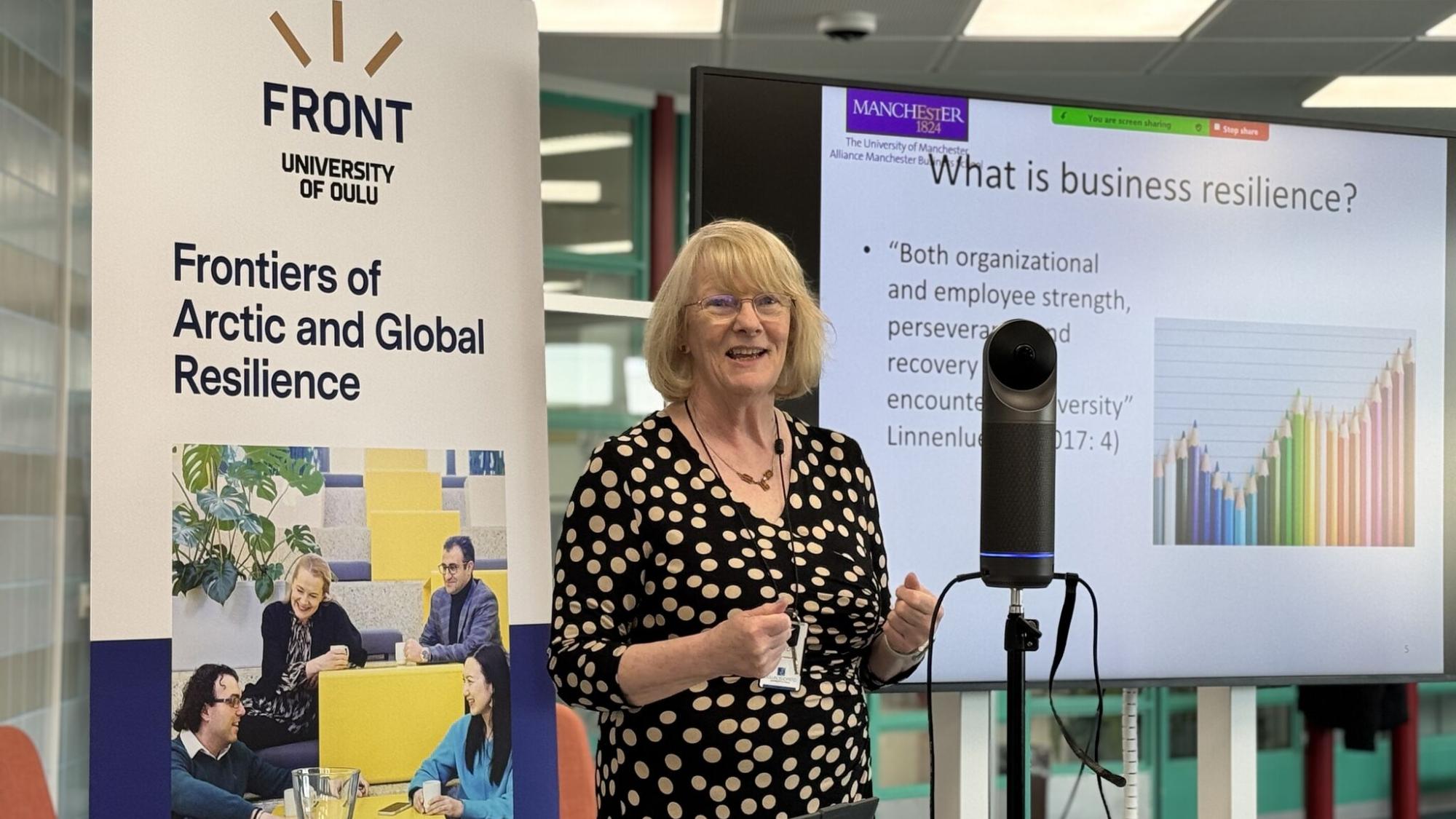
Porfessor Judy Zolkiewski giving a presentation at the University of Oulu

UK Government figures show that 4 out of 10 businesses and 3 out of 10 charities reported cyber-attacks or security breaches during 2024. Also, the electricity sub-station fire that closed Heathrow Airport in London for nearly a day during March 2025 seem to be becoming more prevalent. These are all examples of unanticipated events that challenge organizations’ day-to-day operations and result in changes to how they work and who they do business with. This has resulted in a growing focus on business resilience: how organization and their employees respond to adverse conditions, whether these are totally unanticipated or tensions that grow through their ongoing, day-to-day business operations. We see many organizations investing in crisis planning and the development of new capabilities (skills and processes) to deal with these unplanned occurrences and to improve their resilience.

Day-to-Day resilience is also important

However, our research suggests that to ensure success, all organizations need to develop resilience in their day-to-day operations as well as considering the resilience needed at times of major crisis. Organizations do not work in isolation - they are not islands - on a day-to-day basis they work with many other organizations to ensure that they can deliver products and/or services to their customers. As they work with these other organizations, be they their own suppliers, middlemen or customers, tensions, challenges and barriers to working together become evident. In learning how to overcome these difficulties, we see firms learning and developing new capabilities that allow them to be more resilient.

Our research has been specifically looking at the tensions manufacturing companies face when they move from simply supplying products to adding more services in their offerings, which includes the potential to create more sustainable offerings and reducing waste.

Day-to-Day challenges

The challenges and tensions we have identified in our research relate to all aspects of the business, for example:

  • not being able to recognize and/or react quickly enough to factors in the wider environment such as changes in regulation
  • being unable to manage new relationships with organizations who offer complementary products and services
  • the firm’s internal culture lacking adaptability
  • employees lacking the technological skills to understand new digital interfaces

The above challenges are common across many different sizes of organizations and sectors.

Capabilities to support day-to-day resilience

Our research and experiences have suggested that key to overcoming these challenges is the development of new capabilities in areas such as innovation, developing new customer serving skills, as well as gaining a deeper understanding of customer requirements and how to work with other companies to jointly meet customer requirements. We have also seen some very interesting examples of how working with university researchers has helped companies to develop these new capabilities.

Some final thoughts

Resilience is developed by ensuring that you are willing to learn new ways of tackling challenges and looking outside for insight into what you can do, towards universities or public bodies designed to support you, gives you insights that you would not get on your own.

To learn more about our research you can read the following article


The writer of this blog post is Professor of Marketing Judy Zolkiewski from Alliance Manchester Business School, University of Manchester. Professor Zolkiewski visited FRONT research programme during spring 2025 and gave a keynote speech for ResilienceTalks "Resilience in Business and Society: "Navigating Economic and Social Challenges".

Created 3.12.2025 | Updated 3.12.2025