What Oulu taught me about the curriculum and its blind spots

I arrived in Oulu in April 2025, at that moment of the Finnish spring when the ice is still on the lakes, but the light has already changed. The land holds two seasons at once and refuses to settle. It struck me, later, that this was not a bad image for what I had come to discuss: education systems caught between contradictory demands they can neither reconcile nor openly acknowledge, writes Regis Malet, Professor of Education Sciences at the University of Bordeaux.
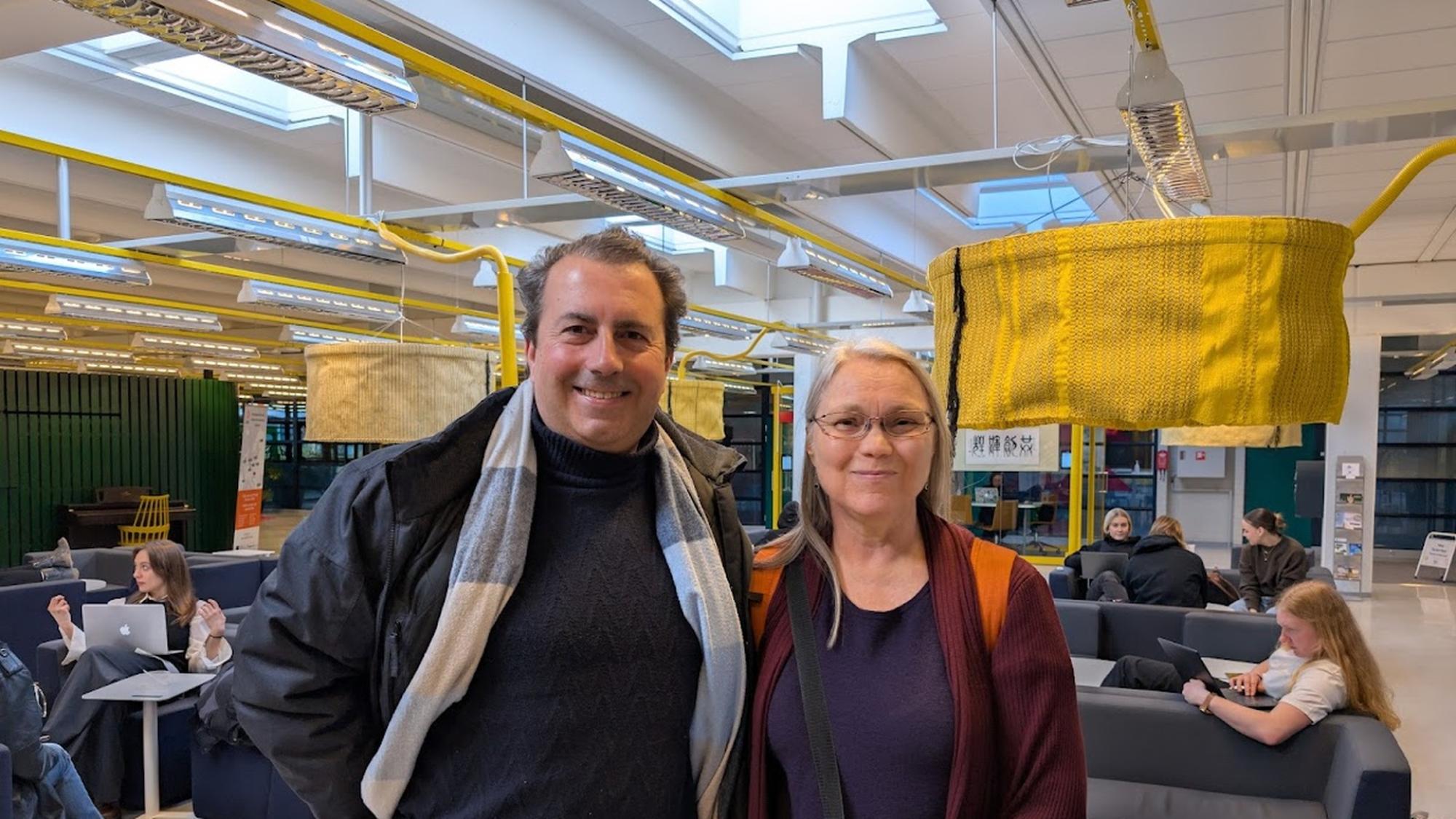
Regis Malet smiling with Elina Lehtomäki at Tellus Backstage space at the University of Oulu
Professor Regis Malet (on the left) visited University of Oulu and FRONT programme in April 2025 and the collaboration continues with Professor Elina Lehtomäki and other collegues.

The FRONT programme had invited me as a ROAM visiting researcher. The stay involved a plenary lecture on democratic citizenship and critical thinking, but also school visits, seminars, and sustained conversations with colleagues across disciplines. The question I brought with me was one I had been working on for years: how do education systems handle the tension between what they officially prescribe (critical thinking, civic agency, autonomous judgment...) and what their institutional arrangements actually make possible? What happened during that visit went beyond any single presentation. It rearranged something in the way I think about my own comparative framework.

Some context. I am a comparatist, trained between France and England, and I have spent over two decades studying how education systems construct the relationship between curriculum, teachers, and the formation of citizens. My current research operates along a Sino-European axis through a Hub on global transitions in education connecting Europe and South-East Asia, where I write these lines. Not every system frames this relationship in terms of democratic citizenship. But every system must decide what knowledge is worth transmitting, to whom, and under what conditions of autonomy or control. That decision is always political. And comparison, as I understand it following Bernstein, is the discipline that makes the politics visible: you do not see what your own system takes for granted until another system refuses to take it for granted in the same way.

Oulu forced that kind of visibility on me.

Curricular gray zones coexist with institutional arrangements – I argue that they are not residual imperfections, but governance technologies

I visited several schools during my stay, and what I observed was not the Finnish miracle as it is usually packaged for international consumption. The international narrative about Finland (high trust, teacher autonomy, no standardised testing, equity) is not false. But it is incomplete in ways that matter. What I found in Oulu classrooms was a system whose remarkable openness also generates its own form of uncertainty. Teachers enjoy genuine curricular freedom. They interpret national objectives with a latitude that would be unthinkable in the French system, where the inspectorate and the concours still function as disciplinary gatekeepers. But this freedom is not uniformly resourced. In northern Finland, at the periphery of the European educational space, the question of what knowledge is worth teaching, to whom, and with what support, carries a weight that the Helsinki-centred policy conversation does not always register.

This observation connects directly to what I have been theorising, across contrasted national cases, as curricular grey zones. The concept designates something precise: spaces where official prescriptions (think critically, develop transversal competences, exercise civic judgment) coexist with institutional arrangements that make such goals practically unrealisable. These zones are not residual imperfections awaiting correction. They are, I argue, governance technologies.

They allow education systems to absorb contradictory demands (economic competitiveness and social cohesion, national identity and global integration, standardisation and local autonomy) without having to arbitrate between them. The contradiction is not resolved. It is delegated downward, to teachers and students who must deal with it using unequal resources.

What comparative work across several systems has taught me is that this indeterminacy is never accidental, and never neutral. Each system produces its own version of it, shaped by its own political history, and each version protects different interests. Some systems use ambiguity to preserve inherited hierarchies; others build it into their foundational design as a form of local freedom.

The striking finding, tested across four national cases with robust empirical protocols, is that systems with profoundly different traditions converge towards the same functional outcome: they organise the gap between what they promise and what they deliver, and they leave teachers and students to absorb the consequences. Finland is no exception. Its celebrated autonomy is real, but it generates its own blind spots, its own territorial inequalities, and acknowledging this is not a criticism of Finland. It is a mark of respect for a system serious enough to deserve serious scrutiny.

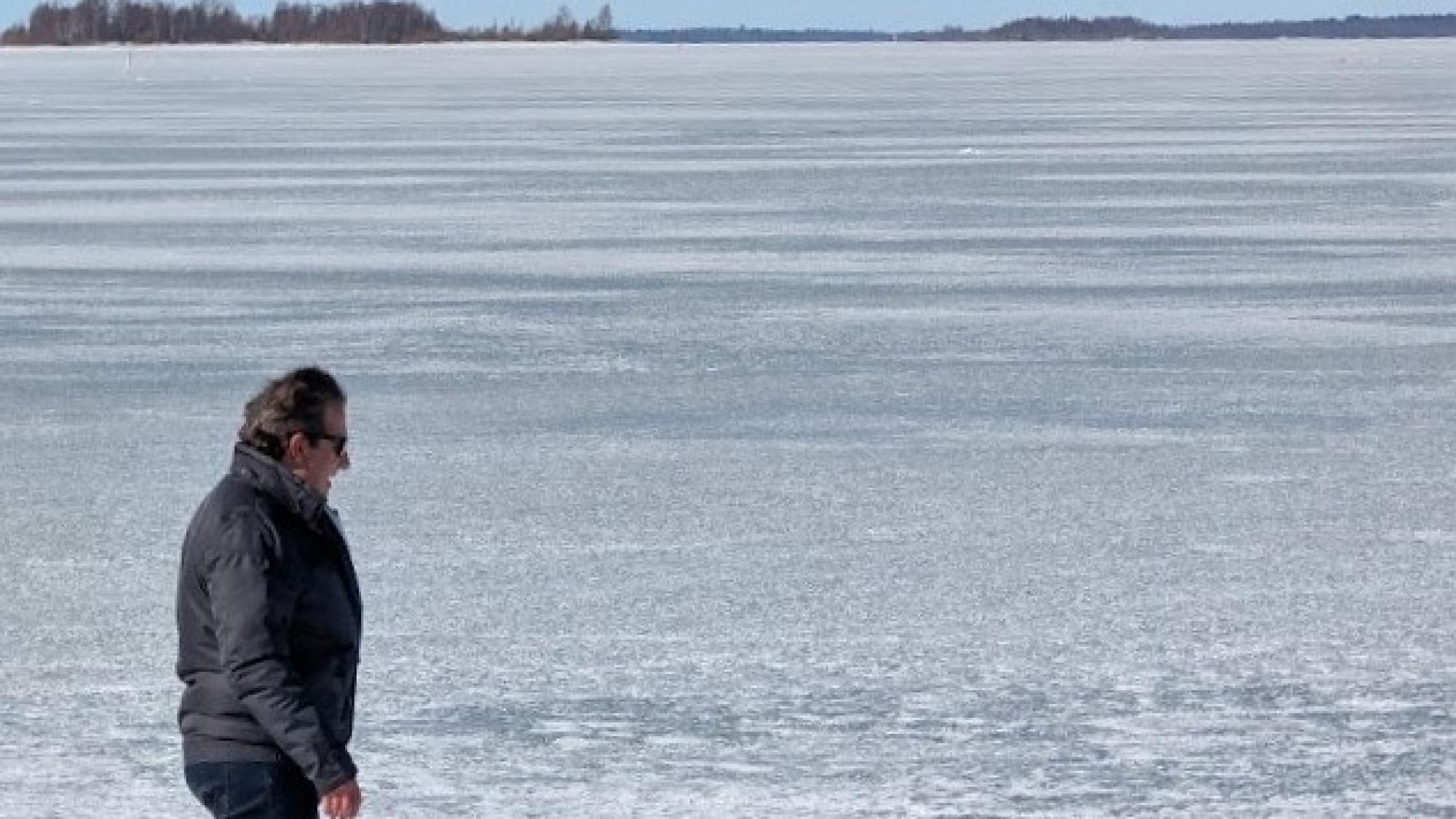
A man on the ice of a lake
Professor Regis Malet photographed in Oulu at a moment that he describes: "--that moment of the Finnish spring when the ice is still on the lakes, but the light has already changed. The land holds two seasons at once and refuses to settle. It struck me, later, that this was not a bad image for what I had come to discuss: education systems caught between contradictory demands they can neither reconcile nor openly acknowledge."

The periphery does not produce exotic questions - it makes visible the ones that the centre has the luxury of ignoring

Visiting Oulu sharpened this last point considerably. There is something about working at 65 degrees north that strips away the comfortable centrality of global central cities, whether Paris, London, Los Angeles or Beijing. The periphery does not produce exotic questions. It makes visible the ones that the centre has the luxury of ignoring. When your university sits closer to the Arctic Circle than to most European decision-making centres, the relationship between education, territory, and democratic belonging is not abstract. It is lived.

The FRONT programme’s intellectual ambition reinforced this displacement. What I found at Oulu was an interdisciplinary research environment that takes resilience seriously enough to interrogate it. Too often, in educational policy discourse, resilience functions as what Michael Young might call a “voice” discourse: it names a desirable disposition without specifying the knowledge structures required to produce it. Students should be resilient. Teachers should foster resilience. But resilience to what? Through what forms of understanding? With what epistemic resources?

These questions are rarely posed with the rigour they demand. The conversations I had at Oulu, across disciplines (ecology, social sciences, education, economics), pushed me to reconsider the limits of my own disciplinary framing. Democratic resilience cannot be understood through curriculum analysis alone. It involves the relationship between knowledge systems and the capacity of societies to govern themselves under pressure.

Pursuing resilience as a condition for democratic deliberation

I write this from Beijing, a year after my visit. The seeds planted at Oulu have grown into active collaboration. I am pursuing joint work with colleagues at the University of Oulu that extends the comparative architecture of MOSAIC, adding Finland not as a model to celebrate but as a case that reveals, through its own contradictions, what other systems cannot see about themselves.

If my visit crystallised one conviction, it is this. Resilience in education, if it is to mean anything for democratic life, cannot be reduced to an individual capacity for adaptation. That version of resilience asks people to bend without asking why they are being bent. It naturalises the structures that produce fragility. What is needed, and what the FRONT programme is well positioned to pursue, is a conception of resilience as a condition for democratic deliberation: the institutional, epistemic, and pedagogical conditions under which citizens can still argue about what schools should teach, why, and for whom. Not resilience as consensus, but resilience as the capacity to sustain productive disagreement.

Finland’s educational architecture contains real resources for this. Whether the political will exists to mobilise them, across European systems and beyond, remains an open question. My time at Oulu persuaded me that the intellectual will, at least, is present. The conversation continues.

Writer of this blog post

Régis Malet is Professor of Education Sciences at the University of Bordeaux, honorary senior member of the Institut Universitaire de France, and Visiting Professor at Capital Normal University, Beijing. He serves as President of the Association Francophone d’Éducation Comparée (AFEC) and Editor-in-Chief of Éducation Comparée. He leads th Sino-European Hub on Global Transitions in Education. His current research programme investigates curricular indeterminacy as a mode of governance across different countries in Europe, Asias and Americas.

He visited the University of Oulu in April 2025 as a ROAM guest of the FRONT research programme.

Created 14.4.2026 | Updated 14.4.2026