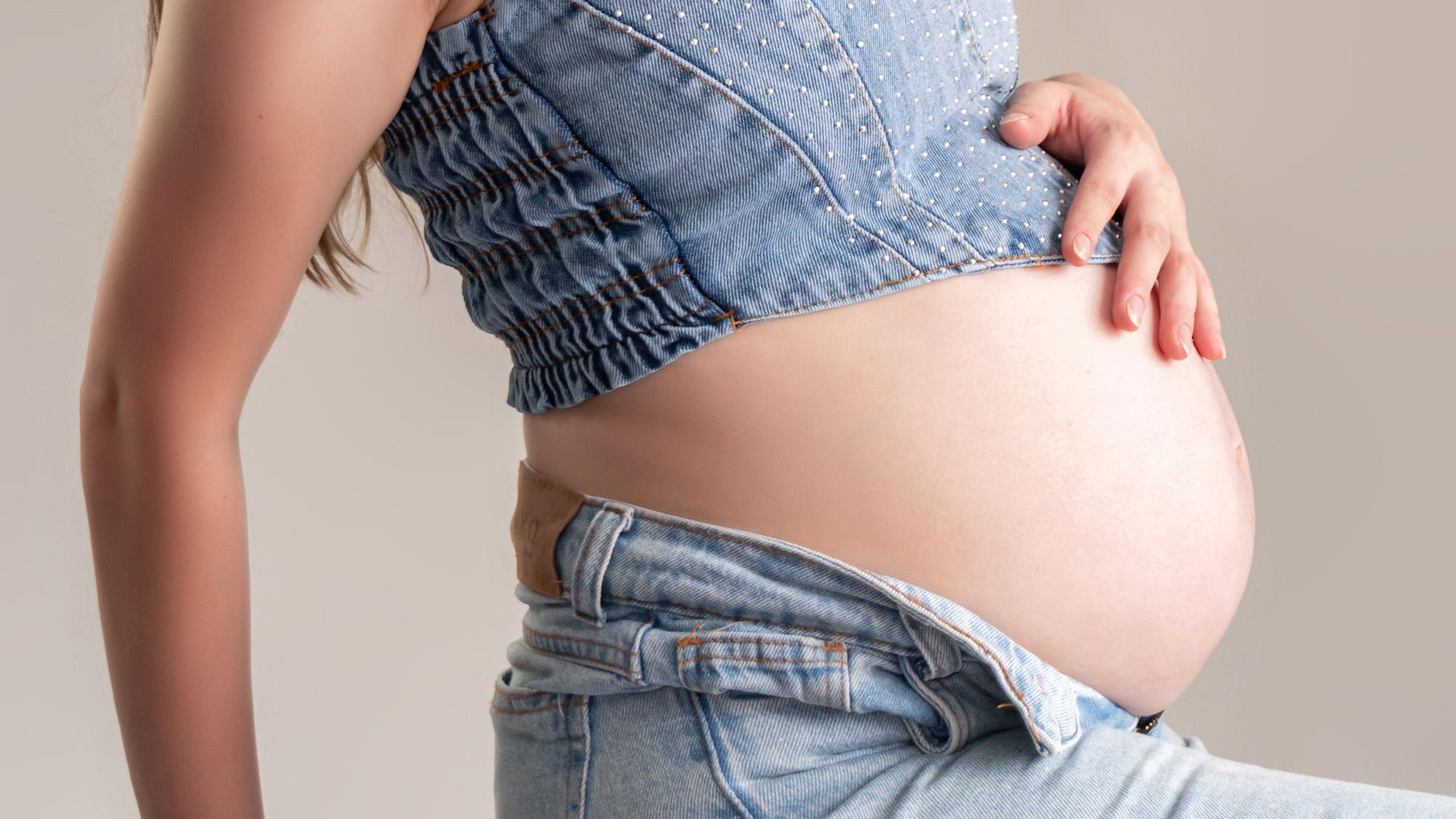
Bacterial Messages in Amniotic Fluid – What Can We Learn from Microbes’ Molecular Packages?

A mother’s microbes may be able to send messages to her developing fetus without the bacteria themselves entering the fetal environment. In our study, we found small membrane vesicles containing bacterial material in amniotic fluid from healthy pregnancies. This finding offers a new perspective on how our microbes might influence us even before birth. Understanding how microbes package and transport molecules could also open up new possibilities in medicine and materials technology.
raskausvatsa

The fetal environment has traditionally been considered sterile. Yet researchers have been divided over reports of bacterial nucleic acid signals in amniotic fluid or the placenta, for example. Other studies have found no corresponding evidence.

The bacterium does not have to be there

The debate has centred on whether these signals demonstrate the presence of bacteria or can instead be explained by contamination or residual bacterial material.

Our study, published in Microbiome in 2023, introduced another possibility: the signal may be carried by a vesicle — a small membrane-enclosed particle released by a bacterium.

Vesicles can be thought of as molecular packages. They carry proteins, RNA and other molecules, either enclosed within them or associated with their lipid membranes. Vesicles are not living bacteria and cannot reproduce independently, but they can transport microbial material and interact with the body’s cells.

We detected bacterial RNA and proteins in vesicle preparations isolated from amniotic fluid. These preparations also shared similarities with vesicles isolated from the mothers’ stool samples. In an animal model, we detected fluorescent signals in fetuses after labelled vesicle preparations had been administered into the bloodstream of pregnant mice. The experiment supported the possibility that circulating vesicles can reach the fetal environment, although it did not demonstrate the entire natural route from the maternal gut to the fetus in humans.

The central finding is this: bacterial material can be present in the fetal environment without bacterial cells being there. The study does not explain every previously reported bacterial signal or remove the need to assess contamination, but it introduces an alternative explanation that cannot be overlooked.

Could microbial messages help prepare us for birth?

Why does this matter? If a fetus encounters microbial material before birth, the significance could extend beyond substances simply moving from one place to another. Such exposure might help the developing body prepare for life after birth.

One particularly interesting question concerns immune system development. Could molecular packages from the mother’s microbes help the developing immune system prepare for encounters with microbes? Our study did not establish such an effect, but it provided a foundation for investigating the question.

If we understand this system better, we can also explore its medical potential. One long-term research question is whether influencing early immune development could help prevent allergies or asthma. This is not an available treatment or an outcome demonstrated by our published studies. It illustrates why understanding the mechanism matters.

The broader idea extends beyond pregnancy: a microbe does not have to be present in the tissue it affects. The molecular packages it releases may form part of the connection between the gut and the rest of the body.

The most abundant bacterium is not necessarily the loudest communicator

Our second study, published in mSystems in 2025, showed why simply identifying gut bacteria is not enough to understand these interactions. We compared the gut microbiota with vesicles isolated from the same samples across seven clinical datasets. The bacterial composition inferred from the vesicles differed from that of the microbiota itself. Machine learning models could distinguish between the two sample types even when trained on one dataset and applied to others.

The vesicles were therefore not simply a miniature version of the gut bacterial community. The findings are consistent with different bacterial groups contributing disproportionately to the vesicle population: the most abundant bacterium is not necessarily the most active communicator.

Metaphorically, a microbiome species list tells us who is in the room, but not whose voice can be heard. To understand how the microbiota influences health, we must also investigate the contents of its messages and their effects on recipient cells.

Why investigate this now?

The human microbiota has been studied intensively since the turn of the century. Much of this research has identified associations between microbial community composition and different diseases. An association, however, does not tell us whether microbes cause a disease, help sustain it or change as a consequence of it. We therefore need research that moves beyond identifying associations to uncovering mechanisms.

Vesicles offer one way forward. Many microbes are difficult to grow under controlled laboratory conditions. Nevertheless, the vesicles they release can be isolated from samples such as stool and studied in experimental models, even when we cannot grow all the microbes that produced them. This allows us to investigate the potential effects of a microbial community rather than merely catalogue its members.

Could microbes teach us how to deliver medicines?

The body’s barriers protect us, but they also make it difficult to deliver medicines to the right place. Even a promising drug cannot help if too little of it reaches its target.

This is why the movement of vesicles across biological barriers is also of interest in medical research. Understanding which properties enable them to cross these barriers and interact with cells could help guide the design of new delivery systems. Natural vesicles are not, however, ready-made drug carriers: their behaviour, safety and suitability for particular applications must be investigated separately.

Within the MenoBrain network, our vesicle research focuses on brain health in women during and after menopause. We aim to better understand interactions between gut microbes and the body, including the possible role of vesicles. This does not mean that vesicles have already been shown to cause memory problems. The purpose is to investigate potential mechanisms.

Why is a microbiologist working in a manufacturing technologies group?

The vesicle studies conducted during my previous appointment provide the starting point for my current work in the Future Manufacturing Technologies, or FMT, group at the University of Oulu’s Kerttu Saalasti Institute.

Studying biological phenomena requires new tools. At the same time, natural structures can provide starting points for materials development. This is where microbiology and manufacturing technology complement one another.

My earlier vesicle research, together with the research ideas I brought to the FMT group, laid the foundation for the Phantom Menace, or PhaMe, project. The project grew out of the meeting of biological questions and the group’s expertise in precision structures and manufacturing methods.

Through a collaboration between FMT and the University of Oulu’s functional neuroimaging group, PhaMe is developing artificial experimental models for brain research. These models are intended to enable the study of biological phenomena under controlled conditions. The project also aims to reduce the need for laboratory animals and create opportunities for the wider application of new technologies.

In our future research, we will also examine biological membranes from a materials science perspective. Rather than copying nature’s solutions directly, we want to understand the principles behind them. FMT’s expertise brings considerations of manufacturability, process control and reproducibility to this work.

This is a familiar question for the group in a new application context: how do material composition and the manufacturing process together determine the properties of the final product? My research broadens the group’s materials portfolio to include biological membranes and bio-inspired materials alongside metals.

How can we get oxygen-sensitive microbes to the laboratory alive?

Not all microbes tolerate the oxygen we breathe. For strictly anaerobic microbes, oxygen is toxic, so even sampling and transport can jeopardise their survival. Together with FMT, we plan to develop technology that will allow these microbes to be transported alive from the sampling site to the laboratory for cultivation and study. Our aim is to address a practical challenge: how can oxygen-free conditions be maintained reliably throughout sampling and transport, even outside the laboratory?

Anaerobic microbes inhabit environments such as oxygen-depleted microsites in soil, aquatic sediments, and oxygen-free zones in industrial process waters and wastewater. They participate in the breakdown of organic matter and the cycling of nutrients. Understanding their activities is also important for improving water treatment.

Bringing microbes into the laboratory alive allows us to investigate what they do, rather than merely identify their genetic material. This can help us assess environmental changes and the effects of ecological restoration. In agriculture, such knowledge can inform soil management: microbial processes in oxygen-depleted microsites influence carbon retention, nutrient availability and nitrogen losses. A better understanding could therefore help develop practices that support soil health and reduce environmental impacts.

What might we be unable to replace?

The same approach also extends beyond the human microbiome. Our planned LOST FUNCTION research focuses on soils in threatened habitats. Here, too, knowing the names of microbes or the genes they carry is only a starting point: the essential question is what the community actually does.

We will investigate the functions sustained by microbes and what is at risk of being lost as habitats deteriorate. This knowledge could improve our understanding of how natural systems function and support nature conservation and ecological restoration.
In northern regions, healthy, functioning ecosystems also support community livelihoods and well-being. For the Sámi, biodiversity and healthy ecosystems underpin culture and traditional livelihoods. Research into the invisible functions of soil may, in the future, bring a new perspective to this discussion. Any potential collaboration must be guided by the Sámi people’s own needs and priorities, with respect for their rights and traditional knowledge.

My research brings two complementary perspectives to the Kerttu Saalasti Institute. On the one hand, we investigate what natural structures can teach us about developing new materials and methods. On the other, we explore which functions are at risk of disappearing from nature. In the first, the aim is to learn how to build; in the second, to understand what we may not be able to replace.

Author: Justus Reunanen, Docent, University of Oulu, Kerttu Saalasti Institute, Future Manufacturing Technologies (FMT).

Photo: Pexels, Marcelo Lima

Sources:
Kaisanlahti A, Turunen J, Bytz N, Samoylenko A, Bart G, Virtanen N, Tejesvi MV, Zhyvolozhnyi A, Sarfraz S, Kumpula S, Hekkala, J, Salmi S, Will O, Korvala J, Paalanne N, Erawijantari PP, Suokas M, Penate-Medina T, Vainio S, Penate-Medina O, Lahti L, Tapiainen T*, Reunanen J*. Maternal microbiota communicates with the fetus through microbiota-derived extracellular vesicles. Microbiome. 2023;11:249. doi:10.1186/s40168-023-01694-9. *Contributed equally

Kaisanlahti A, Turunen J, Hekkala J, Mishra S, Karikka S, Amatya SB, Paalanne N, Kruger J, Portaankorva AM, Koivunen J, Jukkola A, Vihinen P, Auvinen P, Leppä S, Karihtala P, Koivukangas V, Hukkanen J, Vainio S, Samoylenko A, Bart G, Lahti L, Reunanen J*, Tejesvi MV*, Ruuska-Loewald T*. Gut microbiota-derived extracellular vesicles form a distinct entity from gut microbiota. mSystems. 2025;10(5):e00311-25. doi:10.1128/msystems.00311-25. *Contributed equally

Created 25.11.2026 | Updated 25.11.2026