Oulu Business School
OBS staff and students discuss activities in the business school. Welcome!
The paper was developed through close collaboration between the University of Oulu, Luleå University of Technology, LTU Business, and Oulu Cultural Foundation, as part of the Interreg Aurora project Arts, Culture and Creativity for Entrepreneurial Networking and Tourism (ACCENT).
The white paper identifies the activities that enable cultural and creative initiatives to thrive, as well as the barriers that limit their potential in the North. It also highlights emerging pathways for cross-border cooperation and the empowerment of local and Indigenous communities as integral to a more sustainable cultural and creative tourism ecosystem in northern Finland and Sweden. The opportunities and challenges outlined in the white paper are grounded in an academic literature review, regional mapping, and 25 expert interviews conducted in both Nordic countries. As an evidence-based document, it provides stakeholders and policymakers with practical advice and recommendations to support the design of future initiatives that strengthen cross-border collaboration and sustain the region’s creative economy.
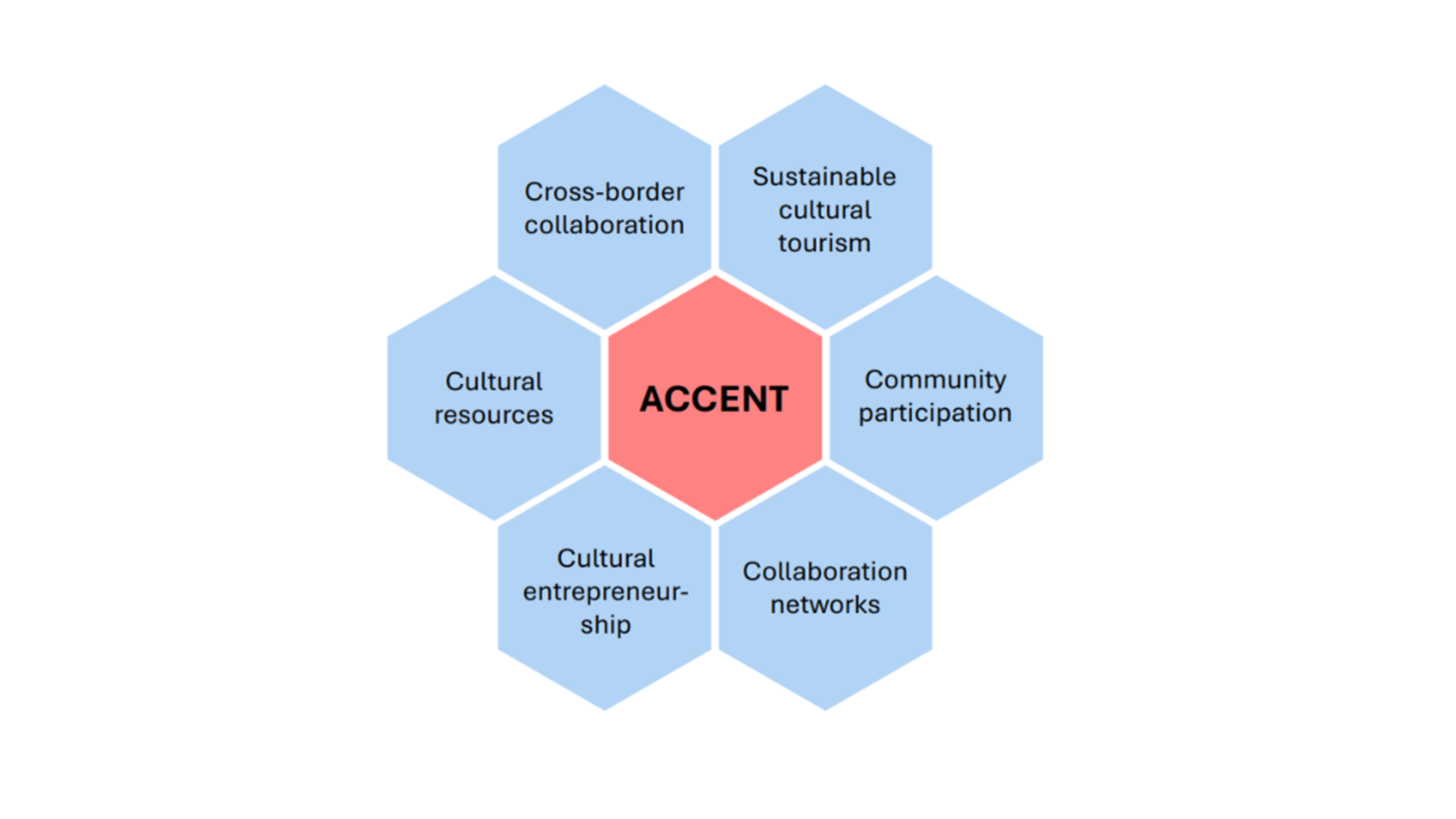
Cultural tourism is understood as a form of tourism in which visitors are motivated to learn, discover, experience, and consume tangible and intangible cultural attractions and products, while also engaging in active, experiential participation that enables the development of their creative potential. Cultural tourism comprises sustainable businesses and services that interpret and make local cultural resources accessible to visitors and local community members. It emphasizes respect for cultural resources and the strengthening of local values. From this perspective, cultural tourism in the North can be based on any field of culture or art, including events, places, destinations, or phenomena such as performances, exhibitions, fairs, tangible and intangible cultural heritage, cultural environments, landscapes, and experiences of local ways of life.

Sustainable cultural tourism in the North is constrained by frozen conditions affecting its development. As culture becomes central to tourism development, artists and communities face growing pressure to meet market expectations while preserving cultural authenticity, meaning, and ownership. Many cultural actors also lack the time, financial stability, and business skills needed to market their work, secure funding, and build durable partnerships. These capacity gaps are reinforced by fragmented collaboration between cultural and tourism sectors, where differing operational logics and policy silos limit coordination. In cross-border northern contexts, particularly between Finland and Sweden, divergent funding frameworks, administrative procedures, and institutional responsibilities further hinder cooperation and undermine the long-term sustainability of partnerships.
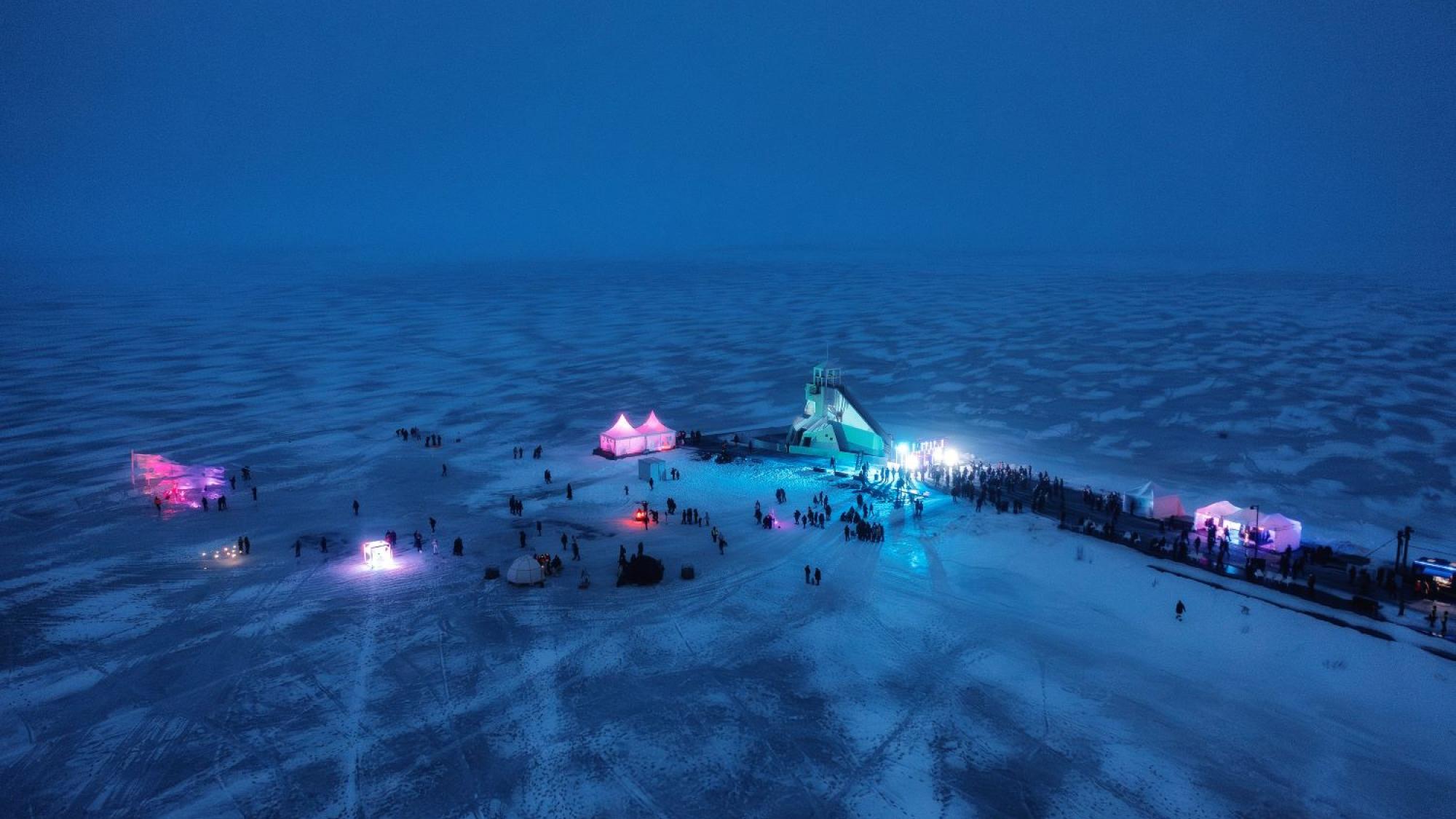
Photo: Harri Tarvainen
Despite existing constraints, the North also offers fertile ground for the development of sustainable cultural tourism. Cultural events and experiences can strengthen the visibility and image of the region, while positioning tourism as a channel for learning, regeneration, and community-based development. Northern Finland and Sweden share a long history of cross-border collaboration, which can be mobilized as a source of innovation and resilience in cultural tourism development. There is also significant potential to empower local and Indigenous communities by supporting cultural ownership, meaningful participation, and locally rooted value creation. In general, culture itself advances sustainability by fostering connections between people and place, strengthening local supply chains, and valuing continuity and care alongside innovation.
To reach this potential and for sustainable impact to take place, the white paper highlights key actions. First, there is a need to build capacity for collaboration and develop entrepreneurial, as well as cooperative knowledge among actors in these sectors. Second, collaboration needs to take place through co-creation across borders, building on the authentic, regional identities. Many cultural and creative actors are small businesses with limited resources, highlighting the need for access to training, coordinated networking and funding opportunities for small-scale projects. Third, the collaboration must take place on policy level, so that governance systems become aligned to allow cultural collaborations with different actors.
Therefore, we invite you to join this dialogue. Culture and creativity begin locally, but their impact extends far beyond. Together, we can strengthen the bridges between communities, business networks, regional councils, and national policy. The time to act is now, as all of Europe is looking north. This is our opportunity to shape the path forward – from Oulu, European Capital of Culture 2026, to Kiruna, European Capital of Culture 2029.
José-Carlos García-Rosell, Professor, Business Ethics
Department of Marketing, Management and International Business
Oulu Business School, University of Oulu
Anna Näppä, Senior Lecturer
Division: Business Administration and Industrial Engineering
Department of Social Sciences, Technology and Arts
Luleå University of Technology
Link to white paper: https://urn.fi/URN:NBN:fi:oulu-202601291425
Link to Accent project: https://www.oulu.fi/en/projects/arts-culture-and-creativity-for-entrepreneurial-networking-and-tourism
OBS staff and students discuss activities in the business school. Welcome!