Advancing quantum software for real-world use

For a long time, quantum research has been dominated by hardware: building better devices, improving coherence times and pushing the limits of physical control. These challenges remain essential. At the same time, the field is clearly changing. As quantum computers have become increasingly accessible online and on site, attention is shifting towards how these machines can actually be used.

At the University of Oulu, this shift has strongly influenced our recent work in quantum science and technology. Our research focuses increasingly on quantum computing from a practical perspective: algorithms, software engineering, cybersecurity and the modelling of quantum devices. The central question is no longer only how quantum computers work, but what they can be used for, by whom and under what conditions.

From theory to use cases

Our expertise in quantum computation spans closely connected areas. We work on quantum algorithms, error correction and mitigation, physics-aware compilation and empirical quantum software engineering. In parallel, we study concrete computational use cases, including applications in molecular systems, materials science and optimisation problems. Cybersecurity of quantum technologies, and theoretical and computational modelling of quantum devices and materials are also central parts of our work.

What unites these strands is an emphasis on usability and reliability. As quantum computing moves closer to early industrial adoption, questions of software quality, verification and security become increasingly important. These are areas where the University of Oulu’s long-standing strengths in computer science, engineering and physics naturally meet.

Building momentum through collaboration

A recent example of this approach is the Business Finland funded project Towards reliable quantum software development: Approaches and use cases (2023–2025), carried out together with the University of Jyväskylä and nine companies. The project brought together researchers from different backgrounds and produced a wide range of outcomes, from reviews of quantum algorithms to improved compiler methods and broader analyses of quantum computing prospects for Finnish industry.

Equally important were the networks that emerged. The project strengthened collaboration between research groups and helped initiate follow-up work, including new projects in quantum cybersecurity that combine computer science with the theory of quantum hardware. These kinds of connections are essential if quantum computing is to move beyond isolated demonstrations towards sustained impact.

Growing capacity and national context

Over the past few years, our quantum research teams at the University of Oulu have grown significantly. We now have several doctoral researchers focusing on different application areas and computational pipelines, and in 2024 we launched a new research team dedicated to applied quantum computing for molecules and materials. Quantum computing is also recognised as one of the university’s research focus areas.

These developments reflect broader trends in the field. While research was largely hardware-driven in the 2010s, the 2020s have seen rapid growth in quantum software, hybrid quantum–classical methods and early industry involvement. Finland is well positioned in the global quantum landscape. A strong foundation in low-temperature physics, applied sciences such as wireless communication, competitive computing infrastructures and a rapidly growing ecosystem of companies and research institutes provide clear opportunities.

The national Quantum Technology Strategy 2025–2035 emphasises effective use of quantum computers and the development of a world-leading quantum software sector. Our university’s strong tradition and expertise in multidisciplinarity allows us to contribute to these trends. In practice, by combining quantum physics, mathematics, engineering and application domains, the University of Oulu has a clear role to play in turning this vision into practice.

The value of coordination

No single university can build a quantum ecosystem alone. National initiatives such as InstituteQ are crucial for connecting researchers across disciplines, coordinating education and workforce development and providing continuity beyond individual funding periods. At the University of Oulu, we see national and international collaboration essential as quantum computing continues to evolve from a scientific frontier into a practical technology.

The blog post is based on an Q&A interview originally published on the Finnish Quantum Flagship’s news, learn more on instituteq.fi.

Created 14.4.2026 | Updated 14.4.2026

Authors

Matti Silveri
Associate Professor
Nano and Molecular Systems Research Unit
University of Oulu

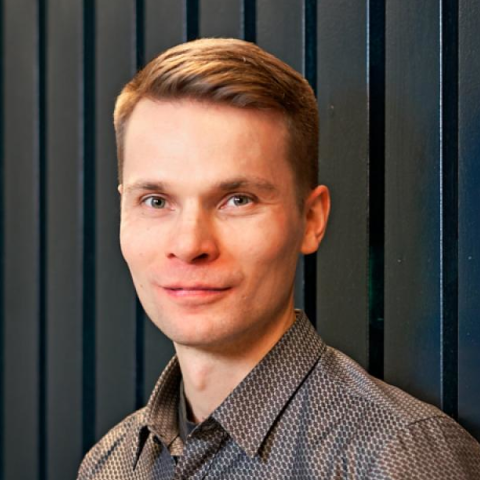
Associate professor Matti Silveri's research focuses on superconducting quantum devices, quantum computing and practical programming of quantum computers.