Orange hydrogen in a green hydrogen world: Reflections from H2Science 2026 conference in Trondheim

In my PhD research, I study hydrogen production using reactive rocks and mineral materials under laboratory conditions. H2Science 2026 conference showed me that although this is still an emerging research direction in the hydrogen field, there is growing curiosity about alternative hydrogen production pathways.
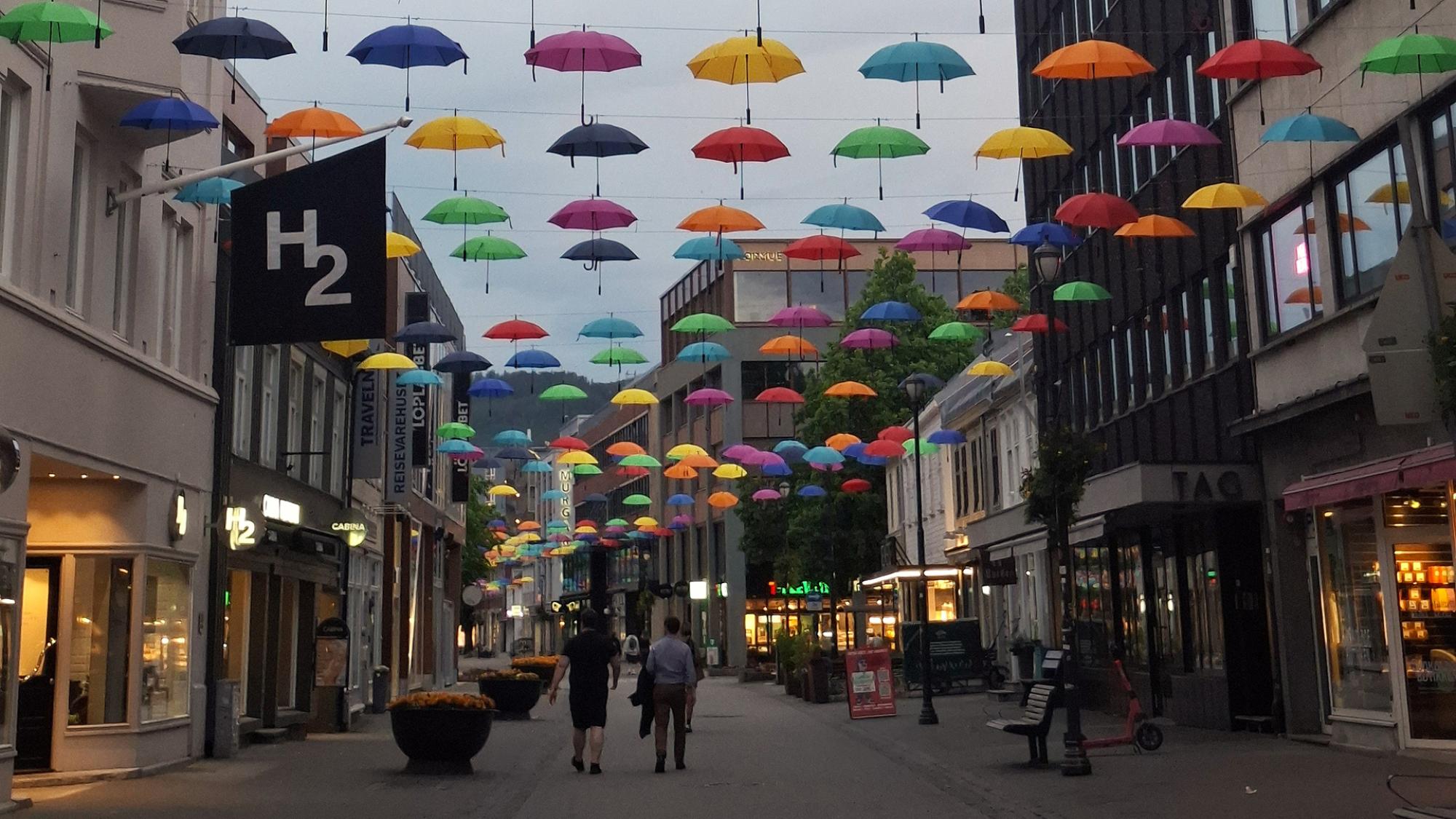
a pedestrian street lined with colourful umbrellas
The Trondheim streetscape unexpectedly echoed the colours used to describe hydrogen production pathways. Beneath colourful umbrellas overhead was a H2 shop sign.

My journey to H2Science 2026 in Trondheim started long before the conference itself. Travelling from Oulu to Trondheim was not as straightforward as it may sound. One possible route included several stops: Oulu, Helsinki, Stockholm, Bergen, and finally Trondheim. When I realised that I would have a stop in Bergen, I decided to choose a longer layover and use the opportunity to see another Norwegian city on the way.

It turned out to be a wonderful decision. Bergen, with its coastal atmosphere, colourful cityscape, and lively fish market, offered a memorable first impression of Norway. After a long travel day that started early in the morning in Oulu and ended in Trondheim in the evening, I arrived tired but excited for the conference ahead.

The next morning, the conference began at NTNU in Trondheim. The venue, surrounded by green hills and the university environment, created an inspiring atmosphere for scientific exchange. H2Science 2026 was organised together with EPHyC, which made the event even more valuable for doctoral researchers working in different areas of hydrogen research.

One thing that stood out to me was Norway’s strong engagement in hydrogen and future energy research. Norway is well known for its oil and gas sector, but this has not prevented the country from actively exploring new energy solutions. During the conference, I had the chance to speak with researchers and industry representatives, including people connected to major Norwegian companies such as Yara International and Equinor. These conversations showed me how actively large industries are exploring hydrogen production, electrolysis, ammonia, and related technologies as part of the future energy landscape.

Bringing orange hydrogen into the discussion

Many of the presentations in the hydrogen production sessions focused on green hydrogen, electrolysis, ammonia, catalysts, membranes, and industrial-scale hydrogen technologies. This made my own presentation feel quite different. My talk, titled “Ex-situ Production of Orange Hydrogen Using Fayalite Slag as a Mineral Side Stream,” introduced a less conventional hydrogen production pathway based on iron-rich mineral materials.

My research is connected to the broader field of natural hydrogen, but it does not focus on simply extracting naturally occurring hydrogen from underground reservoirs. Natural hydrogen, sometimes called white or geological hydrogen, has attracted increasing scientific and industrial interest after discoveries such as the hydrogen accumulation in Mali, which brought attention to the possibility that hydrogen can be generated and accumulated naturally in geological environments.

In my PhD research, I study a related but different concept: orange hydrogen. Orange hydrogen can be understood as an enhanced or stimulated pathway inspired by natural hydrogen formation processes. Instead of waiting for hydrogen to form naturally underground, we investigate whether hydrogen can be produced under controlled hydrothermal conditions using reactive rocks or mineral materials in the laboratory.

An important aspect of my work is that I am not only studying natural rocks. I am also exploring the possibility of using mineral side streams, such as fayalite slag, as feedstock for hydrogen production. Fayalite slag is an iron-rich industrial side stream, and in Finland alone, its production is around 0.6 million tonnes per year. Since this material is often landfilled, using it for hydrogen production could connect clean energy research with circular economy and waste valorisation.

For me, one of the most valuable moments of the conference was realising how new this topic still is for many researchers. After my presentation, the session chair, Prof. Vidar Jensen from the University of Bergen, asked questions and mentioned that the topic was very interesting and new to him. This was an encouraging moment. It showed me that although orange hydrogen is still an emerging research direction, it can attract curiosity from scientists working in more established areas of hydrogen production.

This experience helped me see my project from a broader perspective. Being surrounded by international researchers, listening to different approaches, and discussing my work with people from academia and industry gave me new motivation and ideas for developing the project further. Conferences are not only about presenting results; they are also about understanding where your research fits in the bigger scientific landscape.

H2Science 2026 showed me that while green hydrogen and electrolysis are currently major topics in the hydrogen field, there is also room for alternative and emerging pathways. Orange hydrogen from mineral side streams is still a young concept, but it has the potential to bring together geology, process engineering, circular economy, and clean energy.

I am grateful to the University of Oulu Graduate School for supporting this trip through the UniOGS travel grant. This support gave me the opportunity to present my research internationally, receive valuable feedback, and build connections within the hydrogen research community.

I also sincerely thank my supervisors, Associate Professor Tero Luukkonen and Associate Professor Juho Yliniemi, for their continuous guidance and support throughout this research. I appreciate the practical help and encouragement from my colleagues in the laboratory, especially Jarno Karvonen, whose support has been valuable during the experimental development of this project.

Created 15.6.2026 | Updated 15.6.2026

Authors

Somayeh Karandish Marvasti
Doctoral researcher
Fibre and Particle Engineering
University of Oulu

Somayeh Karandish Marvasti is a PhD researcher in the Fibre and Particle Engineering Research Unit at the University of Oulu, with a background in chemistry. She focuses on hydrogen production through water–rock interactions and sustainable mineral use, combining chemical expertise with engineering approaches to explore natural and industrial pathways for clean energy.