Nature and Wars Seminar 2: The impact of military actions on flora, fauna and funga
Event information
Time
Fri 10.04.2026 12:15 - 14:00
Venue location
Online
Location
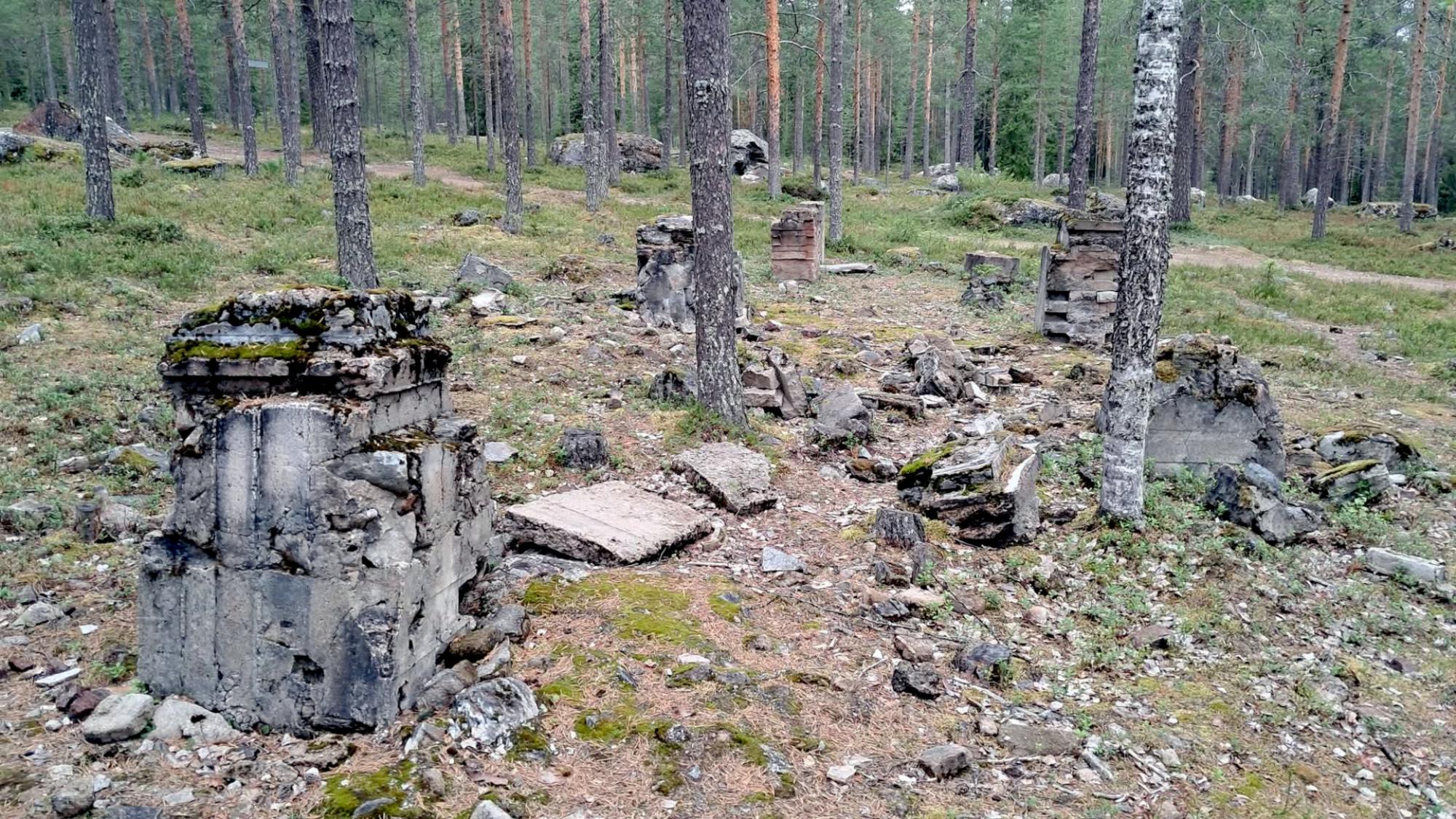
"The Fungal Lives of Ruins - Exploring German World War II remains with citizen science mycologists"
Anatolijs Venovcevs (Svalbard Museum, Longyearbyen, Norway)
Abstract: Conflicts not only have impacts on the plant and animal biodiversity, but they also have the power to radically transform the soil conditions along the lines of conflict and far to the rear. Both with imported materials such as gravel and concrete and imported plants and animals, the texture and chemical composition of soils changes. This in turn transforms the subsurface ecologies on which all life depends. The alteration of subsurface ecologies due to conflict is especially visible in fungi who are especially keen to respond to and “remember” the past. This lecture will present some of the preliminary results from two years of research on fungi that grow in German World War II ruins in northeastern Norway and Finland. This work was a collaborative, interdisciplinary project between archaeologists, mycologists, and citizen scientists to identify the fungal heritage ecologies of the conflict – one that is still living under our feet.
Anatolijs Venovcevs is the researcher in historical archaeology at the Svalbard Museum in Longyearbyen, Norway – the northernmost town in the world. Before this position, he held a postdoctoral researcher position at the University of Oulu looking at fungal ecologies that grow in World War II ruins and how mushrooms “remember” the past. He received his PhD from UiT: The Arctic University of Norway in Tromsø. His interests include mushrooms, archaeology of modern and early modern periods, fermentation, and long walks through beautiful landscapes devastated by the Anthropocene.
“Synanthropization of vegetation cover of Ukraine as a result of military actions”
Oksana Kucher (M.G. Kholodny Institute of Botany of the NAS of Ukraine, Kyiv, Ukraine)
Abstract: During 2023–2025, monitoring studies were conducted on the restoration of vegetation cover in forests of northern Ukraine, focusing on craters caused by shell explosions and areas disturbed by field fortifications. The recovery of vegetation was found to depend on habitat type, as well as the type, degree, and scale of disturbance, and the initial condition of the affected biotopes. Initial restoration primarily occurs through the dispersal of diaspores from nearby species, including both native (aboriginal) and alien taxa. In total, 121 synanthropic species were recorded, of which 65 were apophytes and 56 were alien species. The most common alien species in the studied areas were Erechtites hieraciifolius, Padus serotina, Erigeron canadensis, E. annuus, Robinia pseudoacacia, Acer negundo, and Ambrosia artemisiifolia. The transformation of plant cover in natural ecosystems creates conditions that facilitate the further spread of alien species adapted to altered environmental conditions.
Oksana Kucher is a researcher at the Department of Geobotany and Ecology of the M.G. Kholodny Institute of Botany, National Academy of Sciences of Ukraine. Her research focuses on synanthropic floristics, the role of invasive species across different habitat types, and the impacts of biological invasions on biodiversity. Her broader interests include invasion ecology and plant ecology. In recent years, in response to large-scale military actions in Ukraine, her work has increasingly concentrated on the effects of war-related disturbances on biodiversity and vegetation dynamics.
"Ukrainian Nature Conservation Group", Kyiv, Ukraine) “Animals Under Fire: The Direct and Hidden Consequences of War”
Oleksii Vasyliuk (I.I. Schmalhausen Institute of Zoology of the National Academy of Sciences of Ukraine and NGO
Abstract: The presentation analyzes the direct and indirect impacts of large-scale military actions on wildlife in Ukraine based on remote sensing data and pre-war faunistic monitoring materials, as well as population status assessments. It examines the direct consequences of hostilities, including the mortality of various animal groups caused by shelling, explosions, fires, destruction of nesting and breeding sites, flooding events, contamination of water bodies, and underwater acoustic disturbances, which are particularly critical for marine mammals. Special attention is given to indirect and long-term effects, such as habitat fragmentation due to fortifications, minefields, and defense lines; disruption of migration routes; isolation of local populations; changes in behavioral patterns and reproductive success; and increased poaching and uncontrolled use of natural resources in regions with weakened governance. The presentation also addresses the risk of complete extinction of certain local and endemic animal species as a result of the destruction of their only or key habitats within combat zones, creating the threat of irreversible biodiversity loss at the national level. A separate focus is placed on long-term transformations in the spatial structure of populations and species ranges, which under wartime pressure are likely to reshape patterns of distribution and ultimately form a new map of Ukraine’s natural diversity. The talk synthesizes available evidence demonstrating that war leads not only to immediate losses of individual animals but also to systemic destabilization of population processes, with long-term consequences for the structure and viability of wildlife populations, requiring scientifically grounded recovery strategies in the post-war period.
Oleksii Vasyliuk is a Ukrainian environmentalist specializing in protected areas and biodiversity conservation. He graduated from Taras Shevchenko University of Kyiv with a degree in zoology. Since 2004, he has worked within the Animal Monitoring and Conservation Program at the I.I. Schmalhausen Institute of Zoology of the National Academy of Sciences of Ukraine. He actively participates in the work of several professional environmental organizations, including the National Ecological Center of Ukraine and Environment–People–Law. Since 2014, Oleksii has led the Ukrainian Nature Conservation Group, an association of expert biologists working on conservation policy, protected area development, and biodiversity monitoring. In 2022, he became one of the co-founders of the Ukraine War Environmental Consequences Work Group (UWEC), an international initiative documenting and analyzing the environmental impacts of Russia’s full-scale invasion of Ukraine. He has also co-authored 20 articles and four books addressing the environmental consequences of Russia’s invasion of eastern Ukraine and the annexation of Crimea in 2014. Oleksii has initiated the establishment of more than 60 new protected areas in Ukraine. He also serves as an assistant to Members of the Verkhovna Rada of Ukraine, advocating for nature conservation policy. His professional interests include biodiversity monitoring, protected area governance, and the history of environmental conservation.
Register here »
You will receive a participation link after the registration.