Big green investments do not automatically benefit the region – a new Nordic report shows how local companies can get a share
The report, written by Doctoral Researcher Abolfazl Moradian and Research Director Teresa Haukkala, examines how large green investments can create local entrepreneurship and keep more of the economic value in the host region. Norway and Denmark are the main comparison countries, with Sweden as a further example.
Subsidies alone do not bring local work
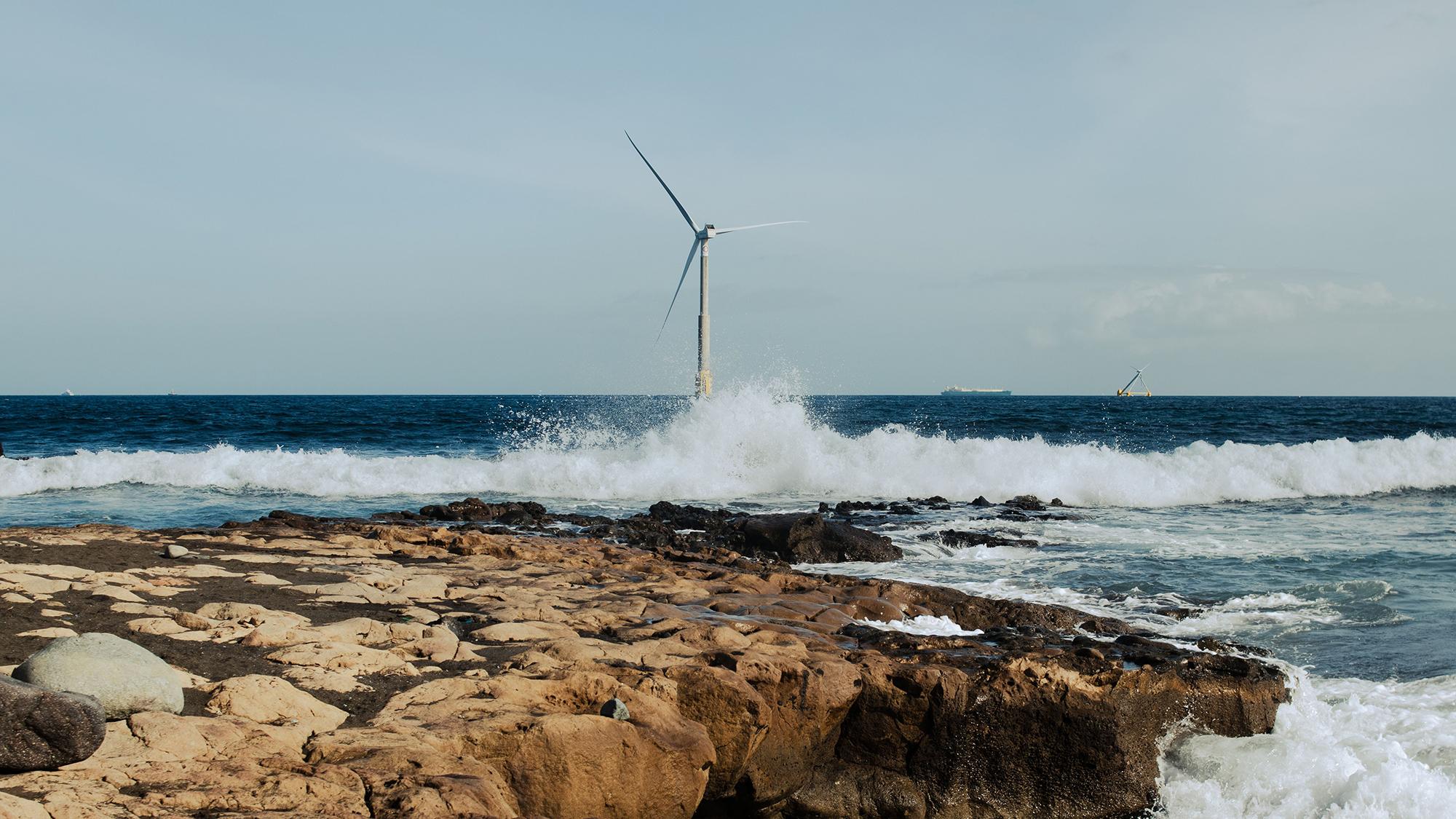
Even generous public support does not guarantee that local companies get a place in a project. Hywind Scotland, a floating wind farm developed by Norway’s Equinor, received substantial subsidies from the Scottish government, yet local small companies played only a limited role. Floating turbines can be built elsewhere and simply towed to the site, so the local supply chain was largely bypassed. The turbines arrived by sea, and much of the work never did.
“Local small companies often have the technical skills these projects need. What they are missing is a track record, the certificates that big developers demand, and the capacity to handle the paperwork of international tenders. Without support, that is a lot to take on”, says Moradian.
Nordic experience points to how small companies can climb step by step
In Denmark, the cluster organisation Energy Cluster Denmark takes on much of the project management, funding applications and regulatory work that would otherwise overwhelm a small firm. Norwegian clusters connect companies to knowledge and resources they could not reach alone, and Norway has used the skills of its oil and gas industry in offshore wind. In Sweden, municipally owned energy companies have given local firms a reliable platform and early pilot opportunities.
Drawing on these experiences, the report proposes a three-stage roadmap for small and medium-sized companies. First, they build capacity by earning certificates and gaining experience through small pilots. Next, they grow within a supportive regional network. Finally, they become real partners of the global companies leading the projects.
“Nobody jumps straight into a mega-project. The region can make every step shorter”, says Teresa Haukkala, Research Director and leader of the ARVO project.
Local communities need to see a fair share of the benefits
Denmark also shows what happens when local people feel left out. When ownership moved from local cooperatives to large companies, opposition grew from a feeling of unfairness, not simply from “not in my backyard” thinking, the research reviewed in the report shows.
“Acceptance is not really about the turbines. It is about whether people see that something stays in the region: jobs, contracts for local companies and a fair share of the benefits. And benefit sharing only works if it feels fair”, says Haukkala.
Northern Ostrobothnia can start preparing now
The report recommends that municipalities strongly encourage local co-ownership in new wind and hydrogen projects, and that regional authorities use green public procurement to give local innovations their first customers. Local utilities can act as testing grounds for small companies. Educational institutions and policymakers can identify the skills that wind and hydrogen projects will need and start training the local workforce now, so that developers can hire locally. With the EU-recognised BotH₂nia Hydrogen Valley in the region, these questions are not far off.
The report is a review of more than 60 academic and policy sources, and it is the first step of the work. The ARVO project will next examine the findings further through benchmarking and expert interviews in Denmark and Norway. The researchers also plan to explore whether small firms in the same area could combine their capacity to serve a large project together.
Explore the report: Abolfazl Moradian and Teresa Haukkala: Local Growth Entrepreneurship Generated by Global Value Chains: A Comparative Nordic Analysis of Mechanisms for Regional Value Capture in the Green Transition. Publications of University of Oulu Kerttu Saalasti Institute 8/2026.
Photo: Pexels, Annelies Brouw
The Added Value from Sustainable Energy Business (ARVO) project is co-funded by the European Union. The project also receives funding from STEK ry. The lead partner is the Kerttu Saalasti Institute at the University of Oulu, and the other project partners are the City of Oulu, Raahe Region Development, the Haapavesi-Siikalatva Subregion Development Centre, the City of Haapajärvi, the City of Nivala, and the Municipality of Vaala.