Docentship seminar explored perspectives on sustainable logistics and supply chain management
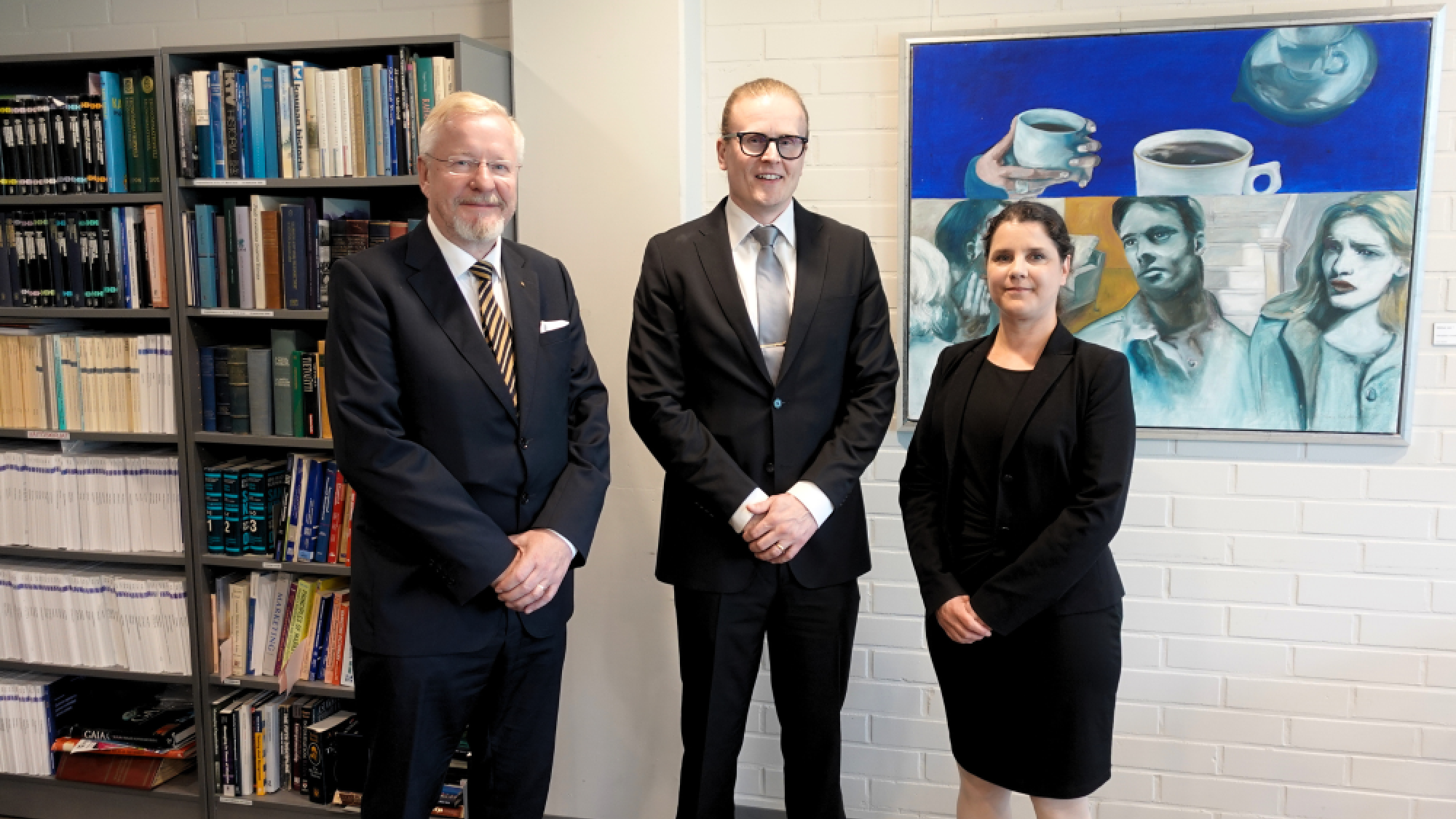
Two speakers joined Dr Timo Pohjosenperä in the seminar: Erkko Professor in Humanitarian Logistics, Dean of Research Gyöngyi Kovacs from the Hanken School of Economics, and Professor of Operations and Supply Chain Management Lauri Ojala from the Turku School of Economics.
Pohjosenperä opened the seminar with a lecture introducing the theme, with a particular focus on global supply chains and their environmental and social impacts. In his lecture, he discussed different sustainability practices and explored how companies have approached sustainability. The papers he discussed in his presentation offered different perspectives on how sustainability becomes organised through people, services and technologies.
Professor Gyöngyi Kovacs’ lecture focused on humanitarian logistics. It introduced the WORM (Waste in Humanitarian Operations: Reduction and Minimization) project, a Horizon Europe initiative aiming to reduce the environmental impact of humanitarian operations. The project focuses particularly on field hospitals and livelihood programmes, with field hospitals facing waste from medical materials, food and plastics during epidemics, natural disasters and conflicts.
Professor Lauri Ojala’s lecture examined how regulation, standards and markets jointly shape sustainable logistics and supply chain management. Sustainable logistics is increasingly seen as a core business capability rather than a separate activity, and it extends beyond purely environmental concerns. Overall, sustainable supply chain management involves managing the interface between regulation, markets and physical logistics networks, with the strategic challenge being not only to comply with evolving requirements but also to remain competitive.