Extended reality revolutionises nursing studies – virtual scenarios reduce stress and enhance learning
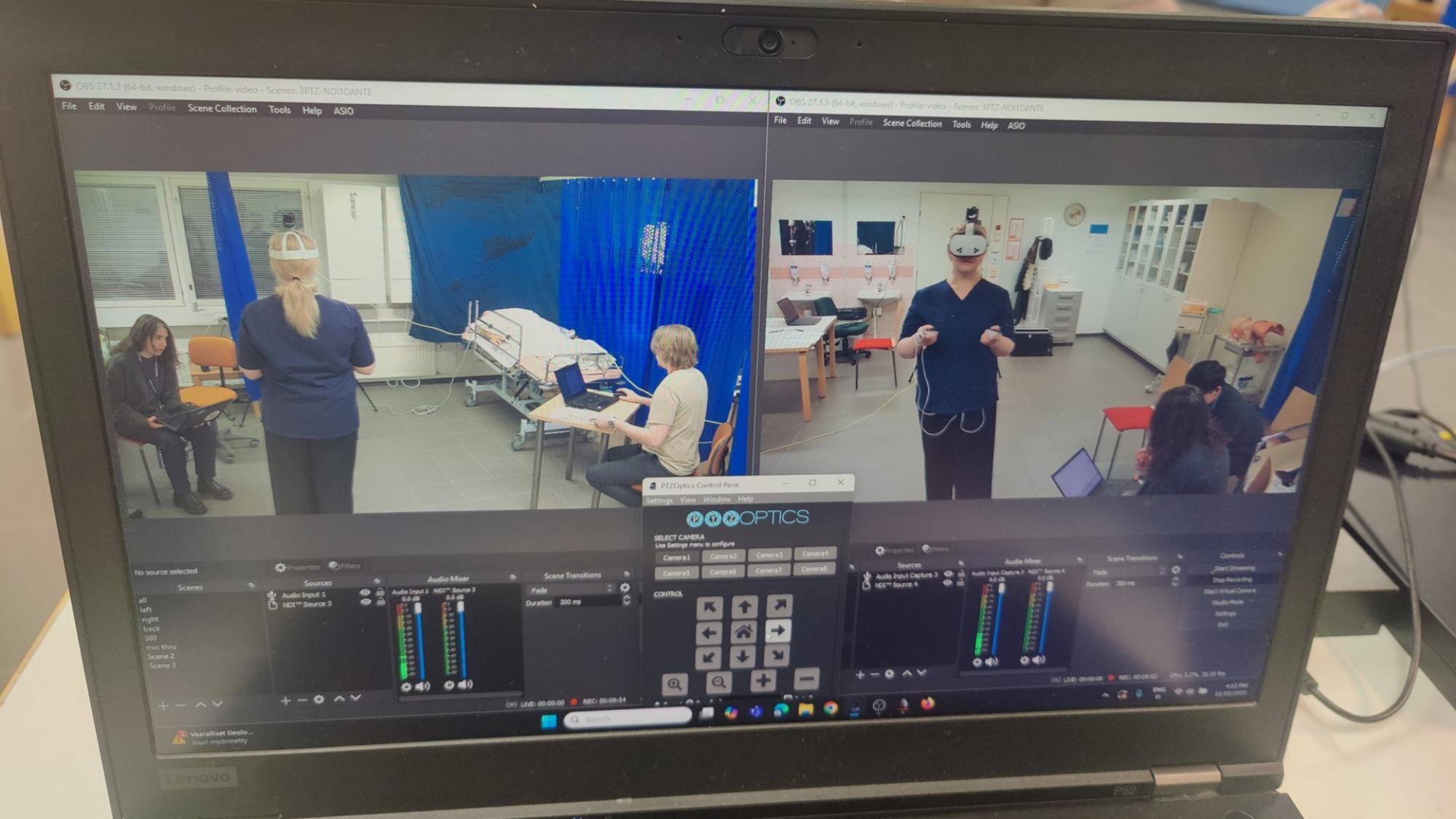
Healthcare education is facing increasing pressures: there are only a limited number of training places available and resources are being cut. Crises, such as pandemics, can disrupt students’ clinical learning. Research at the University of Oulu presents a solution that utilises extended reality (XR) in health and social care education in a human-centred way.
The research created a virtual simulation environment where realistic scenarios and meta-human figures make it possible to train teamwork skills. Learning was monitored with neurophysiological and behavioral indicators, which help assess stress and adaptation. The results show that extended reality can reduce students’ stress levels, bolster their ability to function efficiently in multidisciplinary teams, and build psychological safety in learning.
“I have practised before facing the real situation. I don’t risk a patient's safety by not doing the work correctly,” says one student.
“Technology should serve people, not the other way round. XR provides a safe and flexible way to learn, even when traditional training isn’t possible,” notes Professor Kristina Mikkonen from the University of Oulu.
For nursing students from immigrant backgrounds, the virtual environment enables them to refine their language skills in Finnish. “In the simulation, you must repeat the word until you pronounce it right,” explains a student who participated in the study.
The experience also offered cultural insights, as students became aware of Finnish patients’ communication style and autonomy. “Here people are a bit direct, you have to go straight to the point,” comments another student.
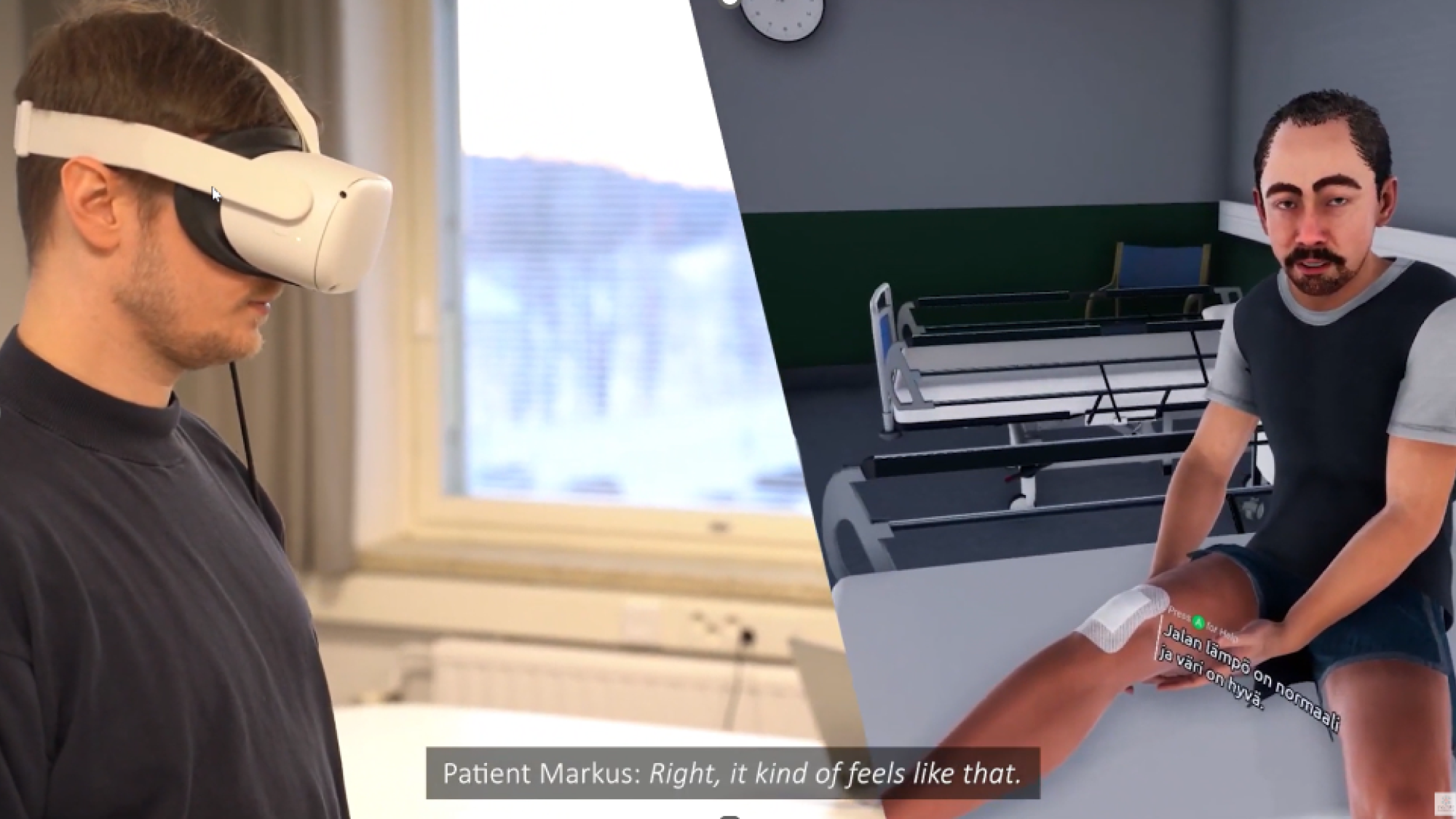
A new pedagogical framework combines classroom, simulation, and XR
Multidisciplinary cooperation is the cornerstone of quality and patient safety in healthcare. Research groups led by Kristina Mikkonen and Professor Sanna Järvelä have developed a pedagogical framework that combines traditional classroom teaching, credible simulations, and extended reality learning environments. The model offers students learning experiences that support teamwork skills and decision-making.
The results indicate that learning occurs on three levels: Theories learned in the classroom are deepened by simulation exercises and XR technology. Interaction improves, and students learn to operate in multidisciplinary teams in realistic situations.
According to the study, the combined approach increases student engagement and improves clinical competence. The use of extended reality adds a new dimension to training and provides a safe and cost-effective way to rehearse critical situations.
The virtual simulation environment was created in collaboration with the FrostBit laboratory at Lapland University of Applied Sciences.
Results are based on scientific articles:
Mikkonen K. et al. (2025). Multidimensional pedagogical framework for interprofessional education: Blending classroom, high fidelity and extended reality simulation. Nursing Education Today. https://doi.org/10.1016/j.nedt.2025.106838
Mikkonen, K., et al. (2024). How Does Human-Centred Extended Reality Support Healthcare Students’ Learning in Clinical Conditions? https://doi.org/10.1007/978-3-031-59080-1_13