Meet FRONT doctoral researcher Sonja Palmo “Young people are an important group to encourage to be part of the solution to environmental crises”
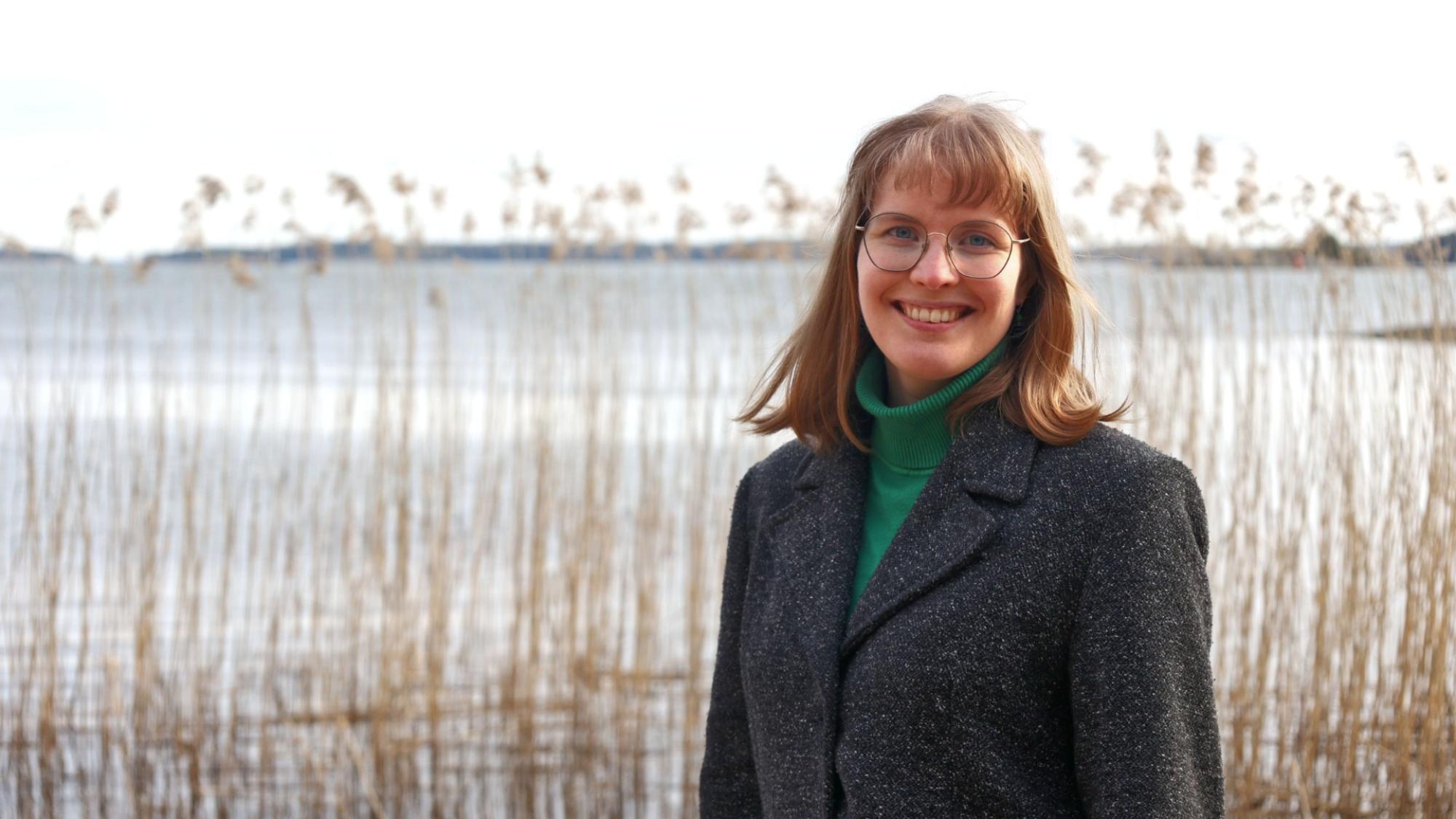
Doctoral researcher Sonja Palmo’ s work dives into socio-ecological resilience in the field of psychology. The relation between wellbeing, engagement and ecological crises in fairly new but very relevant research topic. Palmo’ s focus group is young people – for many good reasons. According to studies conducted, young people often feel disempowered and even hopeless regarding climate change - though there is hidden potential in youth that could be essential for finding solutions.
“Young people are in a developmental phase where they are gaining more independence and responsibility over the choices they make in their everyday lives. That makes them also an important group to encourage to be part of the solution to environmental crises”, Palmo explains.
One of the most relevant questions in her research area is this: how we can support young people to become and stay engaged in climate mitigation efforts, while also promoting their wellbeing? “The aim of my research is to increase young people’ s sense of being able to make a difference related to environmental crises. We seek to understand resilience factors that help young people cope with issues related to climate change", she says.
In psychology, Palmo adds, resilience usually defined as something that helps a person, a group of people, or an organisation to adapt to changing circumstances that challenge the individual or the group in question. Palmo sees resilience as a dynamic process, not a fixed trait that one is born with, but something that develops through overcoming and navigating life’s challenges. Challenges help us develop skills that makes it easier to bounce back and continue our lives.
“While we may not be the same after a radical change in our lives – be it a personal crisis or a crisis that occurs on a societal level or in our own hometown – staying resilient means that we are able to remain connected to other people and to ourselves, while also aiming to actively change the conditions – such as state of our planet – that require resilience from us.”
This combination of adaptability and transformability, she thinks, is key to both personal and collective responses to environmental change. Palmo is looking forward to collaborating with other FRONT researchers and developing further the ideas and concepts around resilience in terms of both Arctic and global resilience as well as resilience in individual, community, and societal level.
“Personally, I’m grateful for being part of this inspiring research programme and hoping to learn a lot from more experienced researchers from a variety of fields. I only started in the autumn 2024, and it has been fantastic to see our research group grow during this short period of time. I’m looking forward to getting to collaborate in various areas of socio-ecological resilience from psychological and educational perspectives, as well.”
Sense of community is an important factor for Palmo herself to upkeep hope and personal resilience
Palmo’ s journey into environmental psychology was sparked by personal experience: a hot summer in Sweden and a pivotal IPCC report led her to study eco-anxiety for her Master’s thesis, setting her on her current research path. Many times, Palmo gets most new ideas through writing.
“I frequently practice sort of free writing after reading an interesting article or hearing something that attracts my interest. For some reason, the best ideas often come to me when I’m in a train – and making the decision of applying for this research position was actually one of them!”
Palmo strengthens her own personal resilience through playing basketball and doing different kinds of handicrafts. She finds that crocheting, knitting or sewing are ways of building resilience in multiple ways; making things with hands and learning new things can help us live our lives a bit slower – and it can also teach us to value materials we have. A significant resilience factor for herself as well has increasingly become the importance of connecting with other people and fostering a sense of community. Palmo is also involved in developing a national course on eco- and environmental psychology for psychology students and is active in the Finnish Psychological Association, that focuses on strengthening the connection between psychology and societal issues.
“For me, engaging in environmental organizations are places to connect with people and find spaces to share the pain of living in an age of environmental crises. Finding one’ s own communities is essential for wellbeing".
Some latest publications by Sonja Palmo:
-
Kirsi, S., Hyvönen, K., Paakolanvaara, J-V., Lyons, M., Nieminen, V., Palmo, S., & Korpela, K. (2025). Luontolähtöinen interventio mielenterveyskuntoutukseen. Sosiaali- ja terveysturvan raportteja: 31.
-
Nieminen, V., Palmo, S., Hyvönen, K., Paakkolanvaara, J. V., Raatikainen, K. J., & Muotka, J. (2025). Social support as coping mechanism mediates the relationship between eco-anxiety and pro-environmental behavior. PLoS One, 20(7), e0326931.