“Non-living nature is part of natural diversity, not just a resource” – Meet FRONT postdoctoral researcher Maija Toivanen
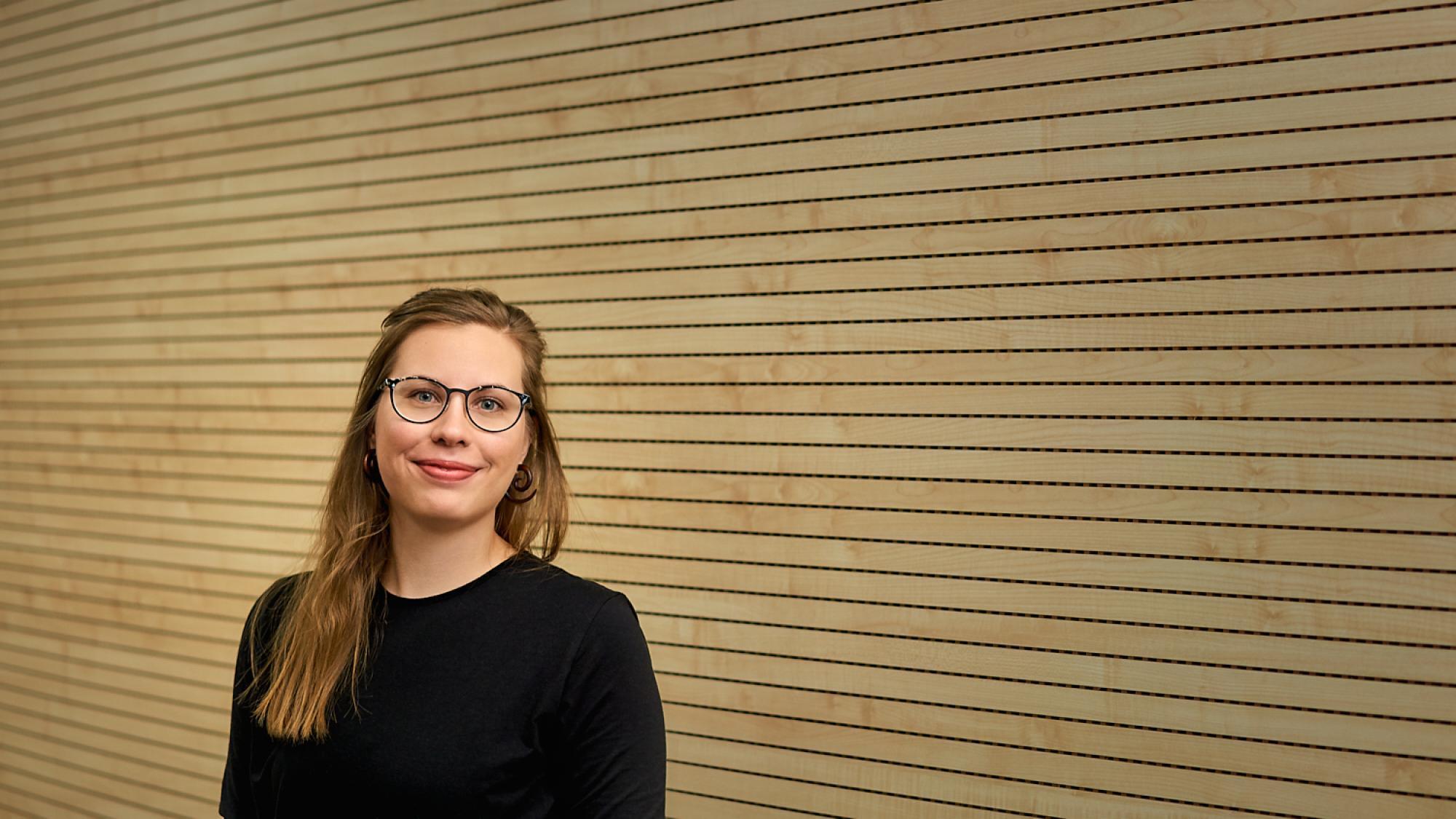
Trained as a physical geographer, Maija Toivanen has long been interested in human–environment interactions. In FRONT, she is connecting that background with resilience research and developing methods that help bring geodiversity into the way resilience is assessed.
“My main topics are geodiversity and socio-ecological resilience, and how geodiversity could be better integrated into resilience-thinking and resilience building efforts.”
What gets lost when we talk about “nature”? Seeing geodiversity as more than a resource
One of Toivanen’s recurring questions is conceptual: what do we actually mean when we say we are protecting nature? She points out that both everyday and scientific language often default to living nature, which can narrow what is considered worth noticing, valuing and safeguarding.
“Usually we equate ‘nature’ with biodiversity, without defining it. But when we do so, are we actually missing a huge part of nature and natural diversity—including diversity in rocks, soils, landforms and waters?”
In resilience discussions, non-living nature can slip into the background as something mainly extracted, managed or used—seen primarily as a resource for humans and other species. Toivanen argues that geodiversity is intrinsically valuable: it carries cultural meanings, supports habitats and underpins ecosystem functioning. Recognising these dimensions can shift how resilience is framed and what kinds of actions are prioritised.
“If we agree that maintaining natural diversity is an important principle of resilience, are we actually considering all natural diversity or are our efforts biased to the living nature?”
She also notes that concepts shape attention: if a phenomenon is hard to name, it becomes harder to argue for in research, policy and everyday decision-making.
“If people don’t even have a word for non-living diversity—geodiversity—are we really able to appreciate it or integrate it into research and practice, at least as systematically as biodiversity?”
In FRONT’s multidisciplinary setting, she is excited to learn more about resilience and to integrate geodiversity into human–environment perspectives—especially since her background is mainly in the natural sciences.
Building tools for broader resilience assessment in multidisciplinary environments
Toivanen just recently conducted a literature review that maps how geodiversity has been linked with resilience in earlier research. Alongside that work, she is familiarising herself with resilience frameworks and considering how both quantitative and qualitative approaches could support assessments that better reflect the full range of natural diversity.
Completing a second master’s degree in science communication in 2023 opened new perspectives and, as she puts it, a “mental door” to qualitative methods. It also reinforced how demanding it can be to put interdisciplinarity into practice within academic structures. She has always been fascinated by the complex interactions between people and the environment—very much at the core of geography.
“My hope is that the FRONT programme can break down some of the common barriers between natural and human sciences and offer concrete tools and frameworks for integrating different types of knowledge.”
Resilience beyond ecology: the relationship between people, values and nature
For Toivanen, resilience is not only an ecological property or a technical target. It is also about how societies and environments respond to disruption—and about recognising the ties between human wellbeing and environmental conditions—while remaining attentive to the diverse values people associate with nature. For her, resilience is also social and cultural, calling us to be aware, informed and inclusive when imagining the futures we want to create.
“I see resilience as the ability of both people and nature to adapt to changes and recover from disturbance. It’s not just about ‘bouncing back’, but also about learning and evolving through challenges.”
Toivanen’s best ideas often develop through discussions with people who enjoy working with concepts and terminology, and by reading slightly outside her own field—for example in a science-focused reading group. Outside work, her personal resilience is also built in nature: the outdoors is where she recharges.
“My love for nature and the outdoors originally drew me to physical geography. Spending time outdoors is by far the most restorative activity for me.”
Further reading:
Tukiainen & Toivanen (2025). What on earth is geodiversity? Nordia Geographical Publications, 54(2).