Paper on Terahertz-Band ISAC receives coveted IEEE Mimno award
The study identifies a strategic bottleneck. While Terahertz (THz) frequencies and Integrated Sensing (ISAC) have been studied in isolation, their intersection remained a functional blind spot. This paper bridges that gap, formalising the rules required to unify these two enablers into a single, efficient framework.
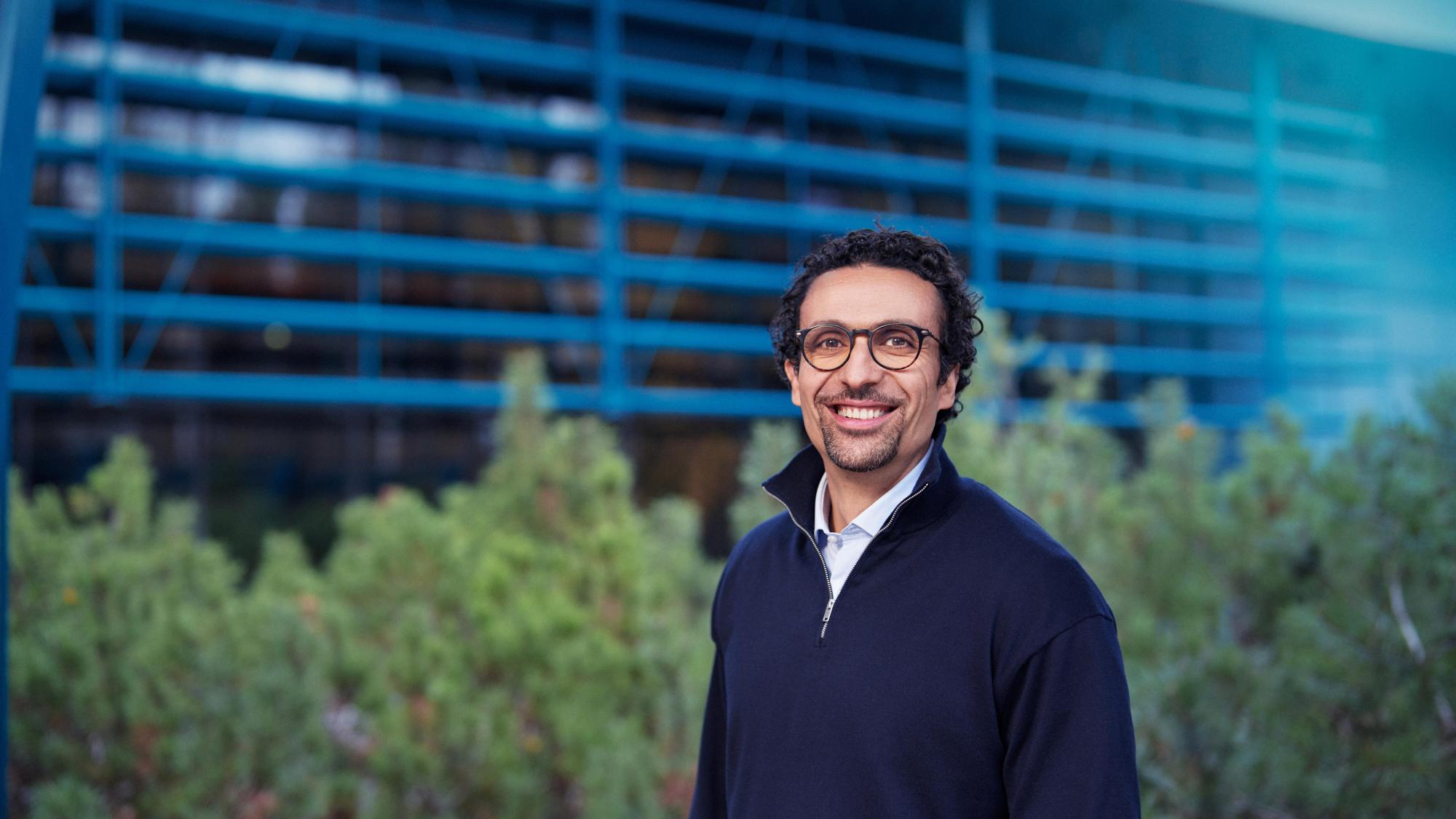
"We’re giving the network a set of eyes," says Mehdi Bennis.
The award recognises how the distinction between sensing the world and communicating within it has blurred into a single function in the 6G era. "Effectively, we are building the central nervous system for the 2030s," Bennis notes.
Engineering the 6G Transition
The research navigates the "unforgiving" physics of the sub-THz spectrum (0.1–10 THz). At these frequencies, traditional 5G models fail. The team addressed the beam-split effect, a phenomenon in which wideband signals smear across space rather than remaining focused, and the extension of the near-field range, which requires entirely new mathematical models for signal propagation.
"For a long time, the Terahertz band was seen as a 'scientific graveyard' because you can’t just throw power at the problem," Bennis explains. "Our work proves that with the right mathematical choreography, we can turn those physical hurdles into a high-definition map of the environment."
To overcome these physical barriers without unsustainable energy costs, the research team —including primary author Ahmet M. Elbir (Istinye University), Kumar Vijay Mishra (U.S. Army Research Laboratory), Symeon Chatzinotas (University of Luxembourg), and Mehdi Bennis— proposes a shift in hardware.
They advocate for Ultra-Massive MIMO arrays using subarray configurations such as Array-of-Subarrays (AoSA). This approach can reduce power consumption by up to 200 times compared to conventional designs, using Machine Learning to manage the resulting data complexity.
The study specifically moves away from the traditional 5G assumption that signals travel in flat, parallel lines. At Terahertz frequencies, signals behave as expanding bubbles or spherical waves for up to 40 metres. This paper provides one of the first rigorous frameworks for this near-field propagation, which is essential for 6G to function in indoor or high-traffic environments where users are close to the base station.
While the Mimno Award validates the team's architectural logic, it also turns the gaze to the magnitude of the engineering hurdles that remain. Transitioning these mathematical choreographies from a scholarly roadmap into mass-produced silicon is the next great bottleneck. The victory is in successfully defining the high-stakes physics problems that the industry must now solve to keep the 2030 timeline alive.
Read the paper Terahertz-Band Integrated Sensing and Communications: Challenges and Opportunities
Read about Mehdi Bennis and his research from this previous article
Professor Mehdi Bennis named among world’s Highly Cited Researchers for sixth consecutive year