Researchers from the University of Oulu and the University of Tokyo demonstrate drone-mounted 5G base station for emergency communications
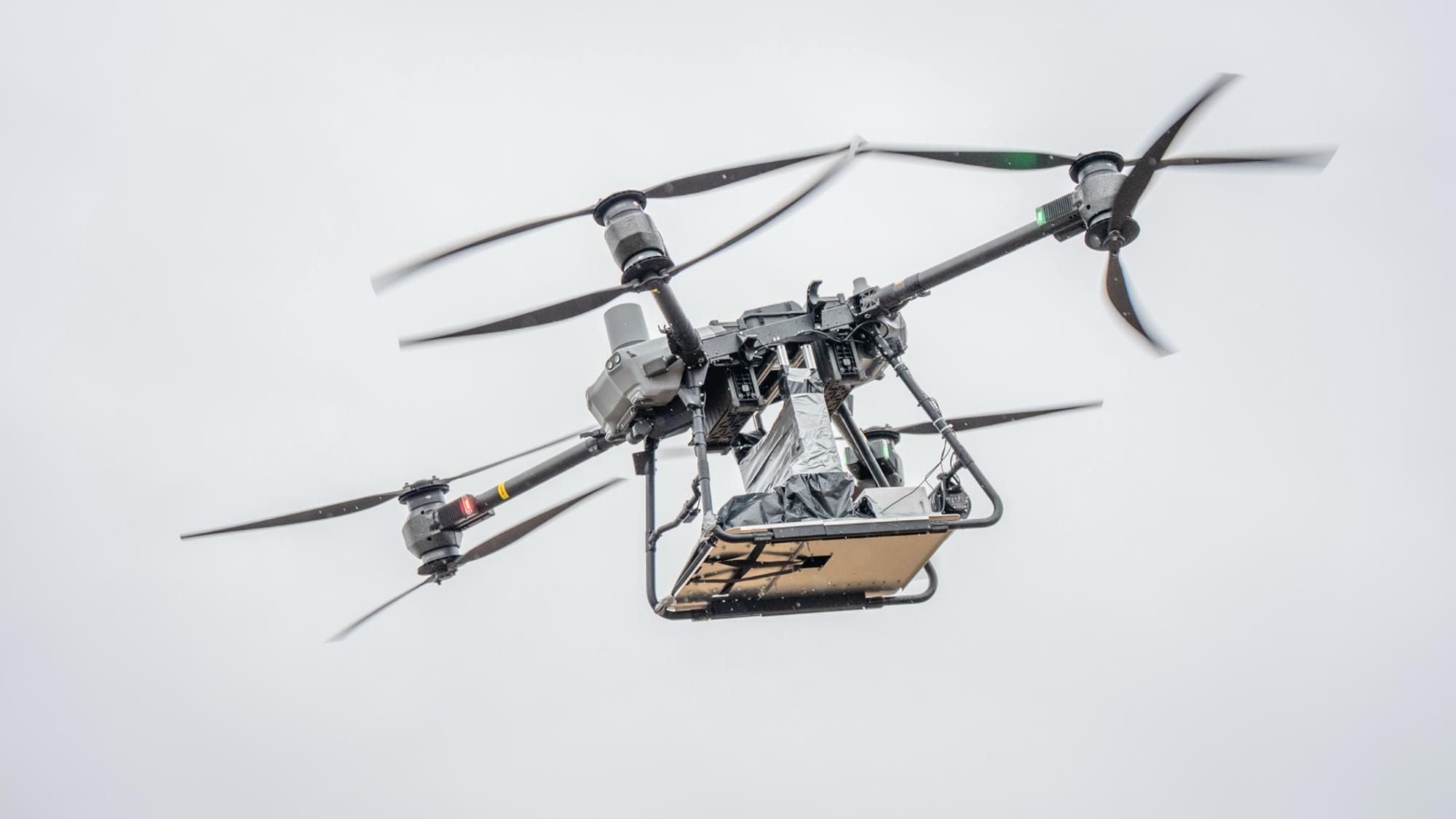
The proof-of-concept trial took place at OuluZone, an experimental wireless environment in Oulu, Finland. The team confirmed stable mobile coverage from an airborne platform at varying flight altitudes, and validated the system’s performance in simulated disaster and emergency scenarios.
The drone integrates a compact local 5G base station with satellite communications equipment, enabling it to establish an aerial coverage zone and connect ground-level users to external networks without relying on any fixed infrastructure below. This makes it suitable for deployment in the immediate aftermath of natural disasters, in mountainous terrain, or, for example, on remote islands where conventional network infrastructure is unavailable or destroyed.
The research was initiated following an international symposium held in the Mount Fuji region in 2025, where the concept of airborne base stations was first proposed to close gaps in emergency communications. Professor Matti Latva-aho, Vice Rector for Research at the University of Oulu, who holds a Global Fellow position at the University of Tokyo, established the collaborative framework that made the Oulu trial possible.
“Working with the University of Tokyo team gave us a chance to test something genuinely useful in a real environment. OuluZone made it possible to do the radio trials that Japan’s regulations currently don’t allow, and the results showed the system can deliver stable coverage from the air,“ says Latva-aho.
“Technologies capable of rapidly deploying communication infrastructure whenever and wherever it is needed are indispensable to the realization of next-generation cyber infrastructure. Through our international collaboration with the University of Oulu, we were able to take advantage of the OuluZone experimental environment to conduct an early demonstration of a drone-mounted local 5G base station — an initiative that would require considerable time for consensus building in Japan. This demonstration verified the potential of drone-based local 5G networks, operated as dedicated high-quality wireless infrastructure, to flexibly and efficiently establish communication coverage in areas where conventional networks are unavailable. We believe this achievement represents an important step toward strengthening future disaster response capabilities and building resilient next-generation communication infrastructure. Looking ahead, we will continue to advance research and development of integrated cyber infrastructure that seamlessly connects aerial, terrestrial, and satellite networks, while accelerating the translation of these technologies into practical social implementation,” says Professor Akihiro Nakao, Nakao Lab, University of Tokyo.
Testing in Japan currently faces regulatory restrictions on transmitting 5G signals from airborne platforms. Preparatory flight tests and radio-propagation simulations were carried out in Japan before the team moved to Finland for live transmission trials. The next steps include refining the system, developing operational procedures, and running use-case trials tied to specific disaster scenarios.
Watch the video Drone-mounted 5G tested for emergency communications
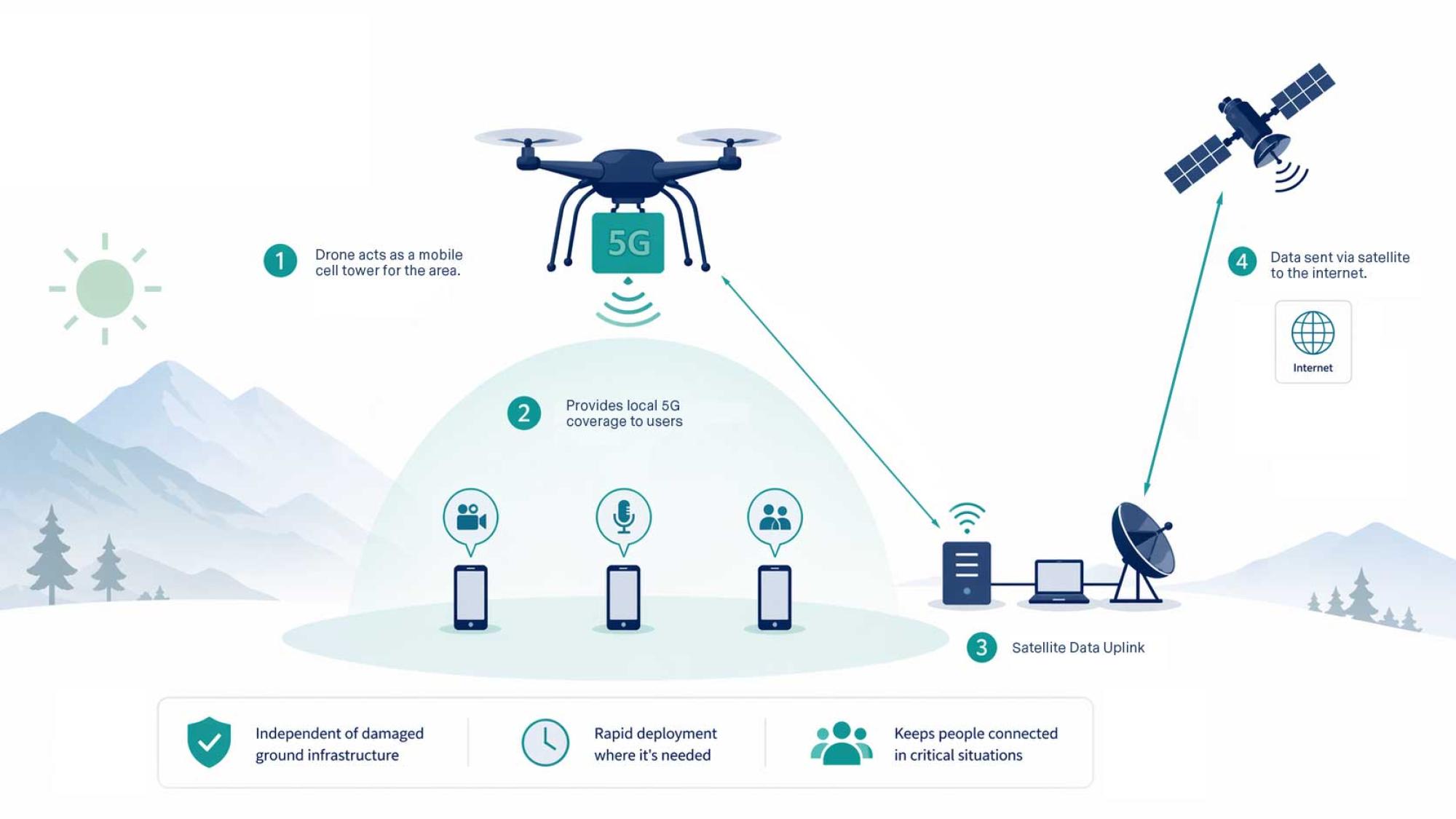
Drone-mounted 5G base station brings connectivity where most needed.