Were the deceased cremated already in the Stone Age? The first signs of human cremation date back 100,000 years
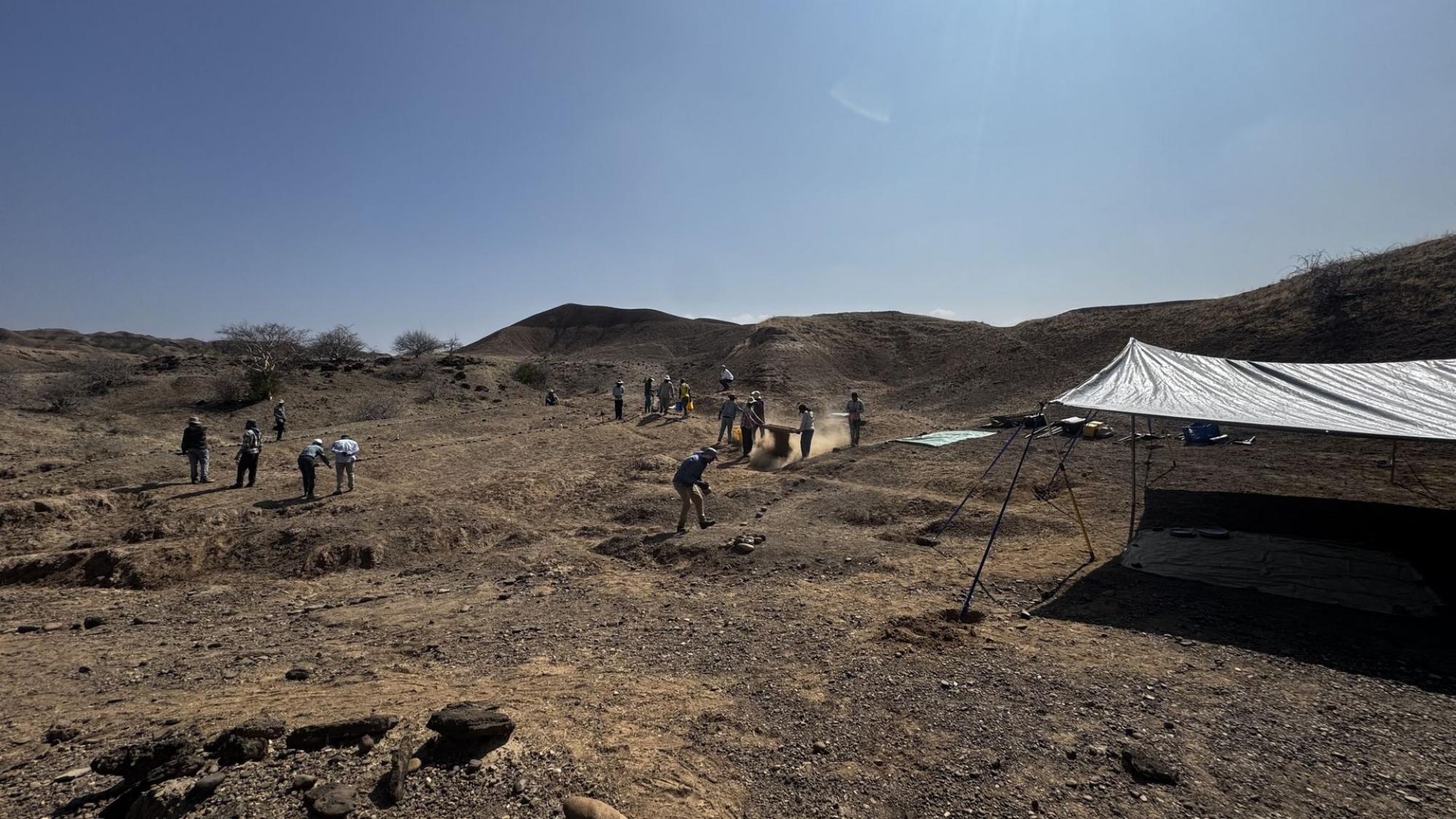
The latest discoveries by an international research team, which includes Academy Research Fellow Ferhat Kaya from the University of Oulu, offer a detailed view of how early humans lived, moved, and adapted to their environment 100,000 years ago. The group has been studying the Afar Rift since 1981.
Significant fossils were found in the area, including remains of Homo sapiens individuals, among them bones that had been burned at high temperatures. This may indicate cremation and could represent the earliest known evidence of human cremation.
The remains also showed bite marks from predators and signs of sudden burial.
The study further shows that local hydrological factors — such as the flood cycles of the ancient Awash River — influenced human life more than global climate fluctuations.
Thousands of stone tools indicate that people repeatedly returned to the area for short periods on a seasonally flooding plain.
Artifacts documented at the site have remained in nearly undisturbed layers, giving researchers an unusually precise understanding of the spatial relationships between objects and fossils across a wide area.
“This research helps us build a comprehensive understanding of how early Homo sapiens interacted with their environment. Our findings suggest that local water‑related factors and changes were more decisive than global climate variations,” says Ferhat Kaya.
Exceptionally well‑preserved open‑air sites
Stone finds and rare obsidian objects — originating from distant regions — reveal complex behaviour among early humans: they moved frequently and over long distances. Obsidian is a volcanic glass formed from lava.
Analysis of more than 3,000 animal fossils reveals a diverse ecosystem that included monkeys, rodents, and large mammals. Studying this helps researchers understand how early humans adapted to changing environments in the East African Rift.
Researchers consider the material exceptional because the artifacts and fossils remained undisturbed in the soil and were not displaced by geological or water movements.
Africa’s role in human evolution is central. Much current knowledge is based on thin cave deposits, which can give a skewed picture of early human activity. Well‑preserved open‑air finds from this period are extremely rare.
The long‑running Middle Awash project focuses on the Halibee Member of the Dawaitoli Formation in Ethiopia’s Afar Rift. It combines geological, paleontological, and archaeological data to reconstruct the environment and behaviour of early humans.
Ferhat Kaya’s work has been supported by the Academy of Finland–funded project Reconstructing the Environmental Context of Hominins in Eastern Africa Through Fossil Small Mammals.
The study is published in Proceedings of the National Academy of Sciences (PNAS): Beyene, Y., et al. (2026). Halibee member archaeology: Middle Stone Age environment, technology, and postmortem modifications doi:10.1073/pnas.2534441123