Radiotherapy Physics, Imaging and Dosimetry (RaPID)
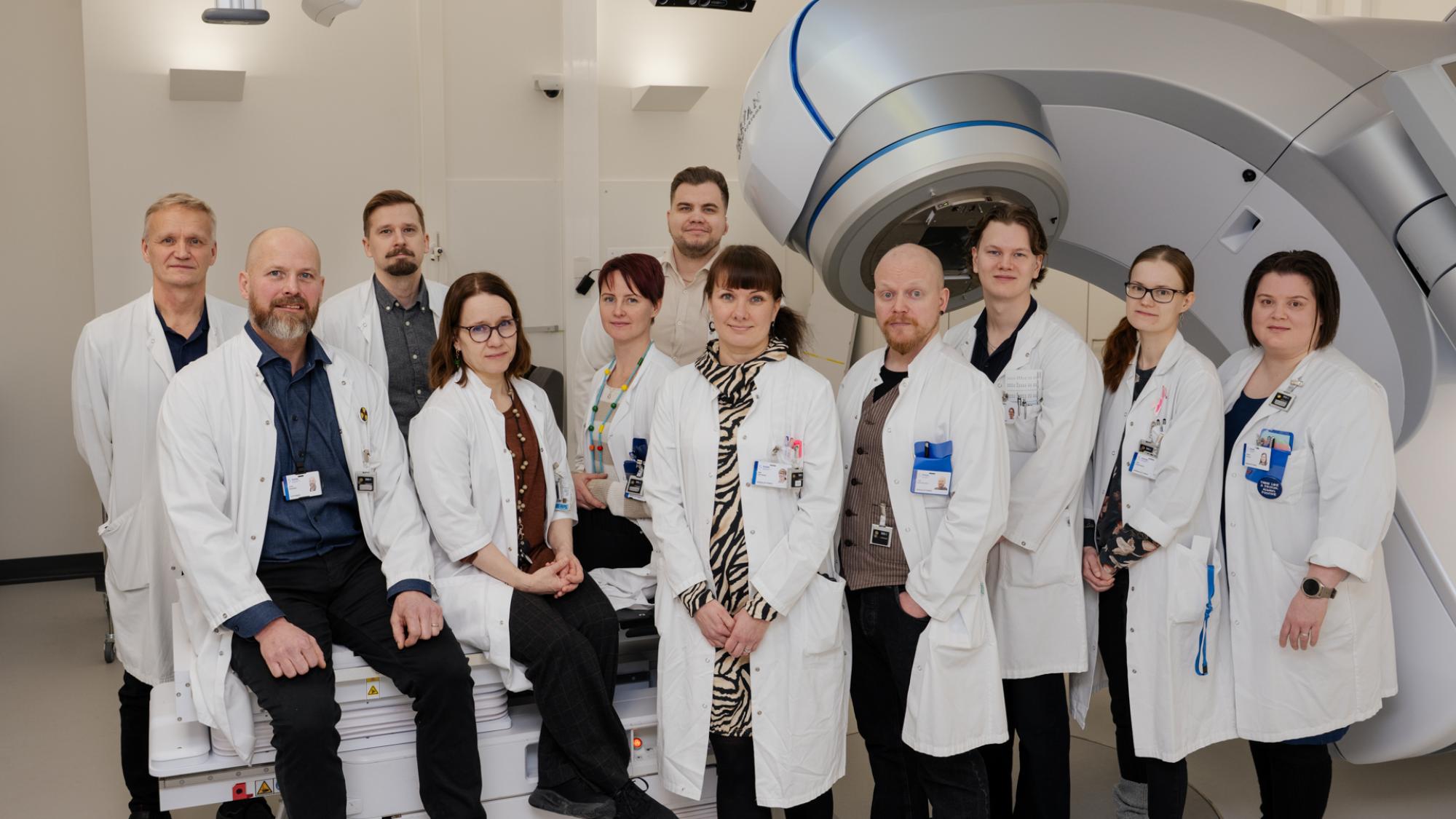
Research group information
Unit and faculty
Research group description
Radiotherapy (or radiation therapy) is a cancer treatment using high-energy ionizing radiation to control and kill malignant cancer cells. Ionizing radiation is delivered either externally, most commonly with linear accelerators, or internally, e.g. in brachytherapy. The patient’s individual physiology and anatomy affect not only the physical aspects of the dose delivery but also the treatment response. Thus, individually tailored radiotherapy allows more efficient and safer treatments.
RaPID research group is led by Juha Nikkinen. The group’s main research topics are medical physics, biophysics and technical methodology in radiotherapy and imaging. RaPID aims to develop methods to provide more tailored, more accurate and more effective radiation therapy to improve patient outcomes. More specifically, RaPID research group’s focus areas are in 1) studying and developing novel methods to monitor radiotherapy treatment responses, 2) validation, implementation and development of novel approaches in external radiotherapy.
Monitoring treatment response during radiotherapy
One of the group’s research focuses is monitoring the individuals’ response to external radiotherapy using MR- and NIRS-based imaging methods. Using advanced MRI techniques, such as perfusion, diffusion, blood-oxygen-level-dependent imaging, and metabolic imaging techniques, the group aims to acquire information about tumor metabolism, haemodynamics, chemical composition and infiltration. This MRI methodology, collectively called multi-parametric MRI (mpMRI) can also be used to monitor treatment effectiveness and differentiate tumor progression from pseudo-progression enhancing diagnostic precision and supporting clinicians in evidence-based decision-making.
The group is also researching and developing a new method for monitoring radiotherapy response in brain tumors and healthy tissues during irradiation using optical spectroscopy methods. Changes in cerebral hemodynamics and concentration of the reactive oxygen radicals correlate with the radiotherapy dose and dose rate. Thus, measuring cerebral dynamics and free water and oxygen radicals during irradiation with fNIRS could improve the effectiveness and safety of the radiation therapy.
Development and validation of Artificial Intelligence based methods in Radiotherapy
Artificial Intelligence-based tools and applications are becoming part of everyday workflow of radiotherapy. Development in AI-based tools and solutions has been shown to decrease inter-variability and subjectivity, decrease working time on repetitive tasks and provide increased accuracy on sparse data (e.g. in image reconstruction). However, increase of AI-based tools in the radiotherapy quality chain proposes a need for methods for validating and quantifying the uncertainty of these AI-based methods. Our group aims to develop and apply existing AI-tools for various phases in radiotherapy workflow and develop suitable validation methods and protocols for these tools.
Head & Neck radiotherapy normal tissue dose optimization
Head & Neck study part focuses on finding possibilities to optimize clinical radiotherapy normal tissue dose distributions to head & neck normal tissues. We have several strategies including auto segmentation workflows, MR imaging for RT treatment planning and follow-up, simulation of various RT plan optimization techniques and timeline/delay analyses. Co-operation with specialized medical care professionals from ear, nose and throat, and dental departments is essential in our research planning and analysis.