My journey from Electronic and Electrical Engineering to Business Analytics
The MSc in Business Analytics at the University of Oulu isn't just a degree programme for me; it's the bridge between my engineering past and my analytics future.

Studying Electronic and Electrical Engineering taught me how to solve complex problems step by step. I learned tools like probability, statistics, Fortran, and MATLAB, but more importantly, I learned how to think clearly when things were complicated.
After graduation, I worked as a front-end engineer, building user interfaces that people used every day. While working with JavaScript, React, and TypeScript, I also saw how people clicked, where they stopped, and where they dropped off.
I started asking myself questions: Why do people leave their carts at this point? What do successful customers do differently? Is there a way to guess what users need before they even say it? Can I know when a customer will churn?
When I later moved into product management and operations, these questions only grew stronger. I kept pushing for decisions based on data, not just intuition, and I spent more time analyzing numbers to understand what was really happening and to foresee events before they occurred.
Over time, I noticed a pattern: the best solutions came when technical skills and business thinking worked together. I didn’t just want to use data; I wanted to understand it properly, make better predictions, and design solutions that were driven by analytics.
That is what led me to study an MSc in Business Analytics at the University of Oulu. It felt like the natural next step, not a complete change of direction.
Why the University of Oulu's MSc in Business Analytics
Making the leap from engineering to business analytics wasn't without its hurdles; it demanded learning to translate technical expertise into business value, mastering new analytical frameworks, and finding a programme that would make the leap meaningful.
The MSc in Business Analytics at the University of Oulu stood out as the answer to these challenges. The programme connects technical content with real business problems, which fits my background. It is very practical, with real-world projects, which is important to me after working with real data in fintech.
The University of Oulu also has a strong research culture and good links to industry, so I feel close to what is happening in the real world, not just in theory.
Studying here has given me structure, confidence, and a clearer path. It supports my move from engineering to a career where data and business work together.
Thriving in analytical thinking
Four months into the programme, and I’m glad I made this choice. The courses have been challenging but rewarding. I'm not just learning how to analyze data, I'm learning which questions to ask, why certain metrics matter more than others, and how to communicate findings to stakeholders who may not share my technical background.
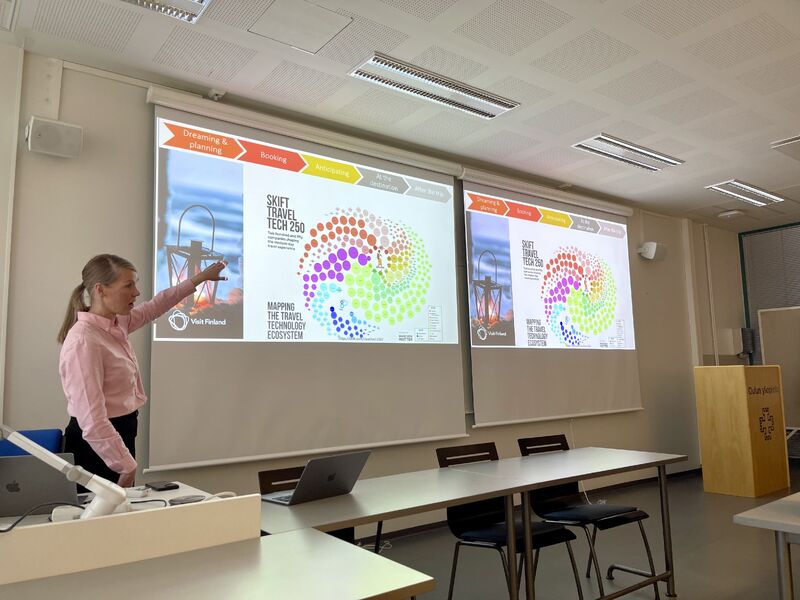
One of my favorite parts of my programme is the part where guest lecturers from a wide range of organizations, including consulting, logistics, ICT, and defense, as well as healthcare, AI, and digital transformation, are invited to give lectures in class. Hearing them talk about their daily challenges and how they have been making decisions with data in their work makes everything feel alive and not just textbook teachings.
The programme has also challenged me to think critically about data ethics, privacy, and the social implications of analytics, which are important as data becomes more powerful in decision-making.
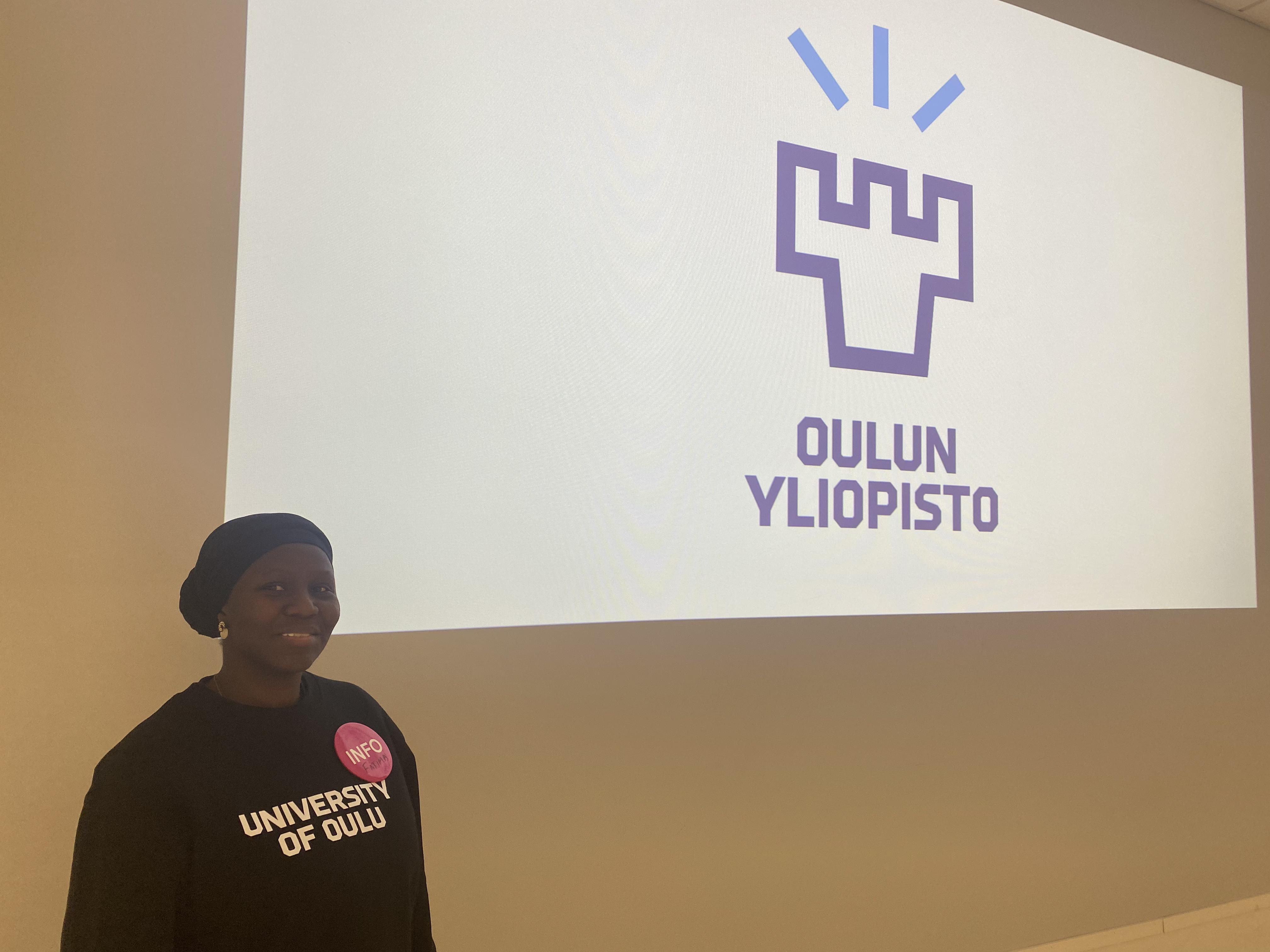
Outside the classroom, I've also had the privilege of serving as a University of Oulu Ambassador. Recently, I participated in school visits where I shared my journey and the reasons behind my choice to study Business Analytics at Oulu.
It's been rewarding standing in front of prospective students, answering their questions about the journey it takes to get here, and seeing their curiosity spark when they realize there are multiple pathways in life.
Key lessons and goals ahead
The biggest lesson I've learned is that my background is my superpower. A career transition isn't about abandoning your past; it's about expanding your toolkit. My engineering roots help me understand technical aspects that many business professionals find challenging.
I've also discovered that transitioning between fields takes time and patience. Those courses and side projects weren't just resume boosters; they were confidence builders that prepared me for this journey.
I've also learned to embrace the learning curve. Some days feel challenging when tackling new business concepts, but discomfort is where growth happens. Every "I don't understand this yet" eventually becomes "Now I see why this matters."
Looking ahead, I’m focused on mastering advanced analytics tools, machine learning for business, predictive modelling, and telling data stories clearly. I want to apply these skills to real-world projects and grow into a data analyst.
Conclusion: the journey continues
I'm building the foundation for a career that excites and challenges me.
For anyone standing at a similar crossroads, wondering if they should take the leap into a new field, I'll leave you with this: The best time to start was yesterday. The second-best time is today. Your background, your experiences, and your unique perspective are exactly what the field of business analytics needs.
The circuits may have led me here, but the data will take me forward.
About the author
Fatima is a current MSc Business Analytics student at the University of Oulu. When she's not analyzing data or attending lectures, you can find her exploring Finland and connecting with more people from around the world.