
The possibilities of the green transition in Northern Ostrobothnia through the eyes of a returnee: investments are gratifying

Northern Ostrobothnia has taken the opportunities of the green transition seriously. The region has received a significant amount of energy and industrial investments related to the sector. There are many actors, and the foundation is being laid for business activities. As a returnee who worked on the green transition in Sweden and Belgium, I am delighted with the development of Northern Ostrobothnia.
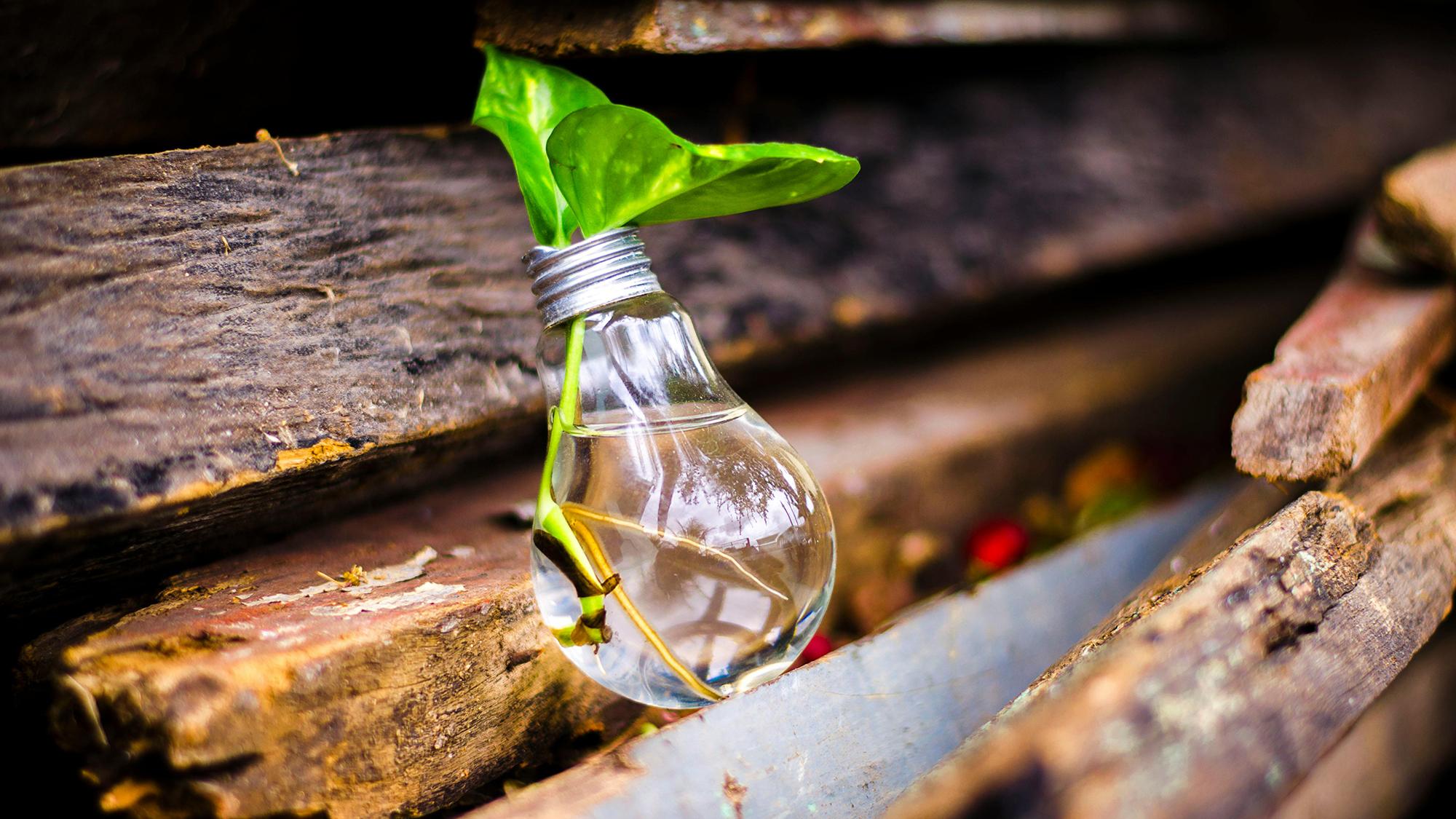
puupinon päällä olevan hehkulampun sisällä kasvi

I have lived in Alavieska for the first 20 years of my life. From there, I continued my journey to Turku to study political science and to Sweden, where I graduated with a Master's degree in sustainable development and environmental sciences. In recent years, I have worked in Brussels, at the European Union's DG Environment, working on unilateral and bilateral relations, and at EFRAG, working on sustainability reporting. In both places, my work consisted of either consulting on the EU's green transition, drafting legal initiatives, or advising and studying environmental and sustainable development issues.

My path brought me back to Alavieska because I wanted to settle back in Finland. Here I was offered the opportunity to work for three months as a project management assistant for the Kerttu Saalasti Institute (KSI) in the Sustainable Energy Business (SEB)- project.

It has been very positive to see how the EU's green transition is being implemented in the regions, especially in North Ostrobothnia. The North Ostrobothnia Regional Council writes that the energy transition and municipal climate solutions are core themes of the green transition. The Finnish Environment Institute coordinates the Hinku- network aimed at mitigating climate change, which ten municipalities in the region have already joined. The Council has also developed the North Ostrobothnia Climate Roadmap project, which combines the EU's and Finland's climate goals into one comprehensive part for the development of the region.

Large investments and many players

According to Yle, many energy and industrial investments related to the green transition are planned in North Ostrobothnia. Investment decisions have already been made in projects located in the region for over 900 million euros. Correspondingly, there are already 1.5 billion euros in completed investments. The region is at the top of Finland in onshore wind power with a project portfolio of over 20 gigawatts, and offshore wind power projects in the region are pending in the area for over 5 gigawatts. In North Ostrobothnia, the projects also include investments in Oulu's bioindustry, several industrial-scale solar power plants, and various investments in the circular economy and manufacturing industry.

The region also has many actors that enable the green transition in the province. For example I am sitting in KSI's premises in Nivala at the technology and competence center of Nivala Industrial Village (NITEK), which is the largest industrial village in Finland. According to Janne Peljo, leading expert of the Confederation of Finnish Industries, the workforce and close regional cooperation are important for North Ostrobothnia in accelerating investments

Financing as a challenge and partnerships as opportunities for green entrepreneurship

The Stockholm Environment Institute (SEI) writes that climate and environmental entrepreneurs are key to combating climate change. Micro-enterprises in particular are seen to have a lot of potential. Aleksi Salo, Customer Manager at the Geological Survey of Finland, mentioned the role of micro-enterprises as a driver of increasing employment and new services at the Kerttu Saalasti seminar in September 2025. According to Salo, they employ and develop new services and are capable of agile changes and radical solutions. Micro-enterprises are able to respond quickly to the challenges of change and think outside the box. Aino Bergius, CEO of Slush, encouraged European companies to take the direction of change into their own hands at the Slush event held at the end of November.

SEI writes that green companies do not only focus on company growth figures but also pay attention to greener and more sustainable ecosystems. According to SEI, this can be challenging, as the concepts of green business models and sustainable business practices are widely used but little understood. How green or sustainable operations are defined also depends on whether the companies' operations are genuinely sustainable or whether they are more of a greenwashing operation. Regulatory frameworks, capacity constraints and financing also pose challenges for new entrepreneurs. Bergius says that European startups are experiencing a period of financial downturn at the moment.

According to Harri Jaskari, Director of Business Policy at Finnish Enterprises, Finnish companies are cautious and create strategies instead of trying and seeing possible failure as an opportunity to learn. SEI notes that collaboration and partnership are key to establishing green entrepreneurship, while Bergius emphasizes the importance of access to finance.

Research data provides the basis for implementing the green transition

Research can contribute to the green transition. According to Arto Maaninen, Rector of the University of Oulu, the university and KSI have the capacity to respond to climate change mitigation, green transition, digitalization and the utilization of artificial intelligence, and securing regional vitality.

Northern Ostrobothnia already seems to have the means to implement the green transition in the region and the number will increase in the future. I can't wait for the final results of the SEB- project to provide one new tool to promote the green transition.

Author: Mari Peltola, VTM and YTM, project worker, Kerttu Saalasti Institute, University of Oulu

Photo: Pexels

Created 4.12.2025 | Updated 4.12.2025