Northern Pedagogy
The Northern Pedagogy blog provides a window into everyday teaching practices and the ongoing development of education at the University of Oulu.
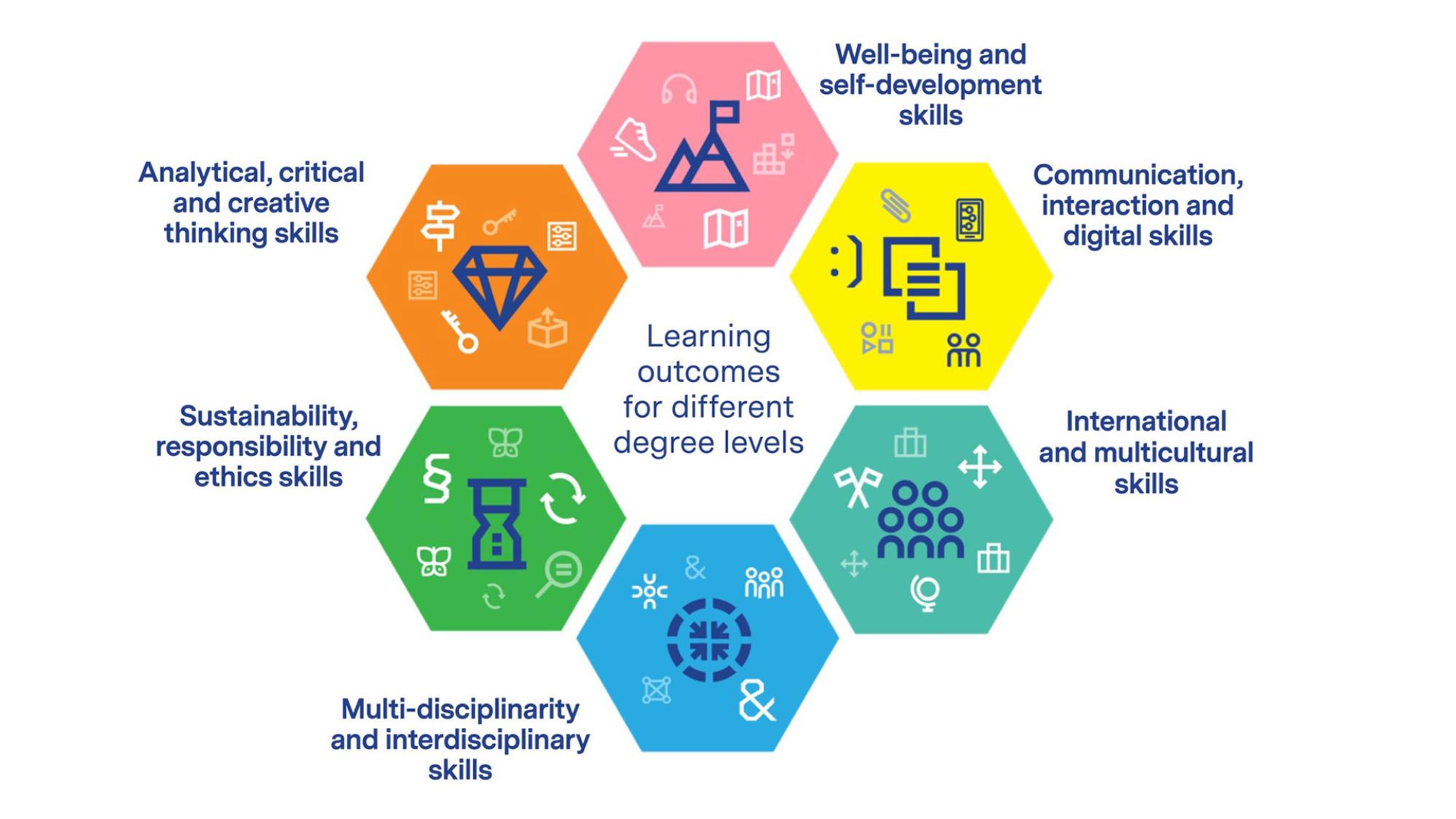
The purpose of this development work is to support the development of our graduates’ employability alongside strong disciplinary expertise. This is a change that concerns the entire university community: it’s about how we support students in becoming experts in their fields—people who can thrive in a changing job market and solve the complex challenges of the future.
The common generic skills selected at the University of Oulu are:
On our website Common generic skills and learning outcomes of the degrees, you can find the common generic skills of all degrees together with their intended learning outcomes.
A general principle is that generic skills are primarily taught and learned as part of discipline-specific courses. This is because generic skills develop more effectively when they are integrated into subject teaching, and because their learning always takes place in relation to the content being studied.
A key aspect of the development work has been the involvement of the entire university community. The common generic skills have not been defined as a top-down approach; instead, they have been developed through extensive collaboration with staff, students, and alumni.
Engaging the whole community has proven to be the most effective way to bring change. The jointly defined generic skills and their learning outcomes have been perceived as meaningful in degree programmes, and teachers have been committed to strengthening them in their courses.
In many programmes, these skills have already been taught previously, but now they are being communicated to students in a more visible and consistent manner. At the same time, this process has helped to reduce overlaps, identify gaps, and improve the quality and alignment of teaching.
The insights gained during the development work clearly demonstrate what successful pedagogical development requires in practice. The first key message is the importance of leadership support. Large-scale change does not progress without clear guidelines, division of responsibilities and continuous communication.
When objectives are defined at the university level and their implementation is supported, the work of programme directors and teachers becomes significantly easier. Programme directors have considered the involvement of teachers in the joint design of generic skills to be a prerequisite for success.
According to teacher feedback, it is important in curriculum work to strengthen communication within the degree programme, clarify responsibilities, and create structures for collaboration and the sharing of good practices.
In workshops and webinars, teachers have reflected on how generic skills should be assessed, whether they have sufficient expertise to teach these skills within discipline-specific courses, and which skills can also be strengthened alongside courses, for example through academic advising.
Based on our experience, concrete pedagogical support is needed: training, workshops, consultations, guidelines and examples. Consultative support for degree programmes in curriculum work and for teachers in course design has been essential.
Positive feedback has been received, for example, on university-level workshops and online platforms that bring together examples of learning assignments and materials supporting teaching and assessment.
Teachers have also appreciated guidance on how artificial intelligence can be used in designing learning assignments for their own courses. Contributions from working life professionals have also helped to clarify why generic skills are particularly important right now.
We presented the development work carried out at the University of Oulu over the past three years at Pedaforum Higher Education Pedagogy seminar in Kuopio on 2–3 June 2026, together with our colleagues Elina Niemitalo-Haapola, Anu Rytivaara and Matti Niemelä. The title of our Symposium was Strengthening common generic skills in curriculum work at the University of Oulu through a university-wide participatory process.
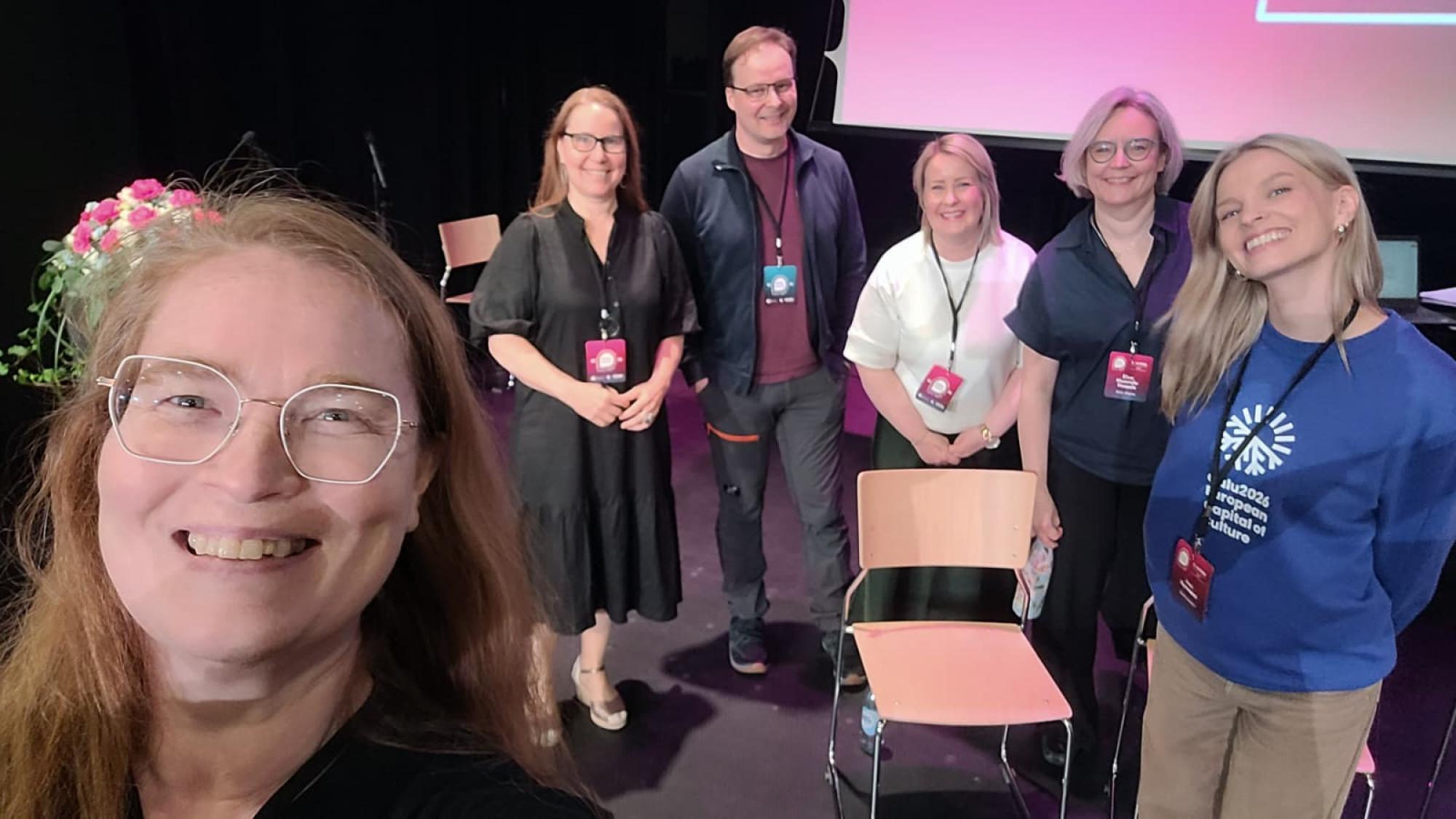
The discussion during the symposium showed that this theme is highly topical in many higher education institutions: how to make generic skills a genuine and visible part of teaching and students’ everyday lives.
In her remarks as a discussant at the symposium, Meiju Keinänen from Turku University of Applied Sciences praised our work in strengthening generic skills, particularly for its inclusiveness and systematic approach. Keinänen also encouraged the University of Oulu to continue ensuring commitment, strong embedding of the skills, maintaining and repeating the shared discourse, and supporting teachers and degree programmes.
In her keynote speech at the Pedaforum seminar, Director Jonna Korhonen from the Ministry of Education and Culture emphasised that high-quality education is not only about accumulating knowledge and skills - it also strengthens students’ agency and wellbeing, prepares them for future changes, and equips them with the capacity even to change the world.
Tytti Tenhula, M.Ed., Solution Specialist
Suvi Jutila, M.Sc., Solution Specialist
University of Oulu, OPE - Centre for pedagogical support and development
The Northern Pedagogy blog provides a window into everyday teaching practices and the ongoing development of education at the University of Oulu.