From boreholes to buildings – towards smarter geothermal heating
Toward smarter operations
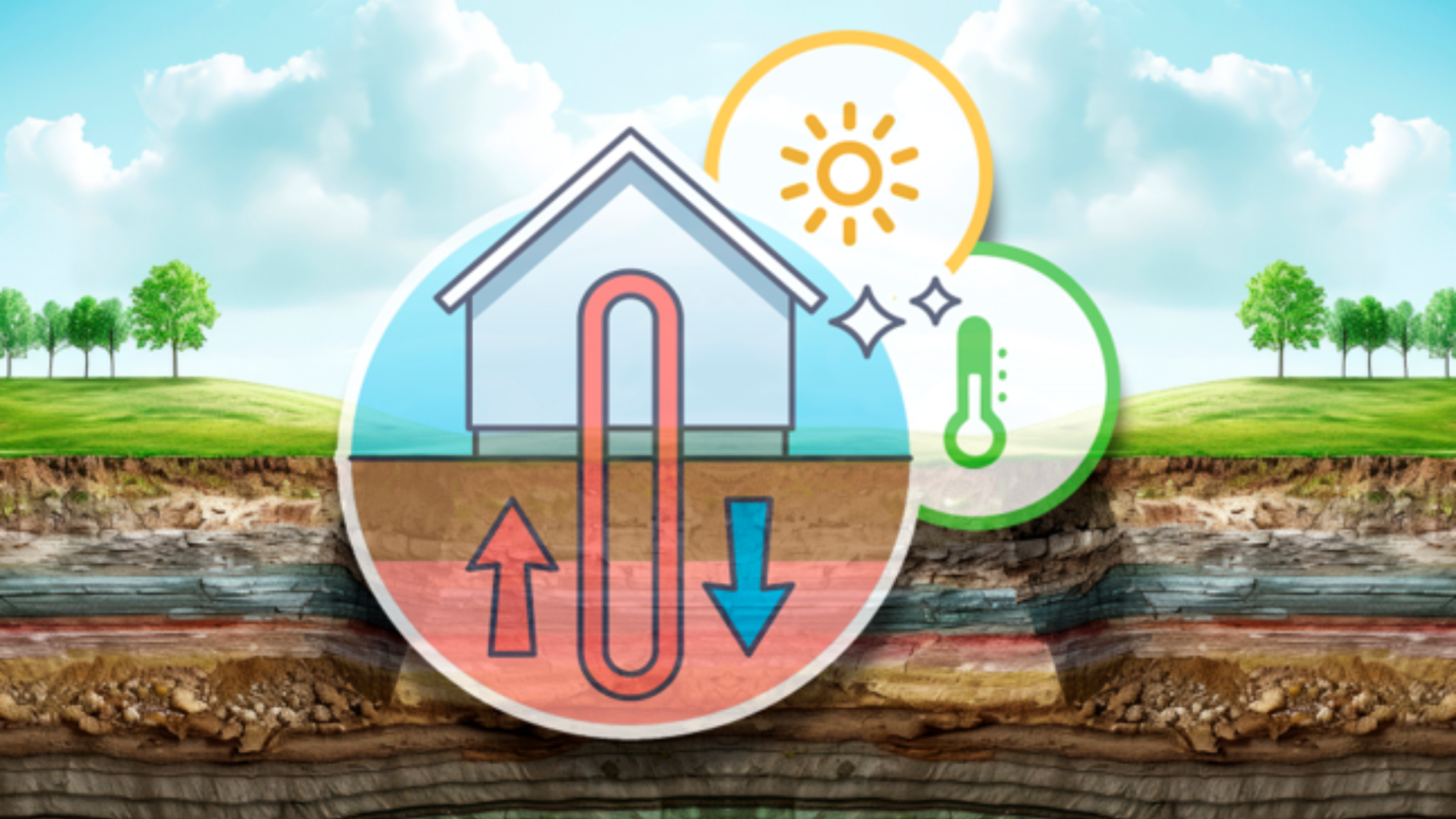
A typical ground-source heat pump uses deep boreholes under buildings to pull heat from the ground. That heat is then upgraded with heat pumps and used to warm buildings. Many larger buildings also include a water tank that can store heat for hours or even days. In today’s systems, heat pumps often run whenever heat is needed, regardless of electricity price or future demand. This can lead to unnecessary costs and stress on the electricity system. The key question is: What if geothermal heating systems could decide when to produce heat, not just how much?
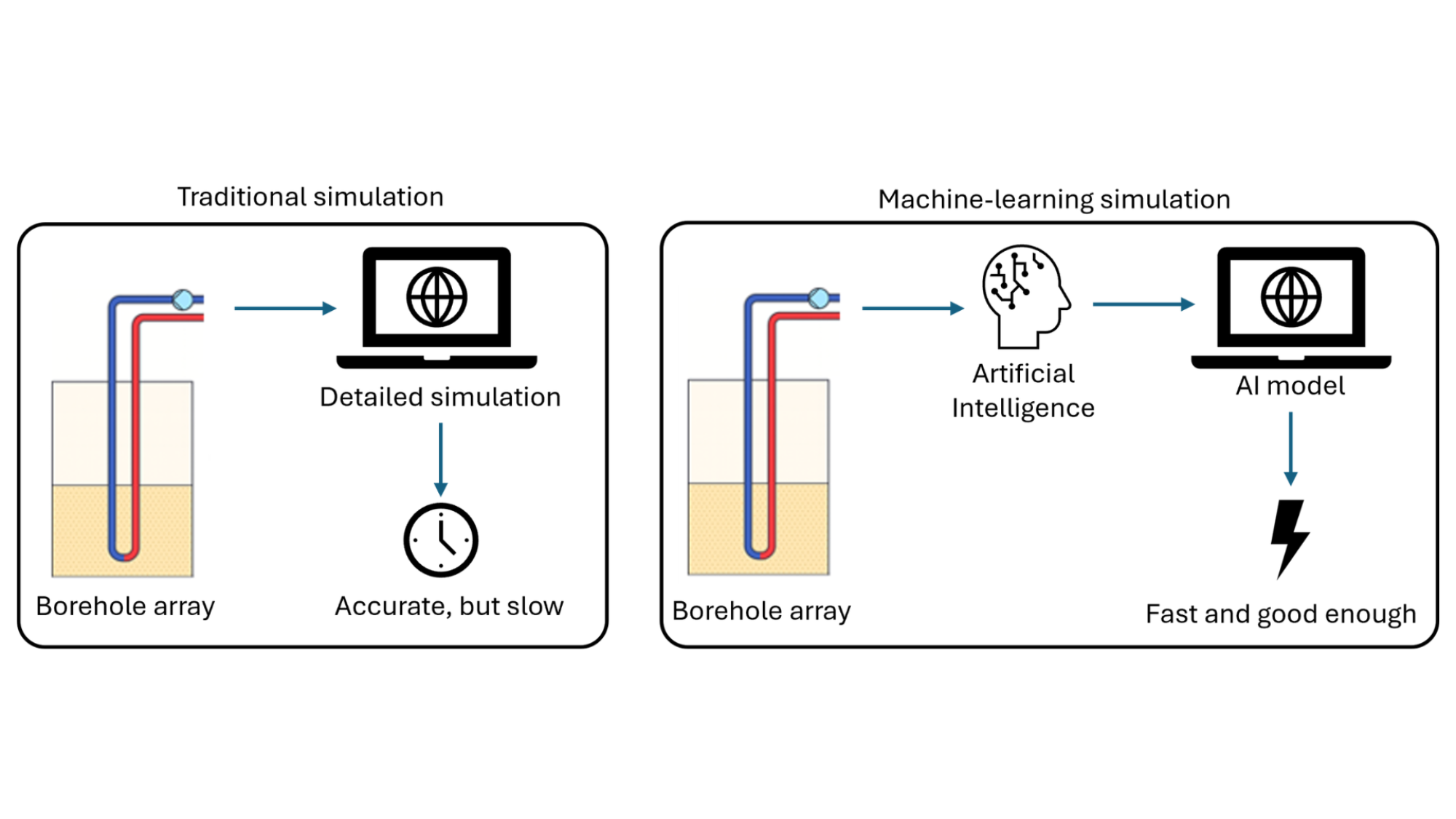
A challenge is that the underground part of the system is slow to respond and difficult to predict in detail. While accurate computer models exist, they are too slow for real-time use. Project researcher Pouya Zahadat addressed this by developing a simplified digital model that can quickly estimate underground conditions. In practice, this allows the system to anticipate how the ground will respond and avoid overuse, while planning operations several hours or even days ahead.
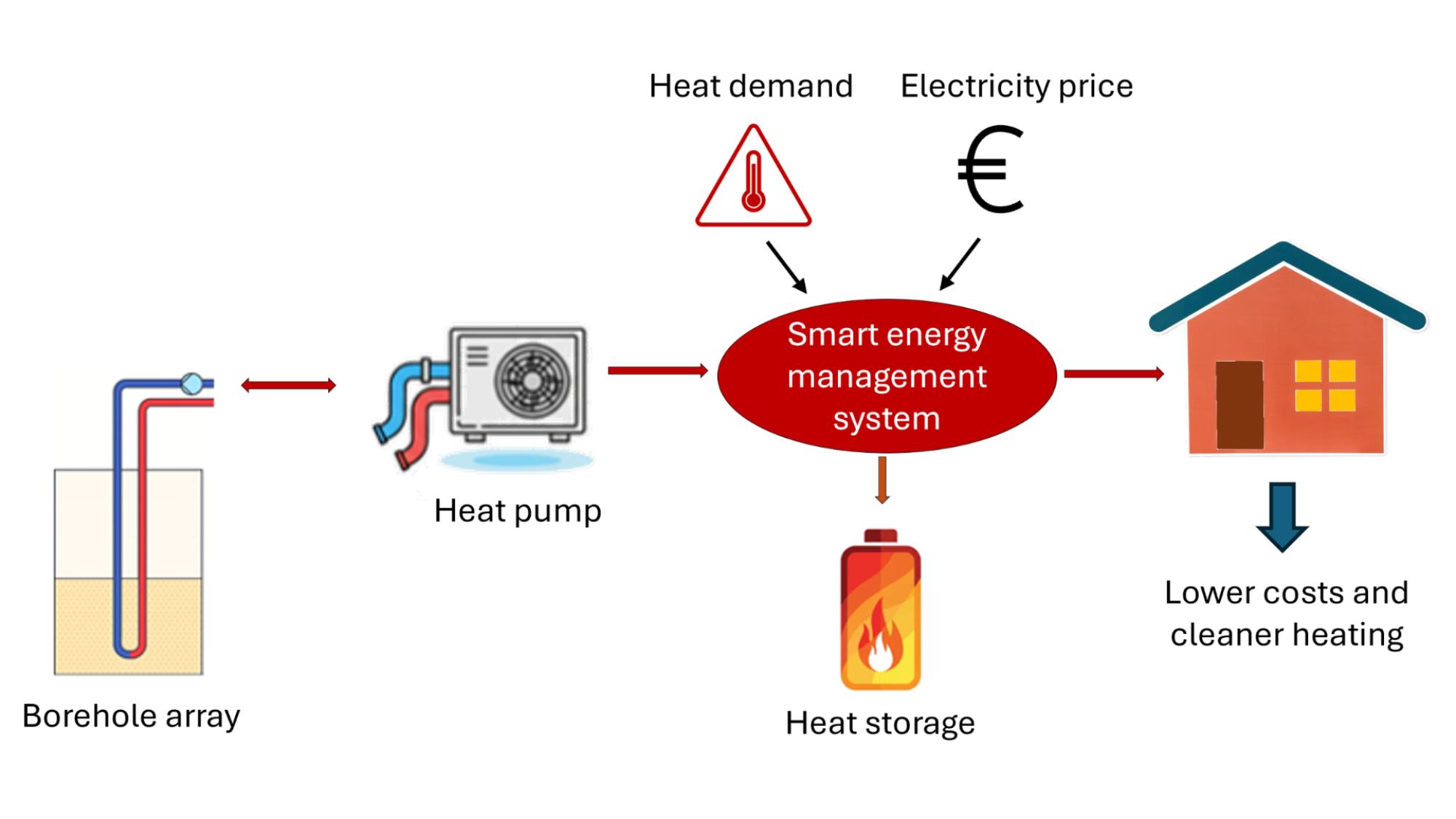
The digital model was then linked to a smart energy management system that controls the entire heating setup, which is illustrated in Figure 2. The setup decides when to run the heat pump, when to heat the building directly, and when to store heat, based on heat demand and electricity prices. The aim is simple: meet heating needs at the lowest possible electricity cost, without compromising comfort or system lifetime.
In practise, this means:
- When electricity is cheap, the system can produce extra heat and store it
- When electricity is expensive, stored heat is used instead
- The heat pump is protected from excessive on–off cycling
Testing the idea: University of Oulu Botanical Gardens
The approach was tested using real data from the buildings at the University of Oulu Botanical Gardens over a winter period (January–March), using actual heating demand and real electricity prices. Different system sizes were compared, from small to large heat pumps and storage tanks.
The results were clear. Smart control reduced electricity costs by 23–36% compared to traditional control. Larger systems achieved slightly higher savings, but they were often unrealistic in practice. Medium-sized systems delivered nearly the same savings, making them the most practical option. In short, smarter control mattered more than bigger equipment. In other words, using smart control was more important than just installing bigger equipment.
To show how the system works in daily use, we look at a two-day winter period from the case with a medium-sized heat pump and heat storage tank. Figure 3 shows when the building’s heating is provided directly by the heat pump and when it is supplied from stored heat. A closer look at these two days shows how the system shifts heating away from hours when electricity prices are high.
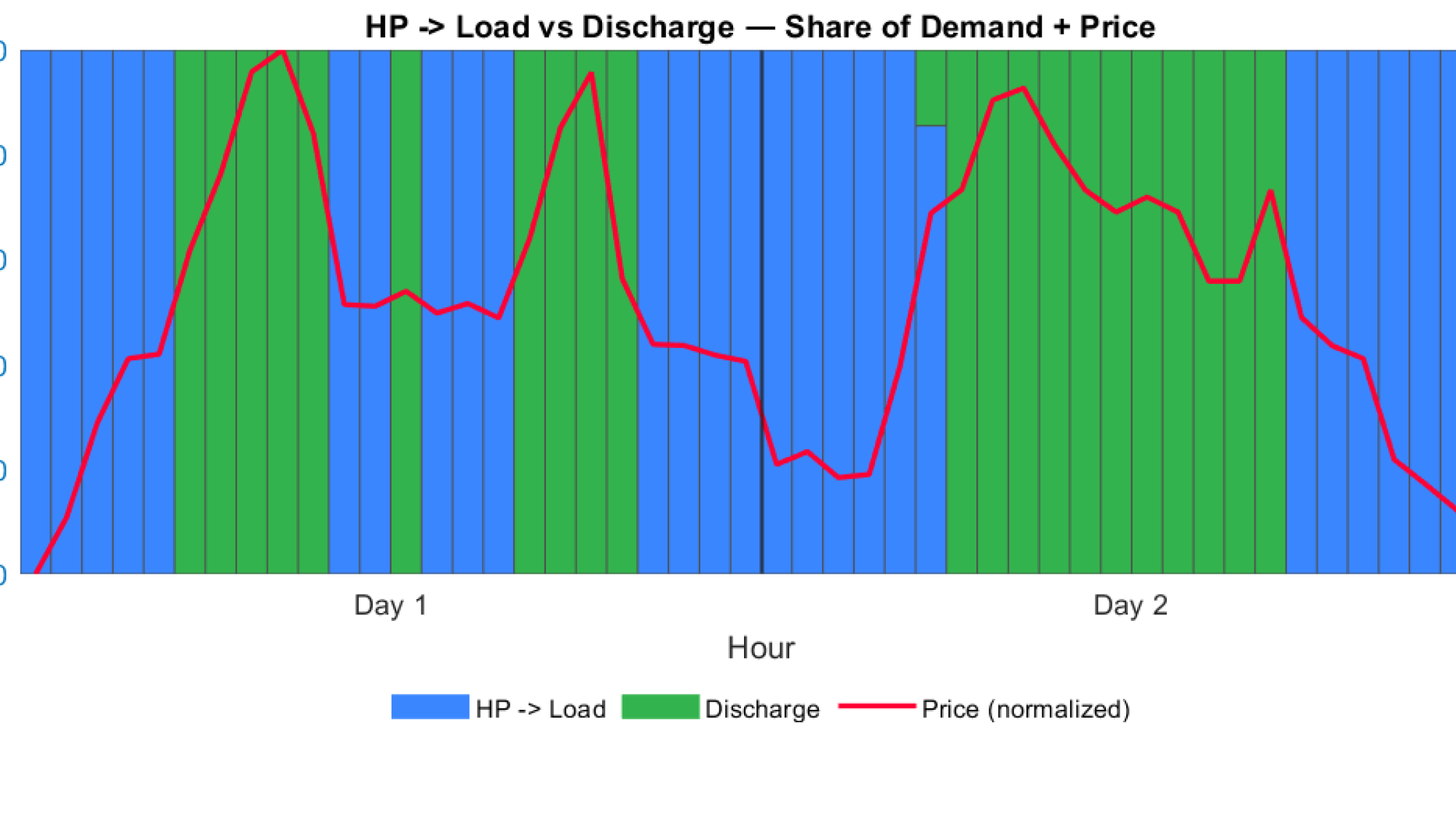
When electricity prices are low, the system runs the heat pump more and stores extra heat for later use. When prices are high, it switches to using stored heat instead, which lowers costs while keeping indoor comfort stable. Figure 3 shows how heating is split between direct heat pump use and stored heat, alongside changes in electricity prices. Over the full period, the building’s heating needs are always met, but electricity use is shifted away from the most expensive hours. This kind of flexibility becomes increasingly important as more renewable electricity enters the power system.
Toward the next generation of geothermal heating
The University of Oulu researchers’ work in the Geoenergy Leap project shows a clear improvement shows a clear improvement over today’s geothermal systems. Instead of running the system in a fixed way, it adjusts its operation based on electricity prices. It also replaces slow, complex simulations with a fast model that supports quick decisions and coordinates all parts of the system to work together more efficiently.
For building owners, this can mean lower energy costs. For the power system, it improves flexibility, and for society, it supports cleaner and more efficient heating without the need for major new infrastructure. The main idea is simple: smarter geothermal heating is not about drilling deeper or using new hardware, but about using better digital control to make existing systems work more efficiently—especially in cold regions, such as Finland, where heating demand is high.