Oulu Radio and TV mast becomes a key climate monitoring station
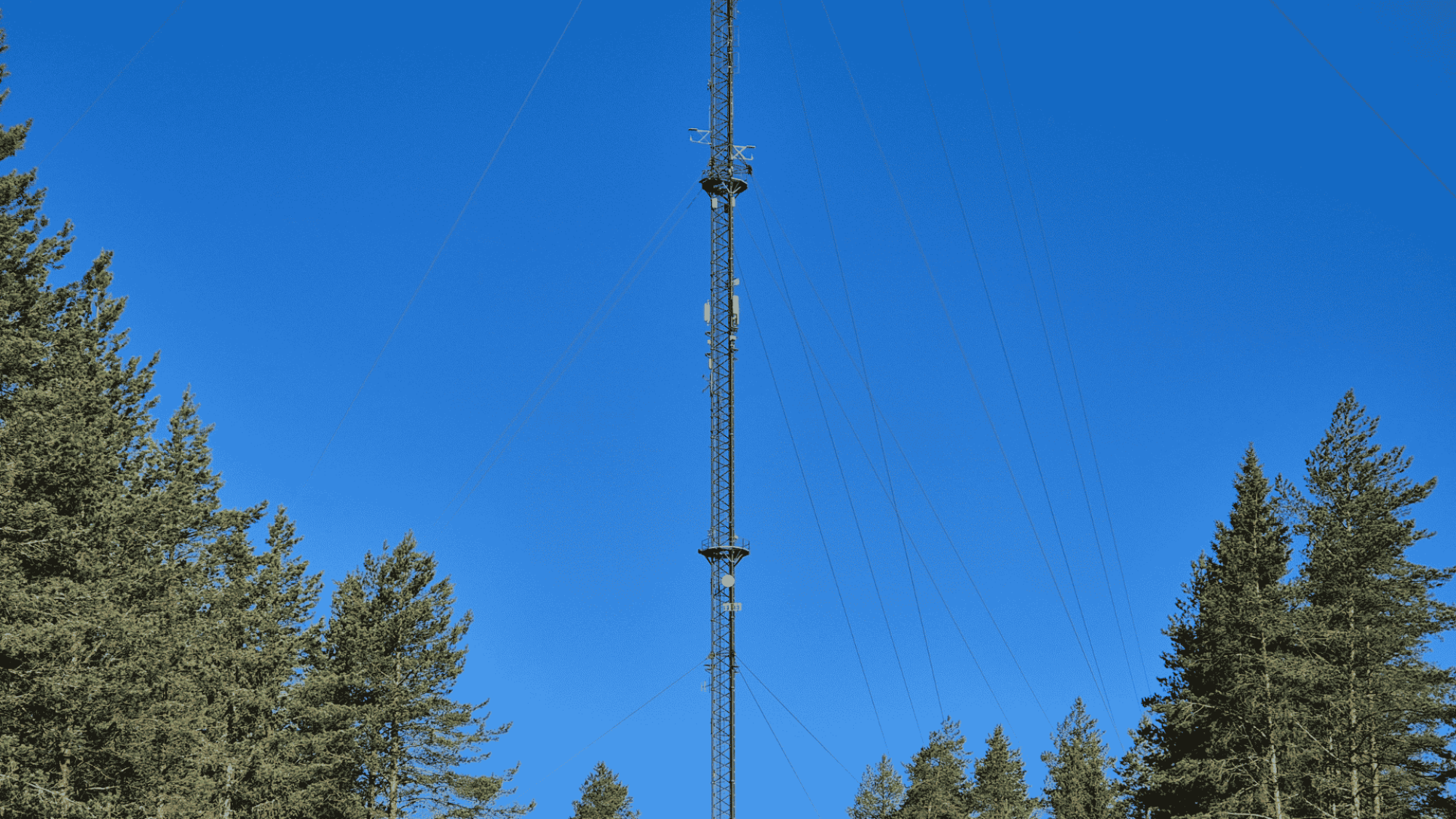
Installed at a height of approximately 120 metres on the radio and television transmission mast, the system measures atmospheric greenhouse gas concentrations every second. The measurements provide a continuous stream of observational data, particularly on carbon dioxide and methane concentrations and their variation across the region. The monitoring station strengthens Finland’s greenhouse gas observation network, especially in Northern Finland, where continuous atmospheric monitoring at this scale has not previously existed.
Towards more accurate climate data in North Ostrobothnia
The measurement data will be used in inversion modelling developed by the Finnish Meteorological Institute. The method combines atmospheric greenhouse gas observations with weather models. This allows emissions and carbon sinks to be identified and quantified, and shows where nature absorbs carbon.
“The impacts of the green transition can and must be measured in real-world conditions. The Kiiminki mast measurements are a key part of a system that, for the first time, provides North Ostrobothnia with a comprehensive and near real-time view of the region’s greenhouse gas situation,” says Associate Professor and VISIO project lead Hannu Marttila.
“The Kiiminki TV mast offers an exceptionally good observation site for regional greenhouse gas measurements. The data obtained from the mast improves the accuracy of inversion modelling significantly,” says Hermanni Aaltonen, Group Manager at the Finnish Meteorological Institute.
Benefits for climate action and decision-making
The monitoring system also enables the rapid detection of unusual emission events. The equipment can identify situations where greenhouse gas concentrations deviate from normal levels, supporting environmental risk monitoring and providing situational awareness for authorities. A similar monitoring capability was previously used at the Finnish Meteorological Institute’s Utö research station to track methane emissions detected in connection with the Nord Stream pipeline explosions.
The measurement data can be used in regional climate action, land-use planning, and monitoring municipalities’ carbon neutrality targets. The aim is to produce open and reliable information on the impacts of the green transition in real-world conditions.

The greenhouse gas measurements in Kiiminki are part of a broader regional monitoring framework that combines atmospheric measurements, water quality monitoring in aquatic systems, coastal observations, and assessments of land-use changes in peatland areas. The data produced by the project will be published openly through the Finnish Meteorological Institute and linked to national and international monitoring networks.
The project is funded by the EU Just Transition Fund (JTF) and supports North Ostrobothnia’s goal of advancing towards a climate-neutral and knowledge-based green transition.
Further information about the project is available in Finnish through the links below.