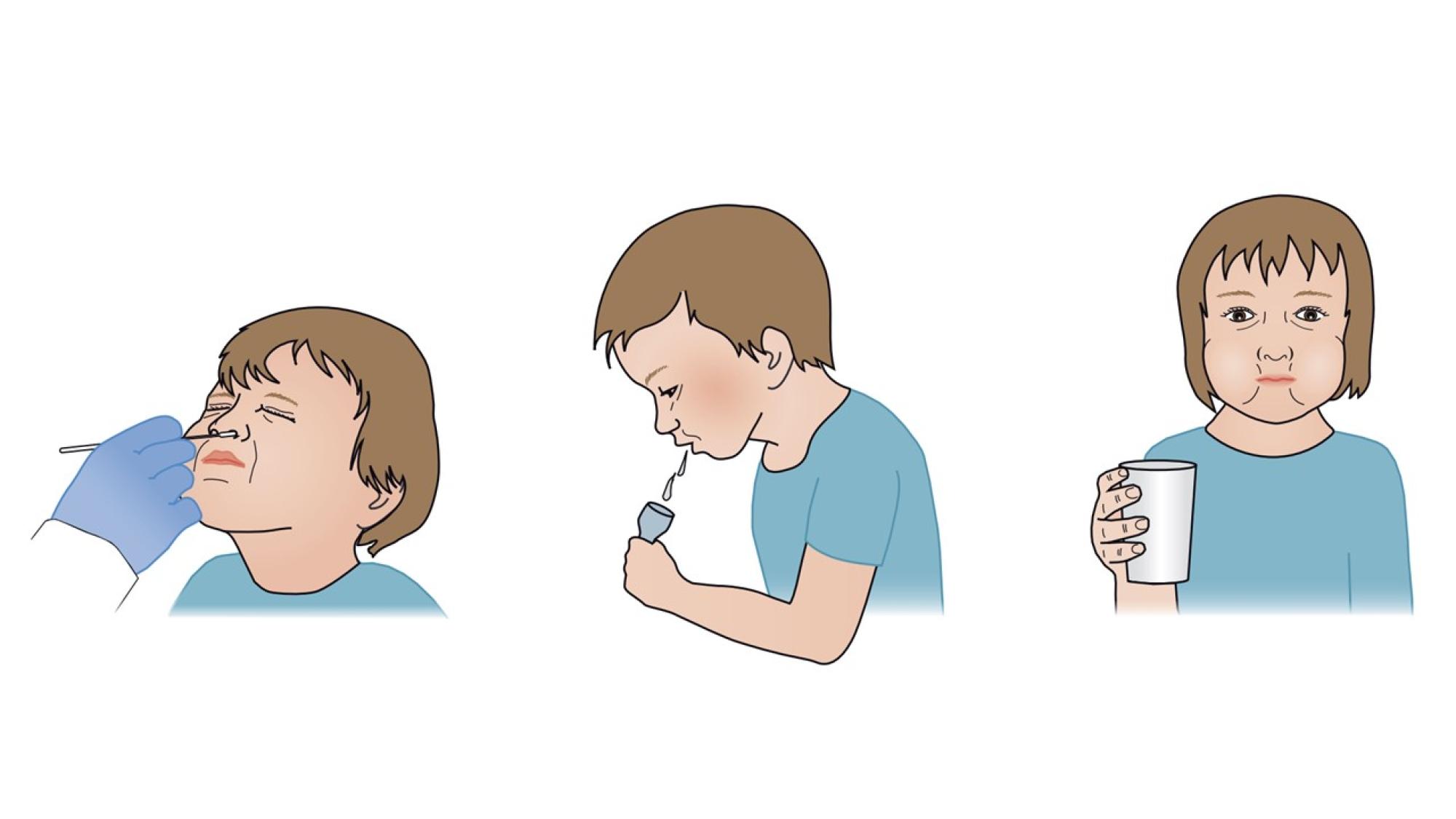
Saliva is a promising alternative to nasopharyngeal swabs in diagnosing respiratory infections in children

Respiratory infections are usually investigated using nasopharyngeal swabs, which became familiar to many during the coronavirus pandemic. However, the method is particularly uncomfortable for children. Findings from a study conducted in the children’s emergency department at Oulu University Hospital indicate that saliva samples could replace nasopharyngeal swabs in many situations.
The study collected a total of 850 saliva and nasopharyngeal samples from children who sought emergency care due to a respiratory infection or fever. Previous saliva-sample studies of a similar scale in children have focused mainly on coronavirus.
“In respiratory infections, the aim is to identify specifically those viruses and bacteria for which targeted treatment exists. These include, for example, mycoplasma, whooping cough and influenza,” says doctoral researcher and paediatrician Ville Lindholm from the University of Oulu.
A new finding of the study was that the mycoplasma bacterium was detected very effectively in saliva. Only a small number of influenza cases were observed in the dataset, but based on earlier studies in adults, influenza is also likely to be detectable reliably from saliva samples.
Children’s own experiences also support the use of saliva samples: of the 300 participating children, only three would have preferred a nasopharyngeal swab.
“The challenge, however, is that very young children are not yet able to provide a saliva sample, and collecting a sufficient amount of saliva can be difficult for a child exhausted by infection,” Lindholm notes.
The study was published in the Journal of the Pediatric Infectious Diseases Society in November: Ville Lindholm, Suvi Mattila, Kimmo Halt, Niko Paalanne, Tytti Pokka, Vesa Mäki-Koivisto, Laura E Savolainen, Minna Honkila, Terhi Ruuska-Loewald, Detection of Respiratory Pathogens in Saliva and Mouthwash Samples in Children, Journal of the Pediatric Infectious Diseases Society, 2025.