Succeeding together: Researcher Olli Haanpää and local activist Pentti Marttila-Tornio restore the Kiiminkijoki River to its former glory
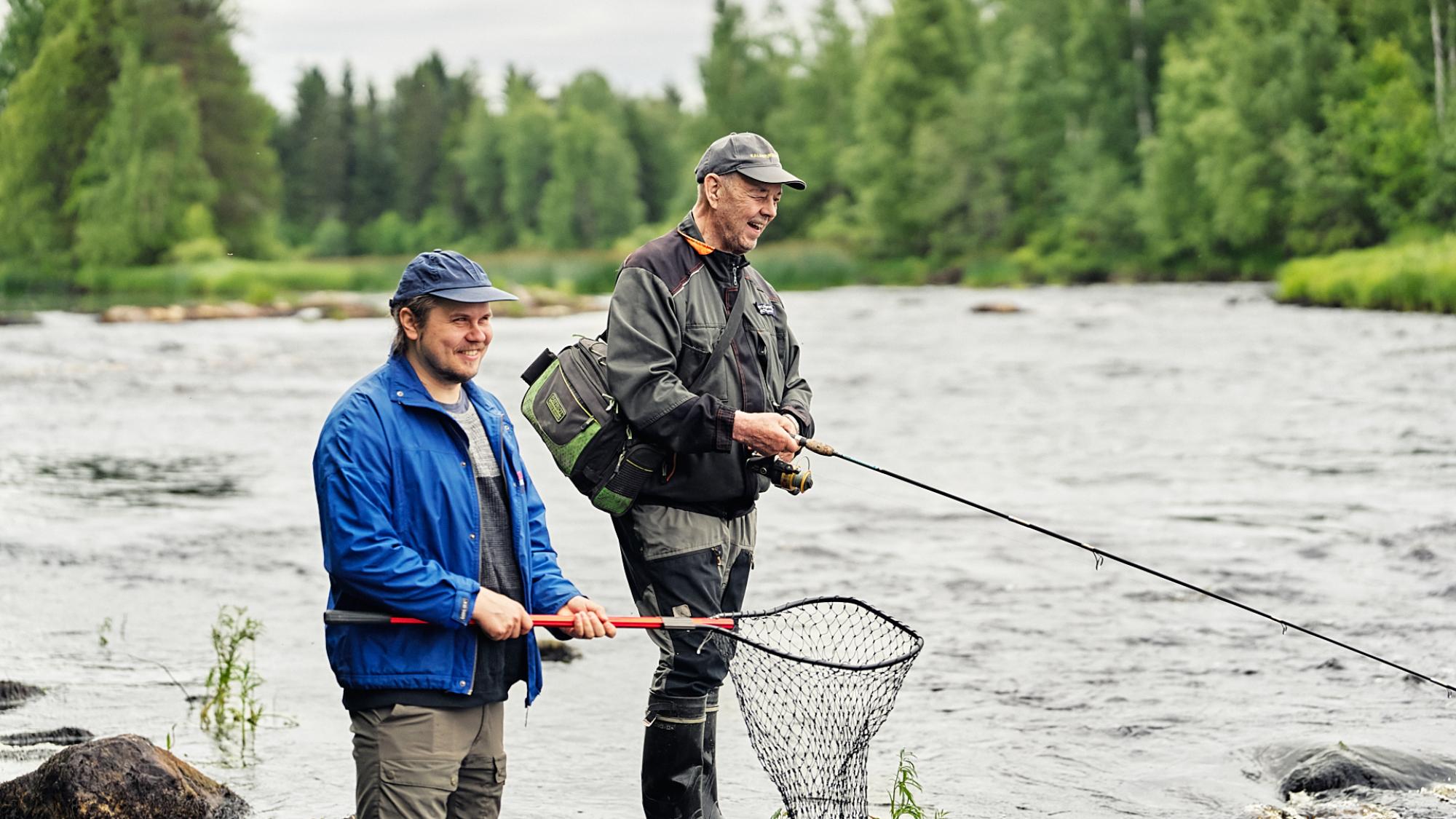
Pentti Marttila-Tornio, a resident of Ylikiiminki, and Olli Haanpää, a researcher at the University of Oulu, share a common goal. They want to see salmon return to the Kiiminkijoki River and ensure that human activity exists in harmony with nature. Various actors across the Kiiminkijoki catchment area have been working towards this for a long time, and the results are now beginning to show.
University researchers joined the region's restoration and climate action research in 2022 through the MATKI project, which examined land use in the Kiiminkijoki catchment area.
The project was carried out in collaboration with the Natural Resources Institute Finland (Luke) and the Finnish Forest Centre. As part of the project, the university organised workshops with local stakeholders to draft a land-use action plan for the area, which also included restoration sites.
Effective cooperation between locals and university researchers is a prerequisite for the long-term work required to improve the state of the environment.
"Research needs a home. If research and restoration are not rooted in the place where they are being carried out, projects remain one-off initiatives and fail to achieve a broader impact," explains Olli Haanpää.
Research cannot succeed without local knowledge
Through the project, Haanpää, who is completing his doctoral thesis in cultural anthropology, got to know the residents and local associations along the river. His task has been to build cooperation with local people and to understand who operates in the area and who possesses knowledge about the state of its nature.
Haanpää ended up exchanging ideas with Marttila-Tornio right at the start of his research while mapping out active local individuals.
Having lived in Ylikiiminki all his life, Marttila-Tornio serves as the chairman of several local associations and knows the Kiiminkijoki area inside out. He has been involved in water restoration projects in the river basin since the early 2000s and continues to monitor the condition of the waters.
Having also earned a living as a fisherman, he remembers the times when valuable fish species still migrated up the river. However, peat extraction, which began in the 1980s, polluted the waters and destroyed fish stocks.
"The university researchers didn't initially have an understanding of what this Kiiminkijoki area is really like. I had that foundational background knowledge, and together we managed to build a solid package," says Marttila-Tornio.
A deep dive into local knowledge has been essential for the university researchers.
"You cannot know what is worth doing to restore the area simply by looking at maps. You need to know who operates in the region and who owns the land, for example," Haanpää says.
Local associations, in turn, benefit from the support of large organisations like the university.
"Associations and individual people have a lot of knowledge, but they don't necessarily know how to direct it to the right places. The university staff have also been a great help in applying for funding and handling coordination," Marttila-Tornio notes.
Trust is built around the same table
Working with locals, Haanpää has noticed how important a good, trusting relationship between researchers and citizens is for successful research.
"Local people have a tremendous amount of knowledge about the areas. By joining forces, we can achieve so much more."
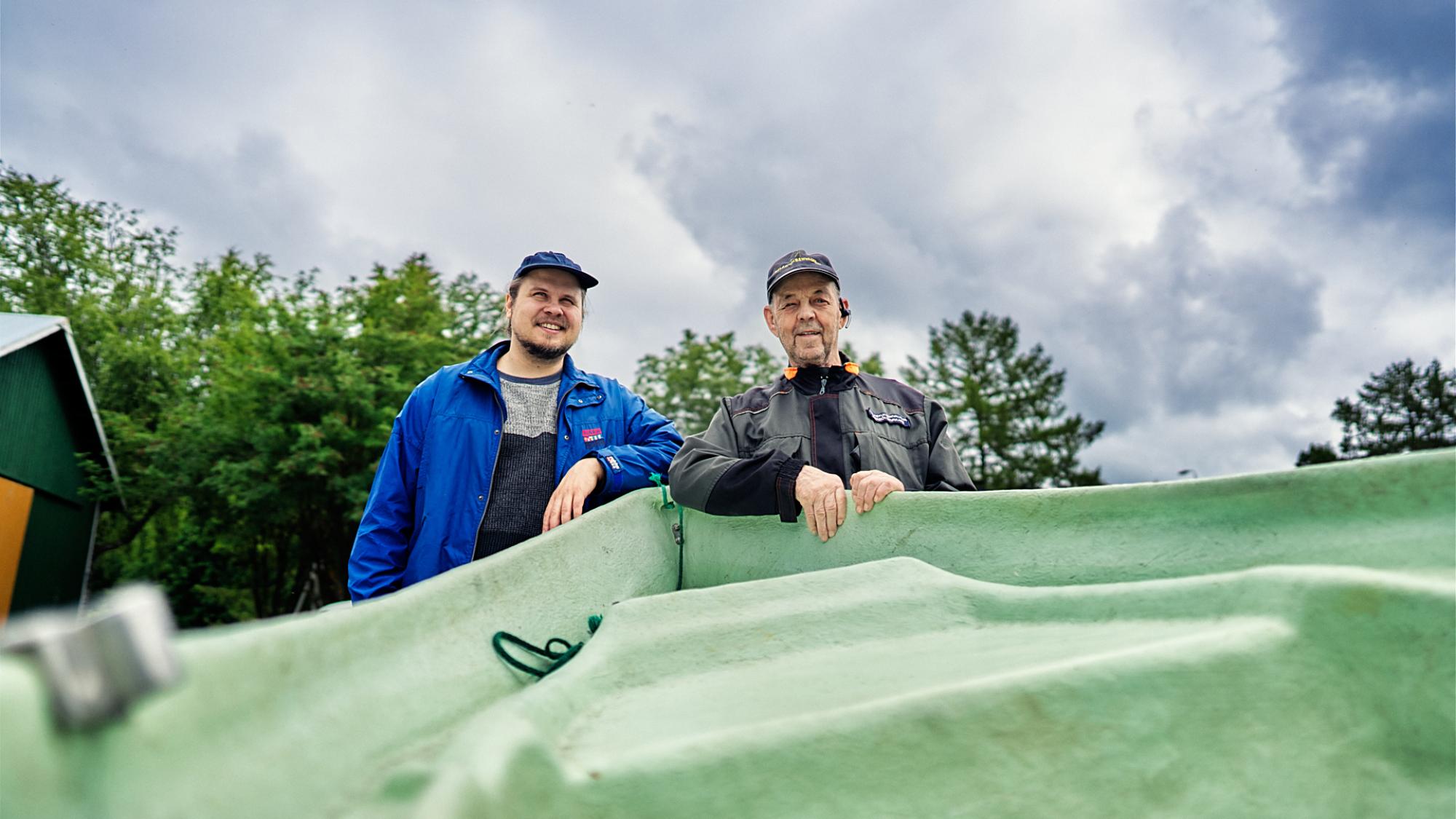
Both men agree that trust is earned by working together and having face-to-face discussions.
"You have to get people around the same table – and out into nature! Olli has joined me many times to collect water samples all the way from Puolanka to Haukipudas, seeing firsthand what the work involves in practice," Marttila-Tornio says.
A shared goal binds everyone to work towards a common objective.
"In the MATKI project, the research participants created a shared vision that everyone could commit to. And from there, we set out to implement it together," says Haanpää.
Improving the state of nature takes time
Research and environmental restoration are both endeavours that require long-term commitment. With university researchers involved, the entire catchment area is better considered, and the work is approached with a long-term perspective.
"We aim to create a positive cycle. As nature improves, it wakes people up to realise that they can make a difference. Interest in the region grows, which helps secure support for new projects and attracts new researchers who are enthusiastic about the area," Haanpää says.
Demonstrating concrete changes and presenting results is essential for keeping local actors motivated.
"It is difficult for an individual forest owner to commit to environmental measures if they don't know what impact those actions will have. When we can show, for instance through data, how the state of the waters can be improved, it becomes much easier to get people on board," Haanpää explains.
Marttila-Tornio is pleased to see what has been achieved through cooperation between different actors. For future generations, he hopes to see salmon swimming in the Kiiminkijoki River once again.
"It really brings a sense of satisfaction when you see the results of the work that's been done. Restoring water bodies is not a simple task, but we won't give up."
The Achievers:
Olli Haanpää
Work: Doctoral Researcher at the University of Oulu
Education: Master of Social Sciences
Motto: "By restoring our relationship with nature, both nature and humanity recover."
Pentti Marttila-Tornio
Work: Retired; former career includes working as a farmer, fisherman, forestry worker, and lorry driver
Education: Basic education
Motto: "We will make the Kiiminkijoki a salmon river again!