“Uncovering the microscopic phenomena that will drive massive, macro-scale industrial change is exciting” - Meet H2FUTURE postdoctoral researcher Aidin Heidari
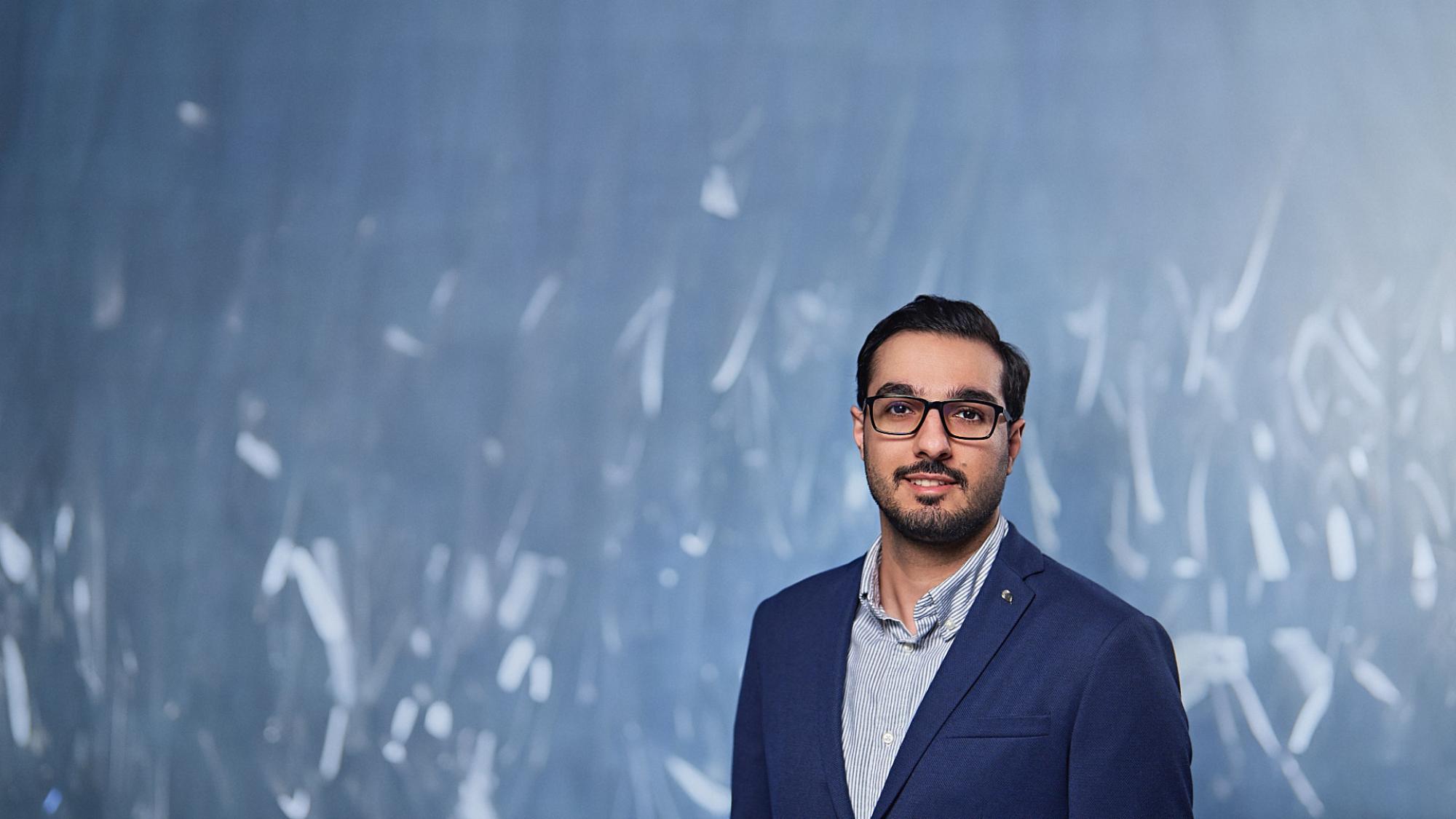
Aidin Heidari is a postdoctoral researcher at the Process Metallurgy Research Unit at the University of Oulu. His academic background is in extractive and process metallurgy: he completed his Bachelor’s and Master’s degrees in Extractive Metallurgy in Tehran, Iran, at Amirkabir University of Technology and Sharif University of Technology. Before moving fully into academic research, he also gained industry experience as a process engineer, including work related to the Mianeh iron and steel plant project.
Aidin moved to Finland to pursue his doctoral studies at the University of Oulu, where he successfully defended his PhD thesis at the end of August 2025. Continuing as a postdoctoral researcher in the same Process Metallurgy Research Unit felt like a natural step as well as a thrilling opportunity.
“The project provides a fantastic platform to stay within a research community I respect, while directly contributing to the pressing global challenge of decarbonizing the steel industry. Joining H2FUTURE felt like the perfect natural progression,” Aidin says.
“I already had a deep synergy with the research group and a strong foundation in hydrogen reduction technologies.”
Hydrogen reduction at the heart of fossil-free steelmaking
In H2FUTURE, Heidari’s research focuses on the hydrogen reduction of iron ores. He studies how different parameters affect the reduction process from the surface of the material to its core, comparing the reduction behaviour of Direct Reduction (DRI) and Blast Furnace (BF) pellets under varying hydrogen and carbon monoxide atmospheres. He also investigates how water vapour influences hydrogen reduction in iron ore pellets.
Although Heidari’s research is conducted at the microscopic level, it aims to support large-scale industrial change. By using thermogravimetric analysis (TGA) together with advanced characterization methods, researchers can follow how iron ores behave under different reduction conditions and build the knowledge needed for fossil-free steelmaking.
“What excites me most is uncovering the microscopic phenomena that will drive massive, macro-scale industrial change,” Heidari says. “Gathering this highly specific data is exactly what is needed to make fossil-free steelmaking a viable reality.”
Making hydrogen metallurgy more efficient
Steelmaking is a major source of industrial emissions, which makes new low-carbon production methods essential for the clean energy transition.
“My work contributes to massively reducing the carbon footprint of one of the world's most energy-intensive industries as a climate change solution.”
Heidari approaches this challenge by studying the kinetics of hydrogen reduction and the behaviour of different feed materials, including pellets and briquettes, under hydrogen-rich conditions.
His expertise combines theoretical knowledge with hands-on experimental skills. He works with complex reduction experiments using thermogravimetric analysis and applies post-reduction analysis methods such as Scanning Electron Microscopy (SEM), Optical Microscopy (OM), and X-ray microtomography to evaluate microstructures and porosity in the reduced pellets.
During his doctoral research, Heidari developed a foundational understanding of how iron ores are reduced under hydrogen. His postdoctoral work now allows him to examine more complex and industrially relevant scenarios, such as non-isothermal kinetic behaviour that simulates shaft furnace conditions. He is also expanding his research from traditional iron ore pellets to the reduction of steelmaking by-products.
From doctoral research to mentoring the next generation
As a postdoctoral researcher, Heidari is looking forward to expanding his research scope and taking on more responsibility in the laboratory. He hopes to further connect experimental research with industrial applications while continuing to publish high-impact research with his colleagues.
Professionally, he aims to establish himself as a leading researcher in fossil-free steelmaking and to deepen the integration between advanced characterization methods and industrial scaling. He also sees mentoring and teaching as an important part of his development.
“I look forward to refining my project management and pedagogical skills, ultimately becoming a more effective educator and mentor for the next generation of metallurgists,” he says.
Outside research, Heidari enjoys staying active and following sports. He is a football fan and a dedicated supporter of Arsenal, and he also enjoys playing racket sports such as tennis and badminton. When he wants to unwind at a slower pace, he likes travelling to new places and reading a good book.