Wolves around the world have evolved different skull shapes – humans are also shaping their evolution
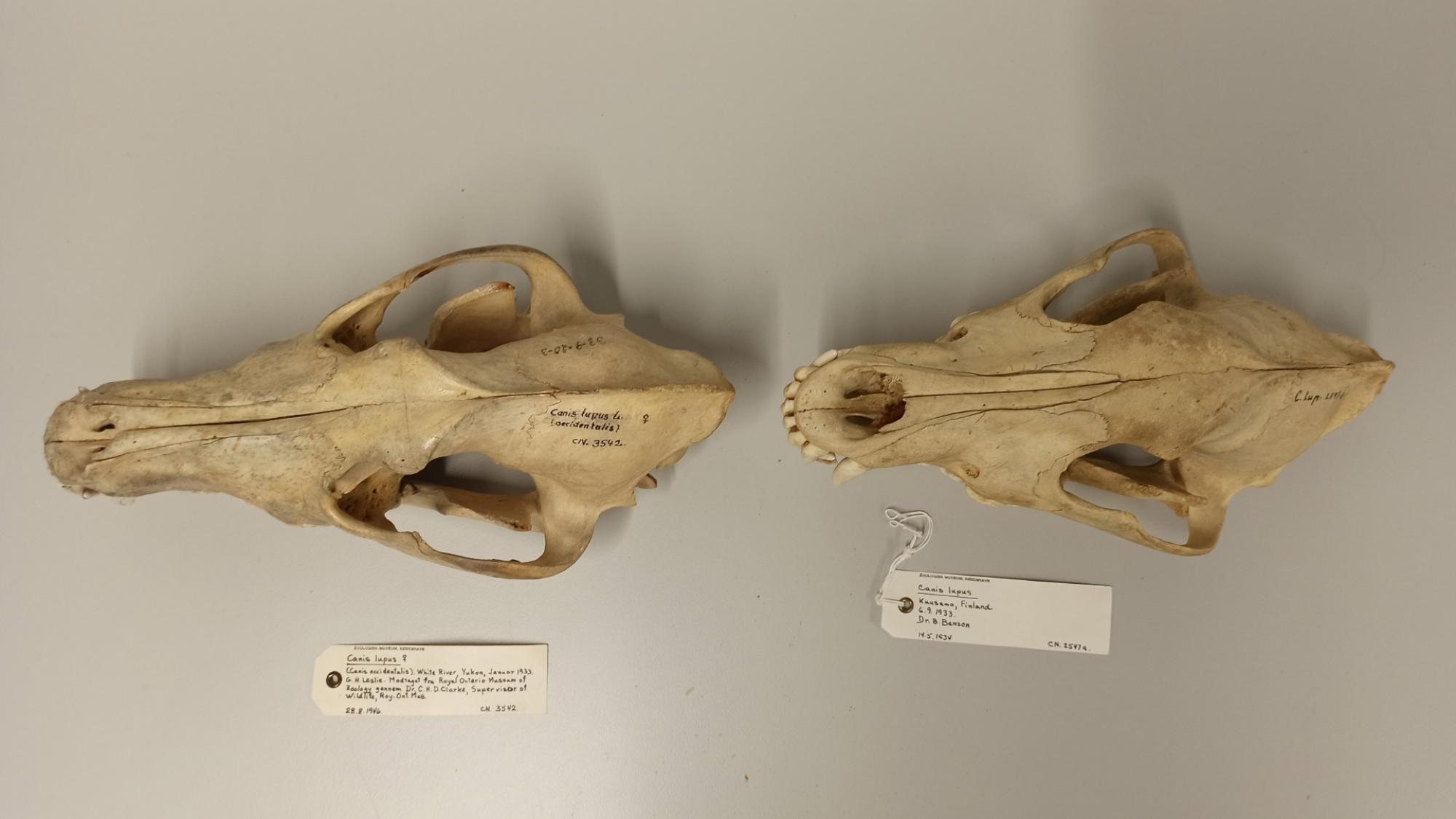
The researchers analysed 227 wolf skulls from Europe, Asia and North America using high-resolution three-dimensional imaging and geometric morphometric methods. The study revealed that environmental factors such as latitude and prey type explain part of the variation.
"Wolves have adapted to the environments they inhabit over thousands of years. Populations living in different habitats face different ecological pressures, and these are reflected in the shape of their skulls," says Dominika Bujnáková, Doctoral Researcher at the University of Oulu and lead author of the study.
However, the study also suggests that natural environmental differences are only part of the story.
Human activities have profoundly altered wolf populations during the last two centuries
Across Europe and North America, many wolf populations were severely reduced or completely eradicated during the 19th and 20th centuries. Some populations later recovered naturally, while others were recolonised by wolves from neighbouring regions or experienced hybridisation with other populations, as shown for example in the previous study. These demographic changes left a measurable signature in skull morphology, increasing differences between populations alongside the effects of natural isolation and local adaptation.
"In many cases, humans have reinforced the processes that naturally make populations different. By reducing population sizes and fragmenting habitats, we have limited gene flow and accelerated divergence between some populations not only in genetic terms but also in how those populations look like", Bujnáková explains.
Lasting effects particularly in Finland and Scandinavia
The findings are particularly relevant for Finland and Scandinavia. Wolves were nearly exterminated from the region before recovering through immigration from eastern populations. The study shows that such historical events can leave lasting effects on the morphology of populations, even after wolves return.
The results also have practical implications for conservation. As wolf populations recovered throughout parts of Europe and there are ongoing efforts for wolf reintroduction in the North America, understanding local adaptations becomes increasingly important when planning translocations, reintroductions or population reinforcement. Moving wolves between regions without considering their evolutionary and ecological differences may reduce the match between animals and their local environments.
The research also highlights the importance of museum collections. Many of the analysed skulls were collected decades ago, allowing researchers to reconstruct patterns of variation that would otherwise no longer be observable.
The study was conducted at the Ecology and Genetics Research Unit of the University of Oulu in collaboration with international researchers and natural history museums.
Human-driven differences in wolf morphology
- Human activity over the past two centuries has not only reduced wolf populations but also reshaped their evolution, leaving clear marks on skull morphology.
- Population declines, habitat fragmentation and human-driven recolonisation have limited gene flow and accelerated physical divergence between wolf populations.
-
As a result, current differences in skull shape reflect a combination of natural adaptation and strong, lasting human influence, which must be considered in conservation.
The study Global Drivers of Morphological Variation in Grey Wolves was published in June 2026.