

Business Transfers in Northern Regions: Lack of Preparation Threatens Continuity

For many micro-enterprises and SMEs in Northern Finland, business transfer will become an increasingly important issue in the coming years. However, the survey shows that preparation remains insufficient and support services are underused. The ageing of entrepreneurs, combined with the lack of concrete plans and identified successors, threatens both business continuity and regional vitality. The challenges related to business transfers call for active solutions and greater awareness. According to a survey conducted at the University of Oulu, many businesses are approaching a transfer, yet preparation is still lacking and the issue is already urgent.
kananmunia käsissä

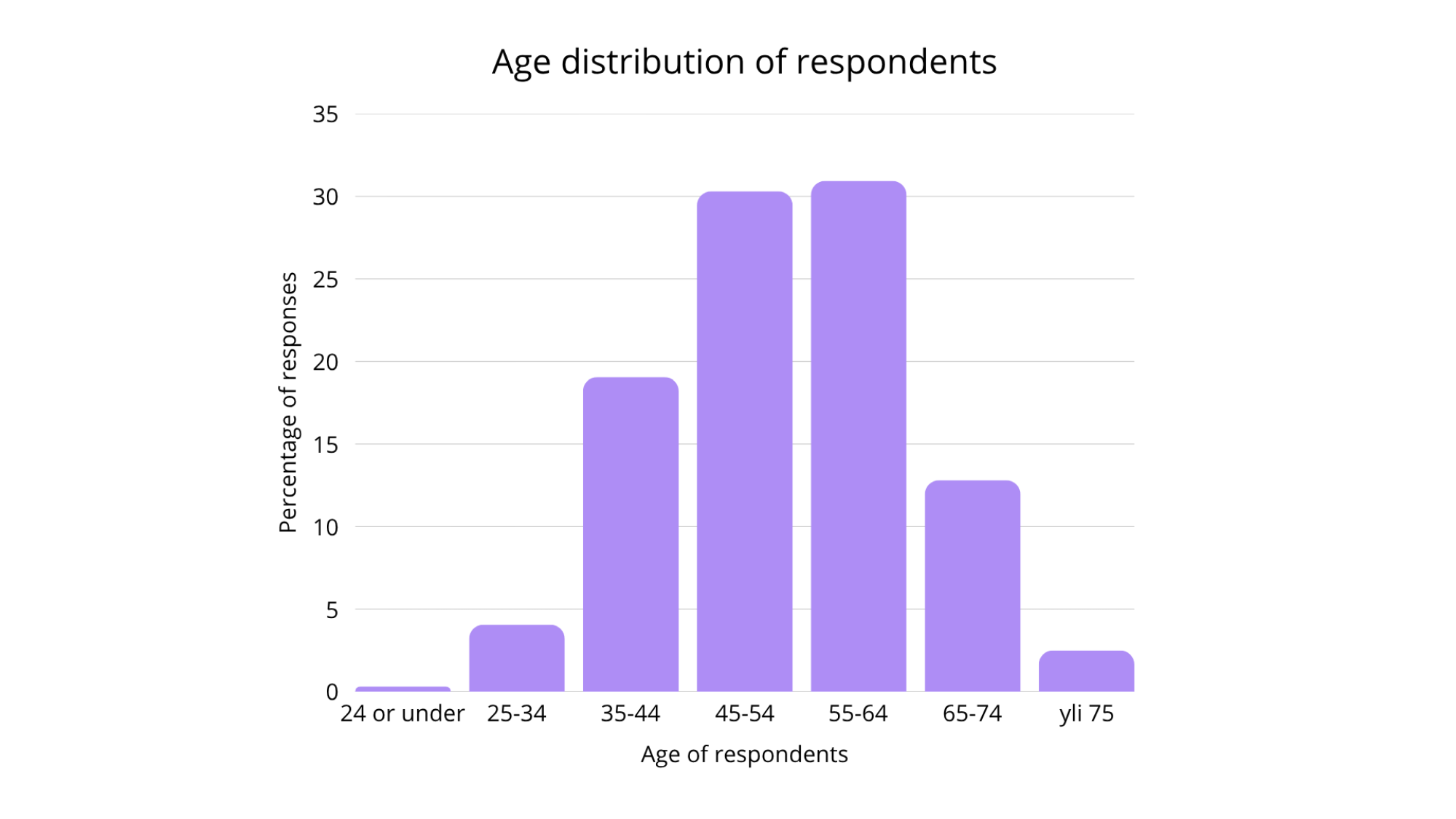
The survey, carried out as part of the BOCOD -Boosting Continuity and Digitalisation of Rural Region Businesses project (NPA), targeted micro-enterprises and small and medium-sized enterprises in North Ostrobothnia, Lapland and North Karelia. A total of 320 responses were received, with micro-enterprises strongly represented. Most respondents were over the age of 45, and more than half were over 55. The findings depict a business landscape in which business transfers will be crucial in the coming years for both business continuity and regional vitality.

Picture about age distribution of respondents.

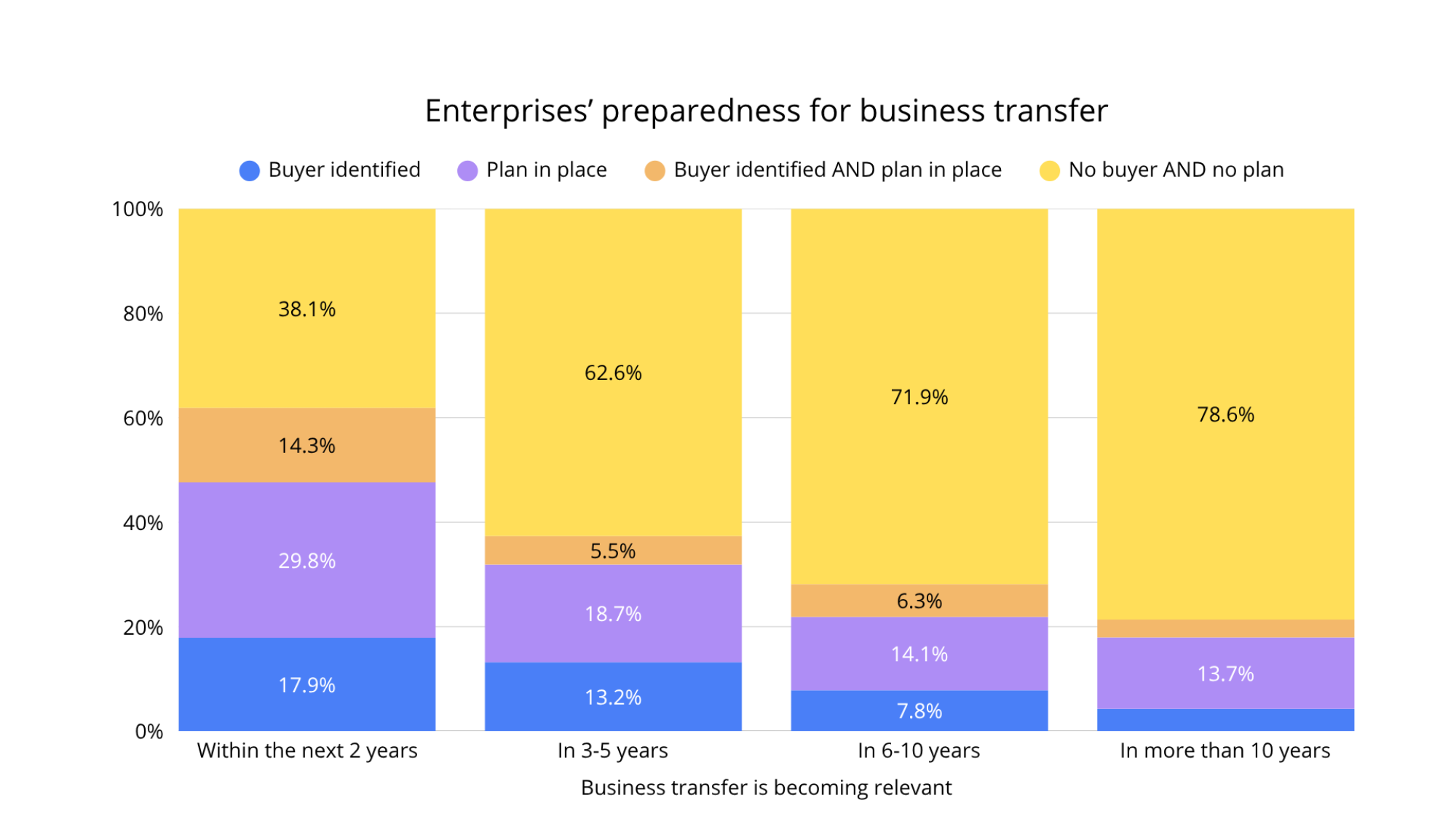
Business transfer is already a timely issue for many respondents: 19% estimated that a transfer would take place within the next two years, and 26% expected it to happen within three to five years. Despite this urgency, only a few entrepreneurs already know who the buyer will be or have a plan for how the transfer will be carried out. Overall, business transfer is relevant within the next five years for 45% of respondents. It is therefore reasonable to assume that the survey title, Mapping the Digital Readiness and Business Transfer Readiness of Businesses, was especially relevant to entrepreneurs for whom the topic is already current.

Among those planning a business transfer within the next two years:

  • Only 22% had sought support for the business transfer process.
  • 48% had no plan for carrying out the transfer and had not sought support for the process.
  • Slightly more than half (52%) felt they needed support with the transfer, but had not sought help.
Picture about enterprises´preparedness for business transfer.

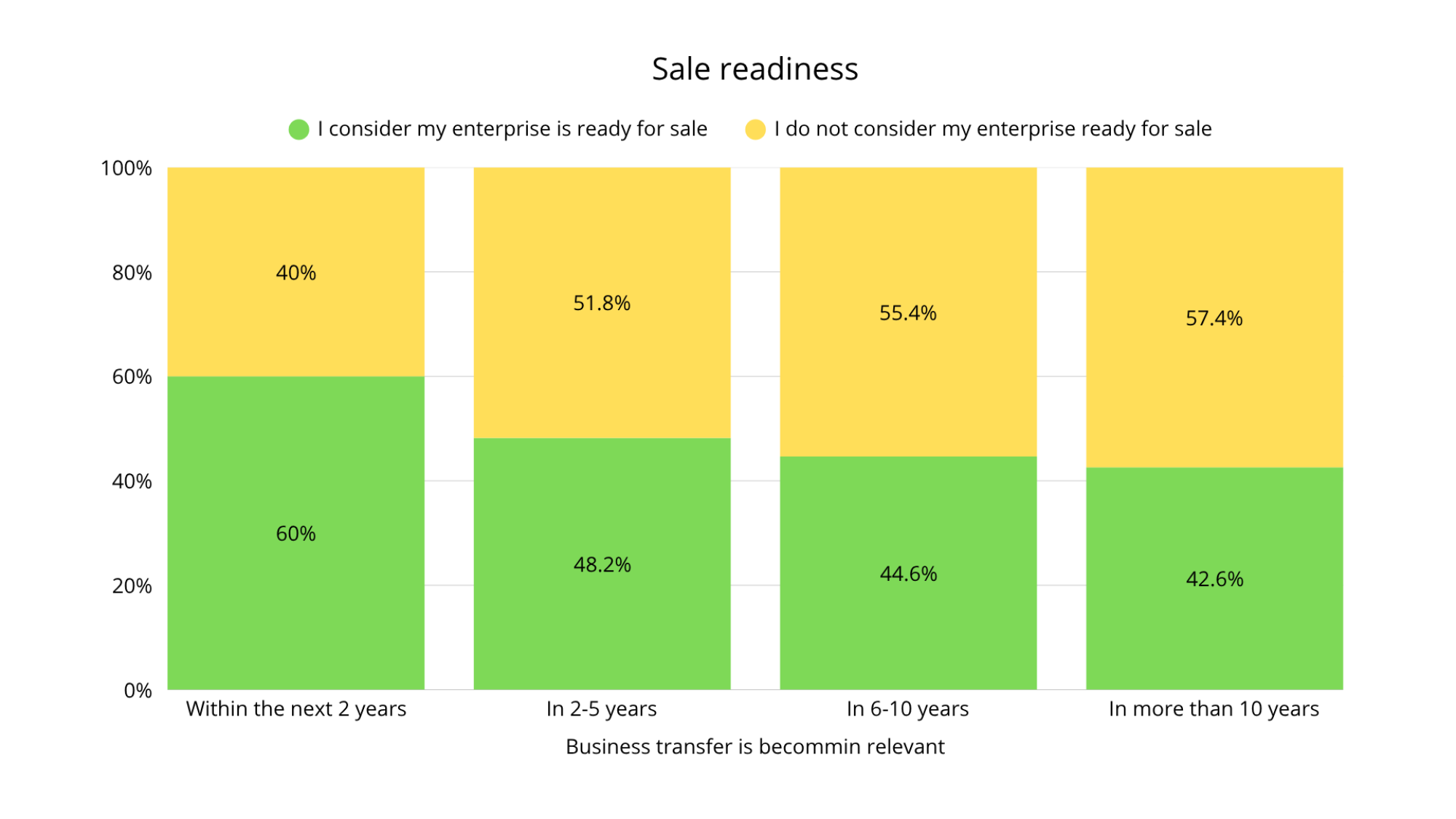
Although a business transfer is planned within the next few years, a significant share of businesses are not, even in the entrepreneurs’ own view, in a condition to be sold. Among entrepreneurs aiming for a business transfer within the next two years, 60% considered their business to be in saleable condition. However, 40% felt that their business was not ready for sale. This situation exposes businesses to several risks: buyer interest may remain limited, the sale price may fall short of expectations, or the transfer may be delayed or fail altogether.

A lack of sale readiness may indicate that the company’s financial structures, the business’s dependence on the owner, or the documentation of key processes do not support a smooth transition to a new owner. Entrepreneurs were also asked how they understood the sale readiness of their business, and the responses varied considerably. In practice, actual sale readiness may differ from the entrepreneur’s own assessment of the company’s condition. On the other hand, it may be encouraging that not all respondents viewed their business as sale-ready, as many may still intend to take steps to improve it.

Picture about sake readiness.

Support Is Needed, but Awareness of Services Remains a Challenge

Based on the responses, entrepreneurs most need support with legal and tax issues related to business transfers, as well as with finding a buyer. In total, 45% of respondents felt that coaching and mentoring could help them carry out a business transfer, yet only just over one fifth had sought any kind of support for the process. The findings suggest that many recognise their need for help but do not know where to find it, or for some reason have not taken action.

Regional low-threshold business transfer services remain poorly known. For example, 38% of entrepreneurs whose business transfer is expected within the next two years are not familiar with support services at all. This suggests that business transfer services need to be further developed and made more visible, and that entrepreneurs need easier access to support.

The current timing of business transfers, the lack of plans, and the limited awareness of support services together create a major challenge. Addressing it requires active measures and cooperation between both public and private actors. At the same time, it is important to recognise that responsibility cannot rest solely with support services; entrepreneurs themselves also have a key role in seeking out and exploring different solutions related to business transfer.

Timing Matters: The Mid-Range Time Horizon Offers the Best Opportunity for Effective Support

The most effective support for business transfers is aimed at entrepreneurs who still have enough time to prepare for the coming change. Coaching and sparring are particularly useful when the possibility of a business transfer has been recognised, but implementation is not yet imminent. At this stage, the entrepreneur can systematically strengthen the company’s value, explore successor options, and prepare mentally for letting go. What matters is that support extends beyond technical issues to include mental preparation and decision-making, allowing business transfer to become part of the company’s strategic development. Exit planning could be introduced in business advisory services long before the issue becomes pressing.

Closing down the business is also an option that entrepreneurs may consider, and it should not carry a negative value judgement. Such a decision may be justified, for example, if no successor can be found or if the conditions for continuing the business weaken. It is also advisable to prepare for business closure well in advance so that obligations, financial and legal matters, and personnel issues can be handled in a controlled manner. Proactive preparation makes the process easier and allows the business to be wound down in a planned and responsible way.

If preparation is delayed and the business transfer or business closure is already imminent, the available options narrow and the risks increase. There is no longer enough time to strengthen the company’s value, the pool of potential buyers becomes smaller, and continuity may be jeopardised. This is why support services and advisory efforts should be directed especially at entrepreneurs who still have an opportunity to influence the outcome.

In acute business transfer situations, support is needed most but sought least. The use of expert services is also inadequate, especially among micro-enterprises. Services should identify early signals and guide entrepreneurs with a low threshold even before the transfer becomes imminent. Proactive communication and tailored coaching based, for example, on financial indicators, sector-specific developments or the entrepreneur’s age profile could support both business value and regional vitality and help enable a well-managed business transfer.

It has also been recognised that paid expert services may represent too high a threshold for micro-enterprises and are often seen as too expensive. However, almost every entrepreneur works regularly with an accounting firm. Accounting firms could raise the issue of business transfer and exit planning well in advance. This would give entrepreneurs an opportunity to reflect on the future and prepare for change in a controlled way, rather than facing business transfer as an unexpected issue. Accounting firms play an important role in the everyday support of businesses, and their active approach to exit planning could also lower the threshold for using other expert services and increase the level of planning related to business transfers, especially in micro-enterprises.


Authors: Laura Veikkola, M.Ed., Project Researcher and Iikka Meriläinen, M.Sc. (Econ.), Project Researcher, University of Oulu Kerttu Saalasti Institute

Photo: University of Oulu

The survey was conducted as part of the Northern Periphery and Arctic (NPA) funded BOCOD -Boosting Continuity and Digitalisation of Rural Region Businesses project. The project is coordinated by Munster Technological University, and the partners are University of Oulu Kerttu Saalasti Institute, Business Joensuu Oy, Lapland University of Applied Sciences, and the Icelandic regional development organisations Westfjords Regional Development Office (Vestfjarðastofa) and East Iceland Regional Development Office (Austurbrú ses).

Created 26.5.2026 | Updated 27.5.2026