What Iceland’s Westfjords can teach us about business transfers and regional vitality?

In September 2026, I took part in a BOCOD project partner meeting in Ísafjörður, located in Iceland’s Westfjords. The project seeks solutions to the challenges of business continuity, business transfers and digitalisation in rural areas in Finland, Iceland and Ireland. The starting point is a shared concern about how entrepreneurship and vitality can be maintained in regions where distances are long, the population is ageing and finding successors for businesses is becoming increasingly difficult.
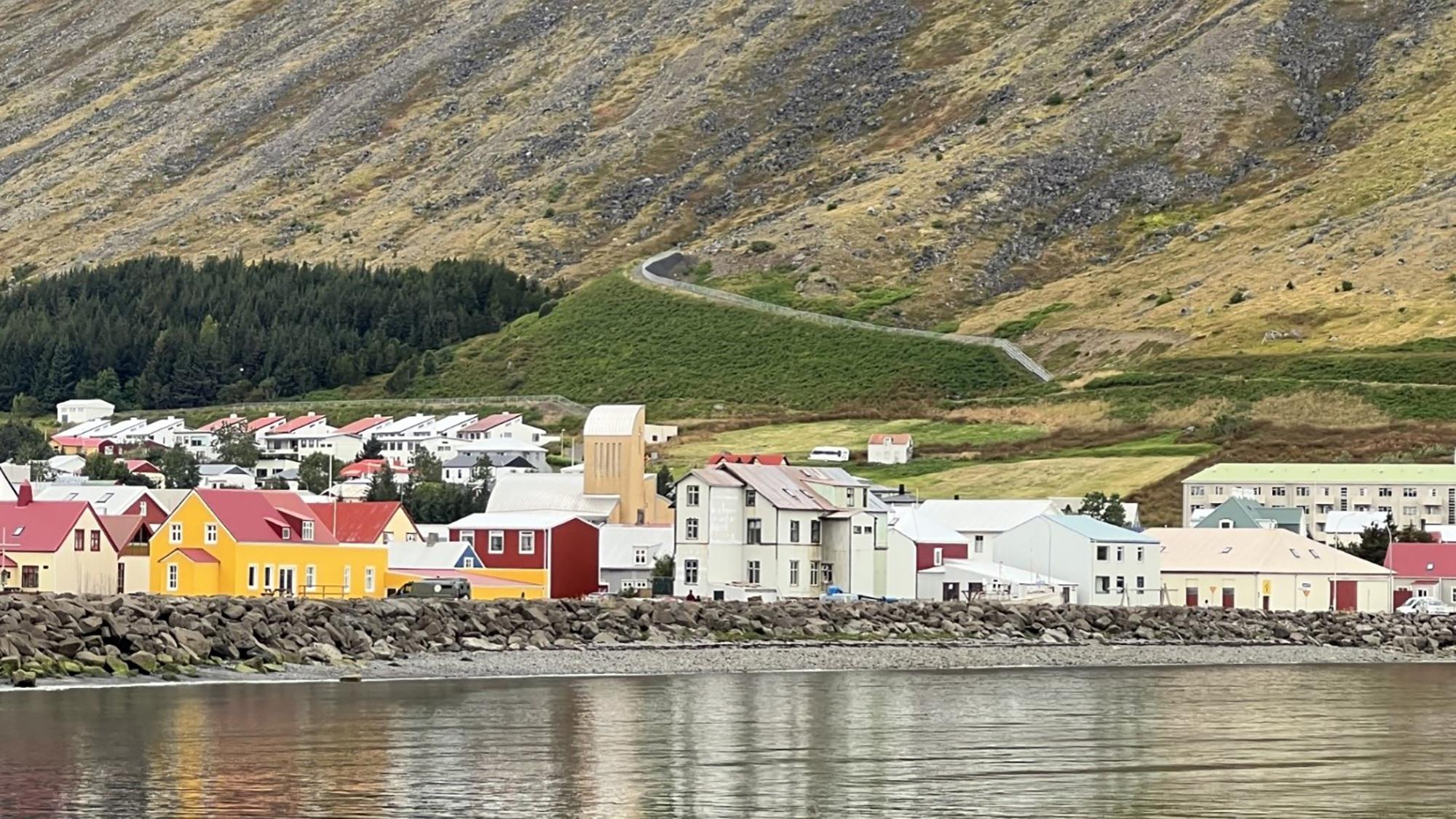
kylämaisema Islannissa mereltä päin

Our visit was hosted by Magnús Þór Bjarnason, who works at Vestfjarðastofa, the Westfjords Regional Development Office. Under his guidance, we learned about regional development work, visited local companies and entrepreneurs, and discussed questions related to business transfers, digitalisation and regional vitality. More information about the region’s development work is available on the Vestfjarðastofa website and the Invest in Westfjords website.

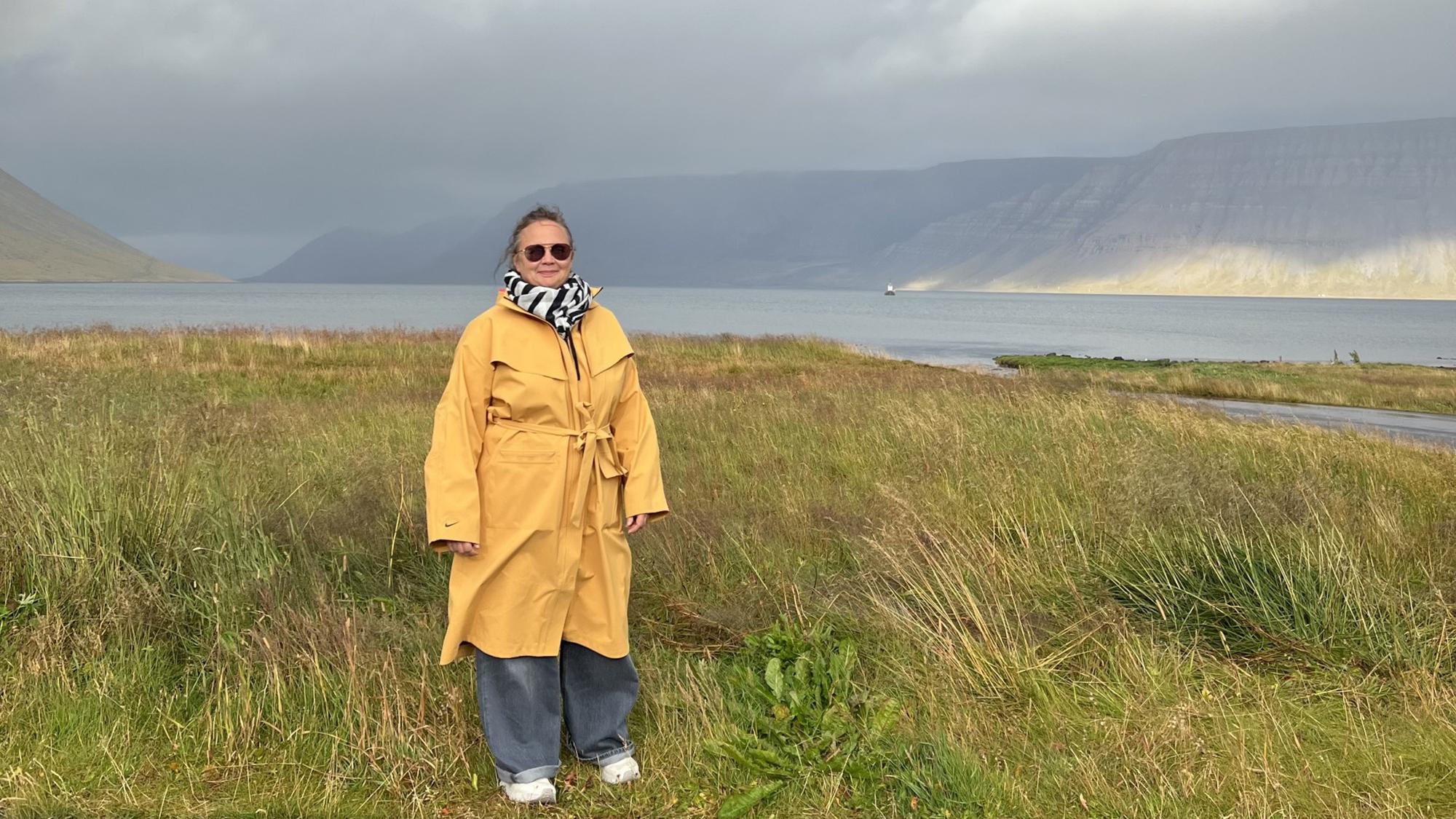
Laura Veikkola Islannin maisemassa
Laura Veikkola (Photo: Heli Hirvonen)

During the trip, I found myself reflecting on how much Iceland’s Westfjords and sparsely populated areas in Finland have in common. Although the landscapes are different, many of the challenges raised in our discussions sounded surprisingly familiar.

Remote, but not irrelevant

Ísafjörður is the largest centre in the Westfjords, with around 2,700 inhabitants. The whole region has only slightly more than 7,000 residents. The area is known for its dramatic fjords, but also for long distances, challenging weather conditions and difficult transport connections. The landscapes may also feel familiar to readers of Satu Rämö’s Hildur books, as their world is set in these rugged and impressive landscapes and communities.

During the visit, I heard several times that small villages in Iceland feel far away from decision-making. In conversations with local people, transport connections, infrastructure and the sense that the needs of these areas are not always sufficiently recognised at the national level came up repeatedly.

Similar views are sometimes heard in Finland as well. In many sparsely populated areas, people wonder whether the impact of long distances, labour availability and access to services is sufficiently understood. Although the situations in Iceland and Finland are not identical, the experience of distance seems to be surprisingly shared.

Business transfer is a question of vitality

From the perspective of the BOCOD project, the most interesting observations from the trip were related to business transfers.
In the Westfjords, we were told that a significant share of new business owners come from outside the region. This gives visibility a completely new role. If a potential successor does not know that a business is for sale, or even that it exists, a business transfer will not take place.

From this perspective, digitalisation does not only mean new software or artificial intelligence solutions. It also means something as simple as ensuring that a business can be found online, that information about it is available and that potential buyers can be reached regardless of where they are located.

This observation also resonates in Finland. In many rural areas, a potential successor may not be found in the neighbouring municipality, or even within the same region. The future of a business may depend on someone discovering it from hundreds of kilometres away. At worst, the only information available online about the business may be the entrepreneur’s phone number.

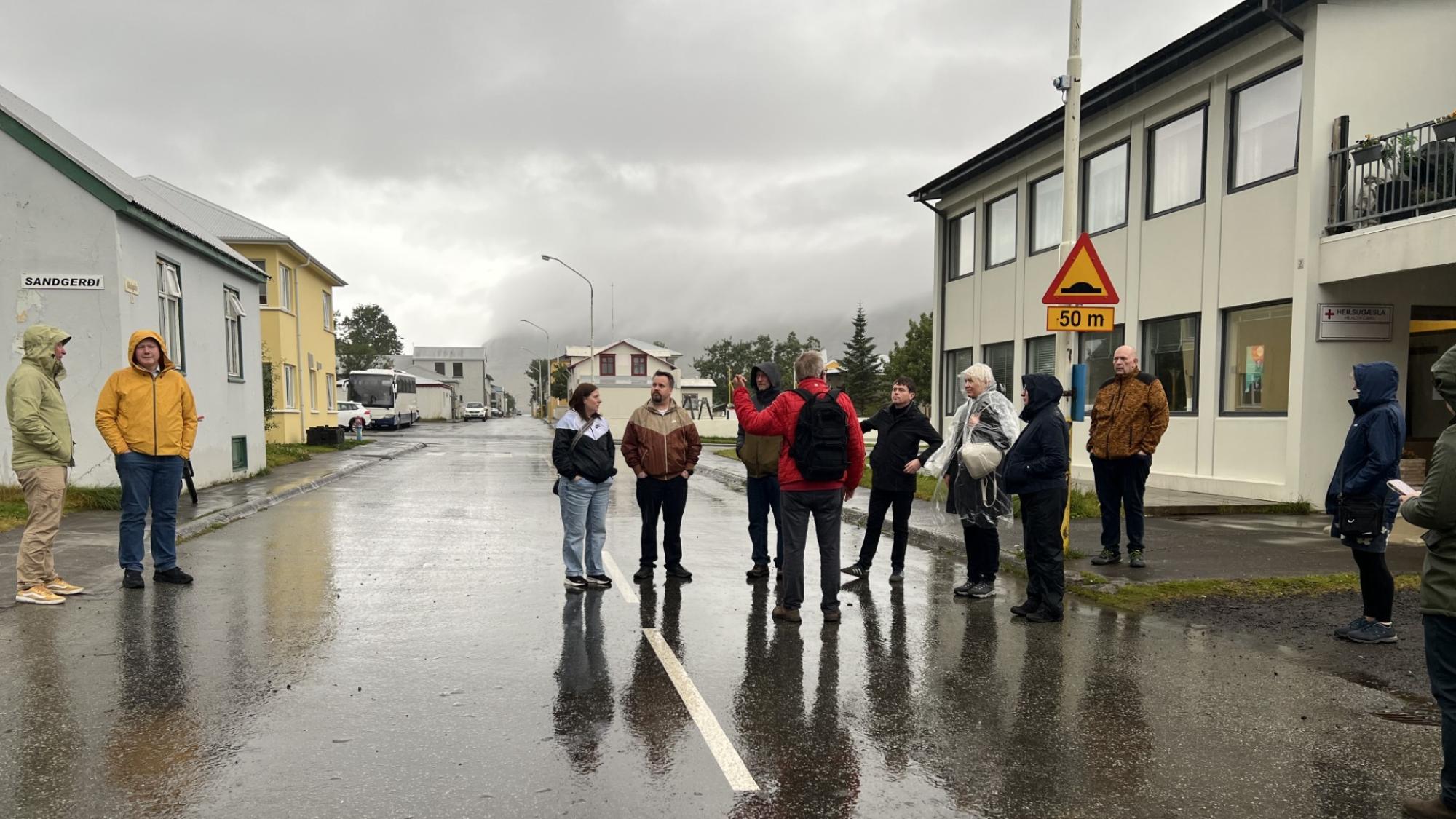
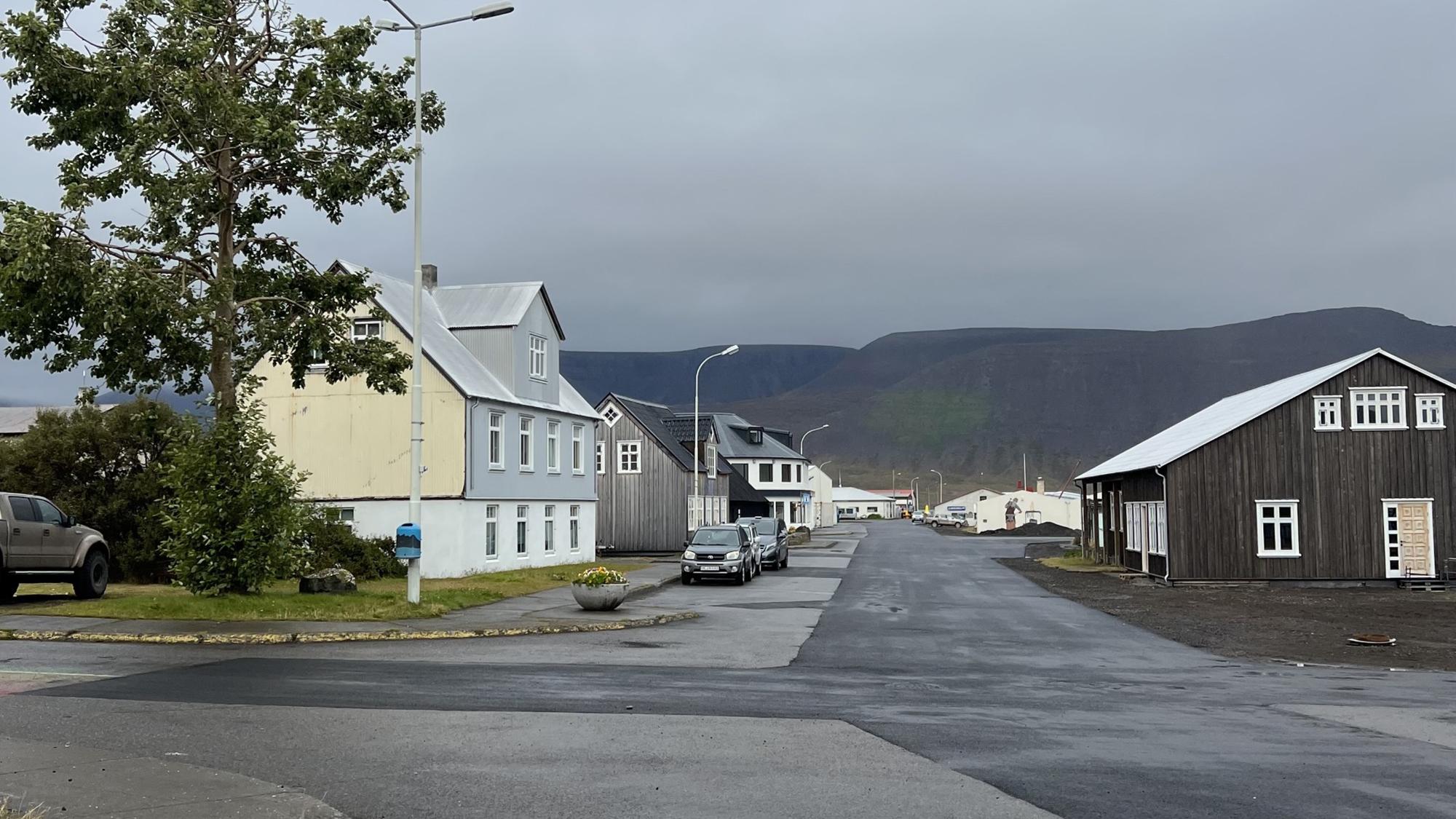
katunäkymä Islannista
Iceland’s weather is changeable, and in the course of a single day, we experienced sunshine, rain and wind – both together and separately. In the photo, entrepreneurs from Suðureyri are showing us around their village, whose main street is about one kilometre long. (Photo: Laura Veikkola)

The European Union as part of the business transfer environment

Access to and the cost of finance came up in several discussions. According to local actors, financing business acquisitions in Iceland is expensive, with interest rates rising above ten per cent. In such a situation, buying a business is not a realistic option for many people, even if they are interested in entrepreneurship.

This has concrete implications for business transfers. When the cost of financing is high, the number of local buyers decreases, and hotels, for example, may more easily end up in the hands of international investors.

Interest rates also came up in broader societal discussions. Many people working close to businesses said they had hoped for a different outcome in Iceland’s recent consultative referendum on whether to continue European Union membership negotiations. In the discussions, closer ties with the EU were seen as one possible way to increase economic stability and ease the challenges associated with high interest rates. Based on the referendum result, however, Iceland will not continue EU membership negotiations. On the other hand, there was also satisfaction that the EU discussion had at least taken place for the time being.

From the perspective of business transfers, the discussion about the European Union and politics was an interesting reminder of how strongly the future of businesses is also connected to wider economic and political questions.

Labour is needed, but where will people live?

In Suðureyri, we visited several companies whose activities are connected to the sea, fisheries and tourism. Fisherman Guesthouse is a family business that has been operating for almost 30 years and has recently undergone a generational transfer. The company has expanded from accommodation to restaurant services and day trips for cruise passengers. We also visited the fish processor Íslandssaga and Klofningur, which uses side streams from the fishing industry by drying and processing fish. The visits illustrated how closely the village’s businesses work together and how the local business network supports jobs, services and community vitality.

From the perspective of ownership, the visit was particularly interesting. Fish processing in Suðureyri entered a new phase in 1999, when local operations were transferred to a new company, Fiskvinnslan Íslandssaga. Today, Íslandssaga’s parent company is mainly owned by people who were born and raised in the locality. The company sees its role as broader than fish processing: it also invests in other local businesses and seeks to maintain diverse employment opportunities in the village. The company aims to employ as many local residents as possible, but labour is also needed from outside the area. The visit made concrete how business transfer and local ownership in a small community can be linked to the preservation of skills, jobs and economic agency.

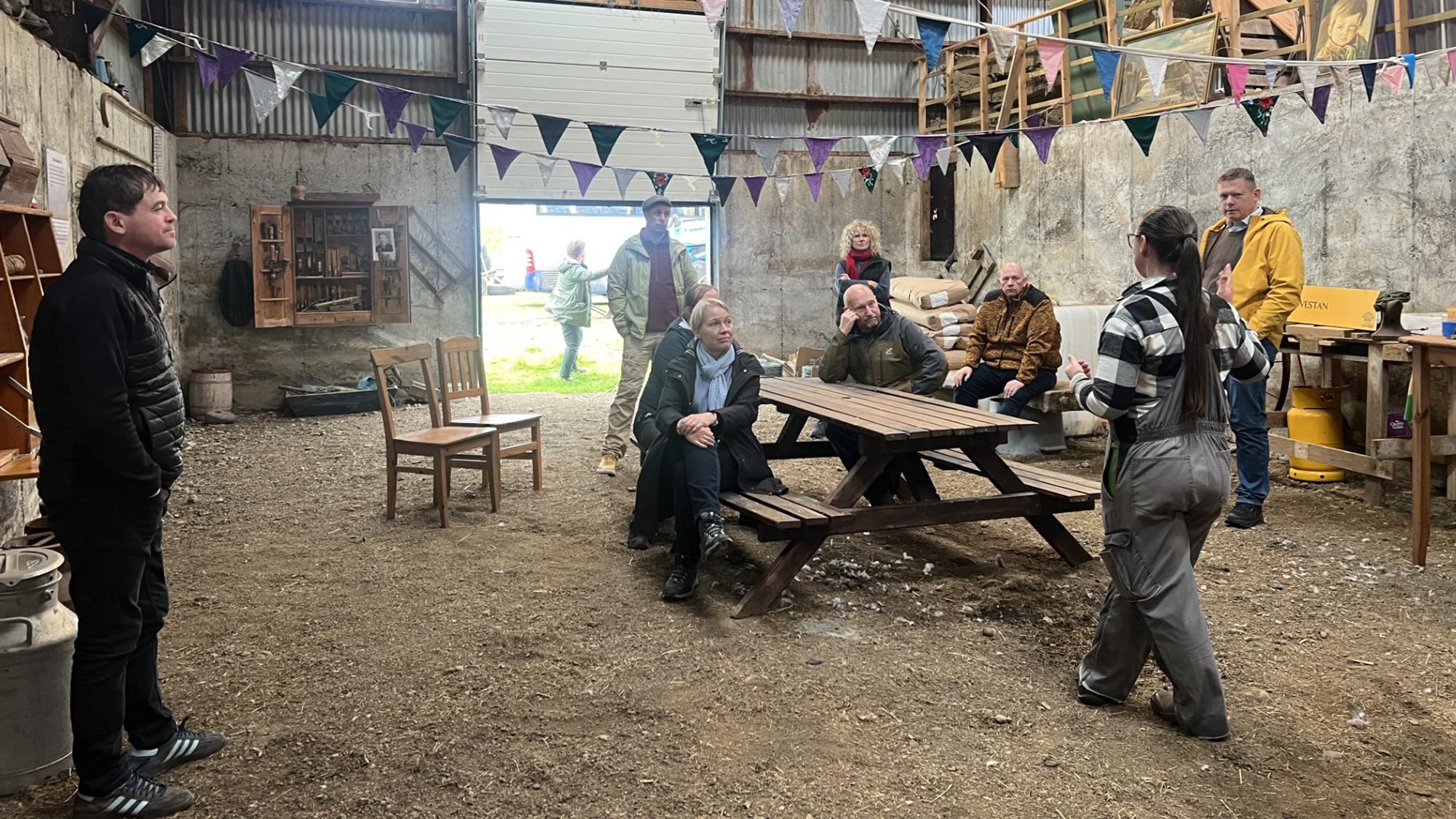
ryhmä vierailulla lammastilalla
A sheep farmer explains how sheep farming and tourism can be combined. Cruise ships and the day trips they offer are an important source of income for local entrepreneurs. In the photo from left Páll Baldursson (Austurbrú ses.), in the background Valborg Ösp Árnadóttir Warén (Austurbrú ses.), Miikka Blomster (Lappi Univerity of Applied Sciences), Heli Hirvonen (Business Joensuu), Eilish Seoigh (Munster Technological University), Jari Juusola (Lapland Univerity of Applied Sciences), Jouko Piirainen (Business Joensuu), local entrepreneur, Magnús Þór Bjarnason (Vestfjarðastofa)

In Ísafjörður, we visited Þrymur, a metal industry company originally founded in 1945 and re-established in 1991 after bankruptcy. The company has recently undergone a generational transfer. Its main focus is on ships and fishing vessels. The company had growth ambitions and had already taken steps towards them by constructing new production facilities, but many familiar challenges also came up in the discussions. Skilled labour is difficult to find, and vocational education struggles to attract competent teachers. Many employees come to the region from elsewhere, but there is not enough housing available.

The region would like to attract more residents and new entrepreneurs, but growth is partly limited by very practical questions: where can housing be found, where is there land for construction and where can skilled labour be found?

This observation also felt familiar from a Finnish perspective. The future of a company is not always decided in the market, but in questions of housing, education and labour availability.

Women’s entrepreneurship and digitalisation raised further questions

According to local actors, the number of women entrepreneurs in Iceland has grown considerably in recent decades. In the same discussions, it was suggested that women entrepreneurs often view the opportunities offered by digitalisation very positively. Women entrepreneurs were perceived as being more willing than men to adopt new tools already in use, and this was thought to be linked to the fact that women’s entrepreneurship is growing and that women entrepreneurs may be adapting to change particularly actively.

These were the experiences of local actors rather than research findings, but the observation raised interesting questions. Is this about generational change in entrepreneurship? Do educational backgrounds, career paths or changing roles in entrepreneurship influence how new technologies are adopted? The topic would certainly deserve closer research attention.

Resilience is built in communities

During the trip, we also visited Blábankinn in the village of Þingeyri. Blábankinn is a community space that brings together local development activities and encounters between people. The visit reminded me that regional resilience is not created only through companies, investments or infrastructure. It is also, and above all, created through communities and people.

tyhjä kylänraitti Islannissa
The village street of Þingeyr. (Photo: Laura Veikkola)

The same idea was visible during visits to local companies. Entrepreneurs in fisheries, tourism and manufacturing operate in a challenging environment, but also in a strong community where people know each other and collaborate. This is common in rural Finland as well.

When we talk about business transfers, attention often focuses on the seller, the buyer and the purchase price. The visit to Iceland’s Westfjords reminded me that, especially in rural and sparsely populated areas, successful business transfers are part of a much larger whole.

Visibility is needed so that successors can find businesses. Financing and different financing solutions are needed so that businesses can be bought. Housing, education, business transfer advice and expert services are needed so that people can move to the region. And above all, communities are needed to make the region a place where people want to live, work and run businesses.

Ultimately, business transfers are not just business transactions. They are a question of the future and vitality of regions. In Iceland’s Westfjords, this became visible in many ways, but surprisingly many of the observations also felt familiar from the perspective of Northern Finland.

The blog was written as part of the BOCOD – Boosting Continuity and Digitalisation of Rural Region Businesses project. The University of Oulu’s Kerttu Saalasti Institute is a project partner in BOCOD. The project is coordinated by Munster Technological University in Ireland, and the other project partners are Business Joensuu, Lapland University of Applied Sciences, the Westfjords Regional Development Office in Iceland and the East Iceland Regional Development Office in Iceland. The project is funded by the Interreg Northern Periphery and Arctic Programme.

Artificial intelligence has been used in writing this blog.

Author: Laura Veikkola, M.Ed., University of Oulu Kerttu Saalasti Institute, micro-entrepreneurship researcj group MicroENTRE

Created 30.9.2026 | Updated 30.9.2026