Genetic research in Oulu supports conservation of Galápagos giant tortoises
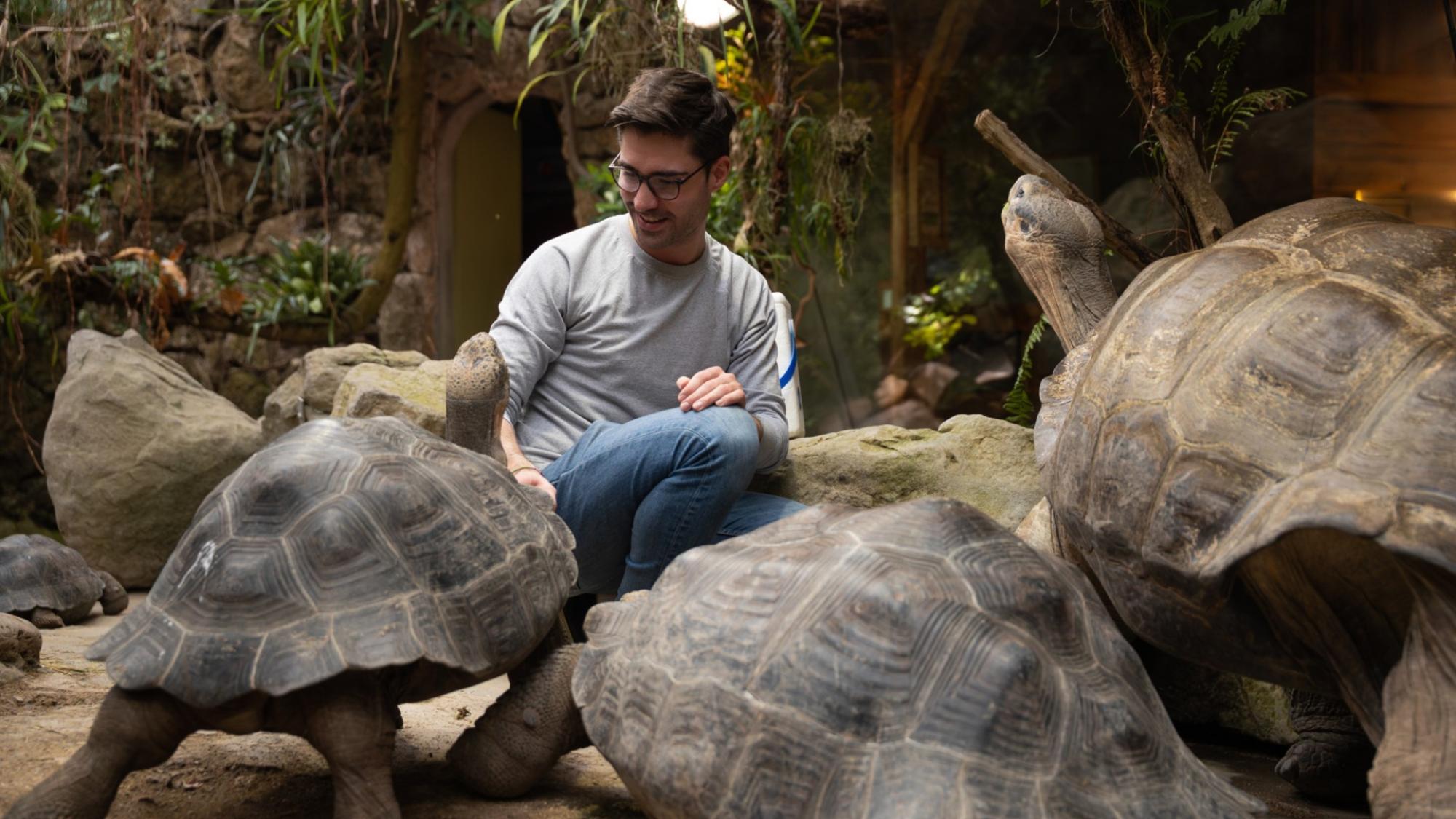
Jumbo is part of the EAZA Ex-situ Programme (EEP) for his kind. EEPs are population management and conservation programmes by the European Association of Zoos and Aquaria (EAZA) to sustain viable populations of threatened species in zoos. Now, the Zürich Zoo and the Biodiversity Genomics Group at the University of Oulu have teamed up to genetically investigate the origins of Jumbo and the other tortoises within the EEP in order to improve the conservation management for these gentle giants.
Nowadays, all the different Galápagos giant tortoises are highly threatened species. Some of the islands already lost their unique tortoises to extinction. On the islands themselves, captive breeding is one of the major strategies to tackle the species’ population declines. The animals can reproduce under controlled conditions, and the hatchlings can start their tiny lives with sufficient food and safe from threats. If big and healthy enough, those young tortoises can be released into their native habitats. The zoo in Zürich is the most successful breeder of Galápagos giant tortoises in Europe.
Historical movement of tortoises by sailors, combined with early imports to Europe before modern conservation standards, has obscured the ancestry of many zoo individuals. Yet this information is crucial: breeding programmes must match the right animals to the right evolutionary lineages if their offspring are ever to be considered for reintroduction.
To uncover these origins, Zürich Zoo has provided Oulu researchers with both leftover veterinary blood samples and freshly collected faecal samples. The latter are being tested to determine whether non‑invasive materials can reliably identify species. As Biologist Gerrit Wehrenberg explains: “We want to test whether the genetic identifications can also be done with non-invasive samples such as faeces. If the answer is yes – future analysis does not need invasive blood collection. This is potentially interesting for genetic monitoring of the wild populations in the Galápagos and a valuable way in which research on zoo populations can directly improve in-situ conservation.”
Recently, Wehrenberg personally travelled to Zürich to ensure that the valuable samples reach Oulu safe and sound. The biologist took the genetic samples back to Oulu in a small cooling box as carry-on luggage. Now, Finnish master student Hans-Peter Zopf will process and analyse all those samples in the next months in the molecular lab of the Ecology and Genetics Research Unit in Oulu. Soon, more samples from other zoos across Europe will make their way to Oulu to for analysis. The genetic results from Oulu will support our decision-making on the future of the European ex-situ population of the Galápagos giant tortoise.
This project is funded and made possible by the Swiss Association of Friends of the Galápagos Islands and the Ventura Wildlife Foundation & Ventura Wildlife Services.