Hydrogen is being produced with sunlight on the roof of the University of Oulu – testing begins on a prototype solar hydrogen reactor
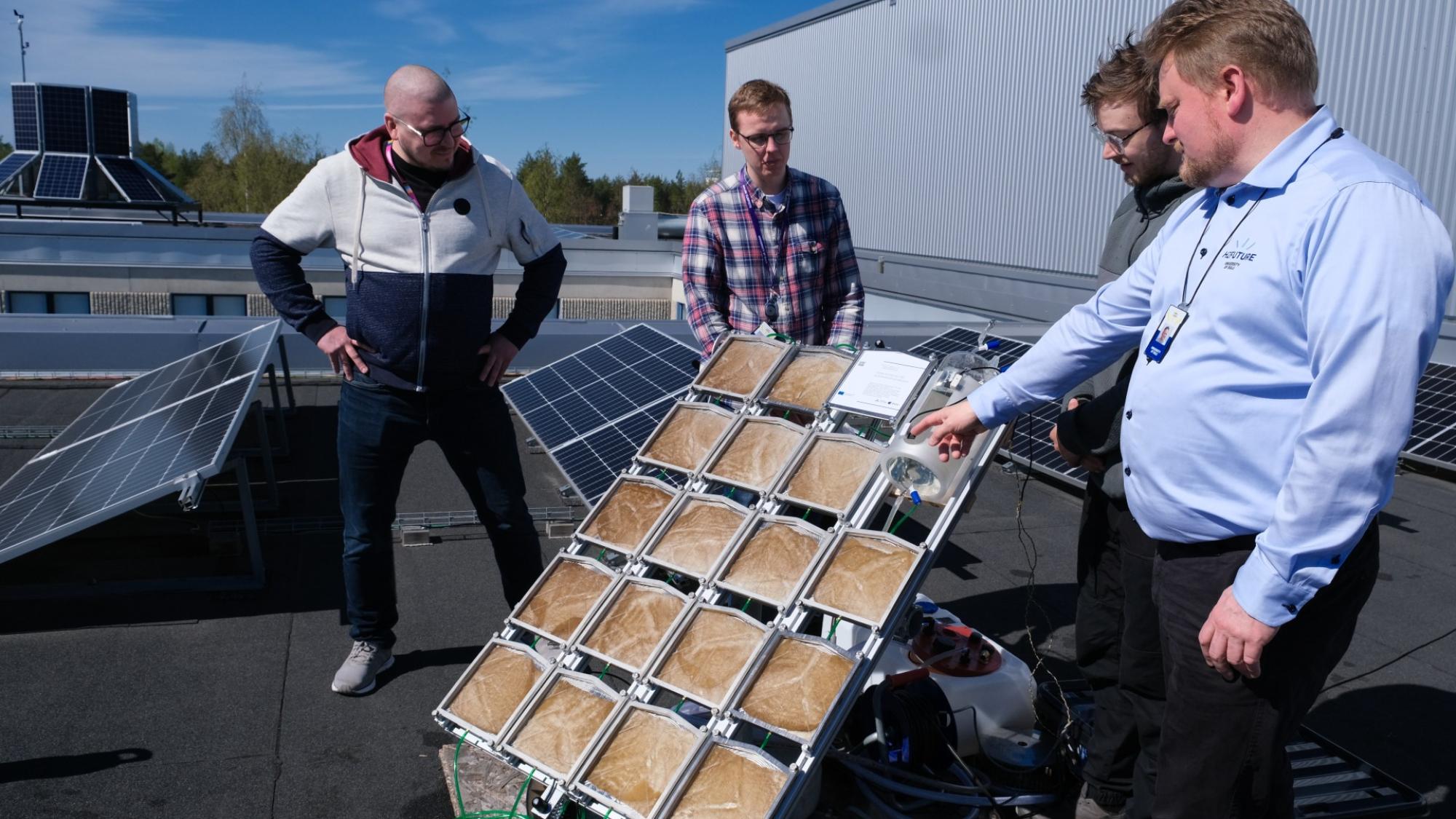
Solar hydrogen production is based on splitting water molecules into hydrogen and oxygen photocatalytically with the help of sunlight. Unlike water electrolysis, a method increasingly used in hydrogen production, it requires no electricity at all. Electrolysis, by contrast, requires vast amounts of energy.
“In solar hydrogen, hydrogen is the direct outcome of the process. Our research has made it possible to produce hydrogen directly using the energy of the Sun – without the intermediate stage in which energy is converted into electricity,” says Professor Marko Huttula, who leads hydrogen research at the University of Oulu. Solar hydrogen production also enables decentralised hydrogen production outside the electricity grid, as long as water and sunlight are available.
“In developing solar hydrogen to an industrial scale, Finland is among the leading developers, close behind Japan and Spain. The Oulu test reactor is an important step in advancing solar hydrogen. The process, catalysts and membranes for solar hydrogen panels that we have long developed in the laboratory have now reached the prototype stage,” says University researcher Samuli Urpelainen.
In solar hydrogen production, the energy of visible sunlight absorbed by the catalyst material is sufficient to split water molecules into hydrogen and oxygen, which are then collected. A catalyst is a substance that accelerates a chemical reaction. In earlier laboratory tests using artificial light, researchers at the University of Oulu produced solar hydrogen for as long as 86 days without any decline in performance.
Rare metals are often used as catalysts, but their availability and the durability of the catalytic stage can present challenges. In the University of Oulu’s solar hydrogen reactor, researchers are developing affordable catalysts that are not critical raw materials and do not increase dependency on countries outside the EU. In the future, research in Oulu will examine, for example, the use of affordable nickel found in Finland as a catalyst.
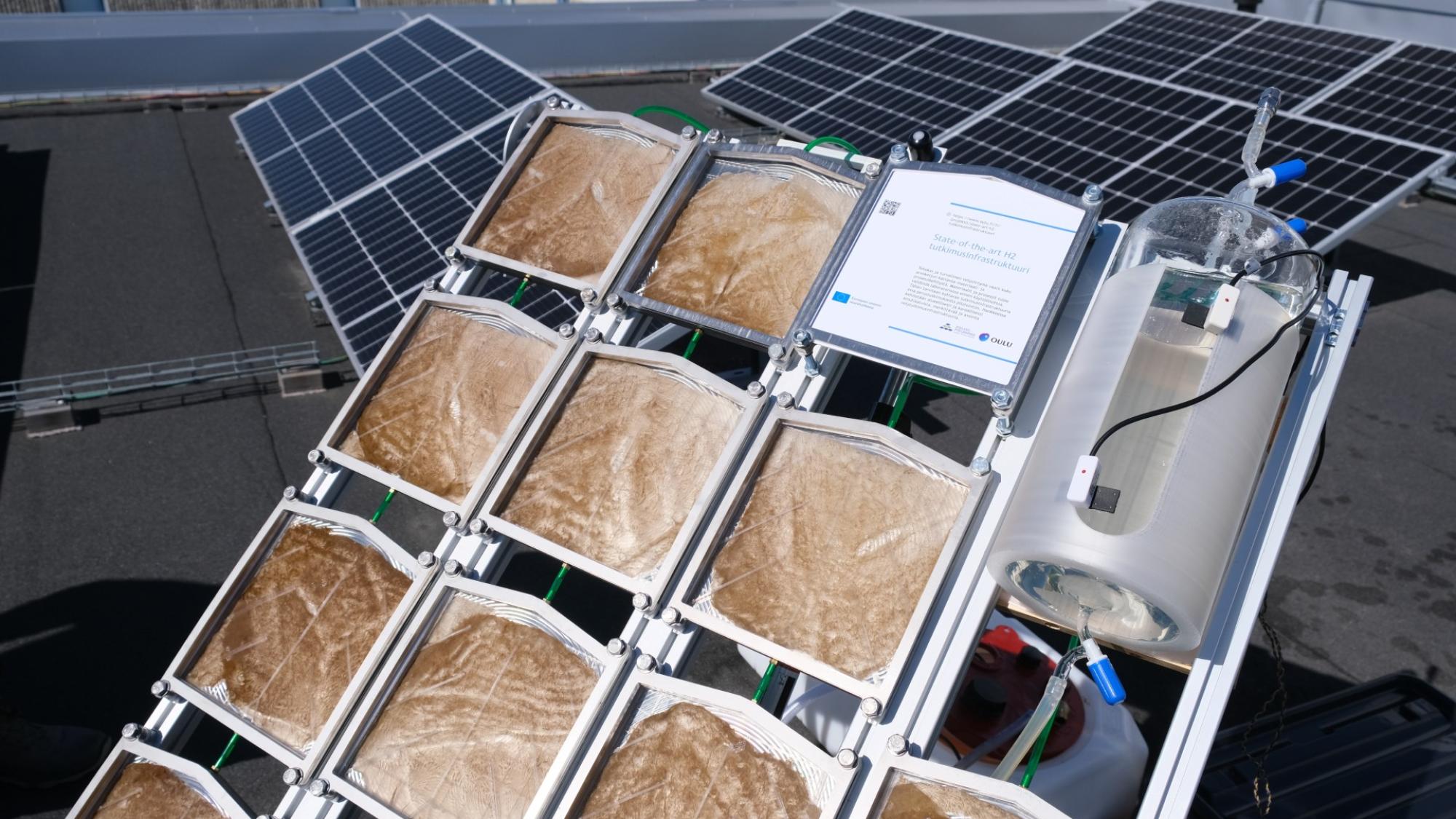
“Catalysts are built from compounds of different molecules, seeking combinations that are as sensitive as possible to visible sunlight. Nickel increases responsiveness to sunlight and can be combined with other substances in many ways,” Urpelainen continues.
“Usually, catalysts are powder-like materials that require continuous mixing if they are placed in water as such. We were able to attach the catalysts to a physical form, creating modifiable membranes,” says University of Oulu doctoral researcher Veera Tapionkaski.
“Another advantage is that the membranes are not tied to a single catalyst; any catalyst can be used in them. This makes it possible to use more efficient catalysts in the future and improves the method’s potential for commercial scale-up.” Tapionkaski is taking the research innovation into practice and towards business through Zun-H, the company she founded.
Partners in solar hydrogen research collaboration include Oulu University of Applied Sciences, the municipality of Utajärvi, renewable energy producers, car dealerships and logistics service providers, such as the City of Oulu, Gen-H Oy, Insta Automation, Automaatiosäätiö, Oulun Energia, the Oulu Industrial Vocational Training Foundation, the municipality of Utajärvi, Wetteri Power, Pohjaset, Skarta and the Finnish Central Organisation for Motor Trades and Repairs. The research has been supported, for example, by the Tiina and Antti Herlin Foundation, and the solar hydrogen panel prototype has been developed and implemented in ERDF projects co-funded by the European Union and financed by the Council of Oulu Region.