New Arctic Six Chairs address energy, connectivity, biodiversity and sustainable development
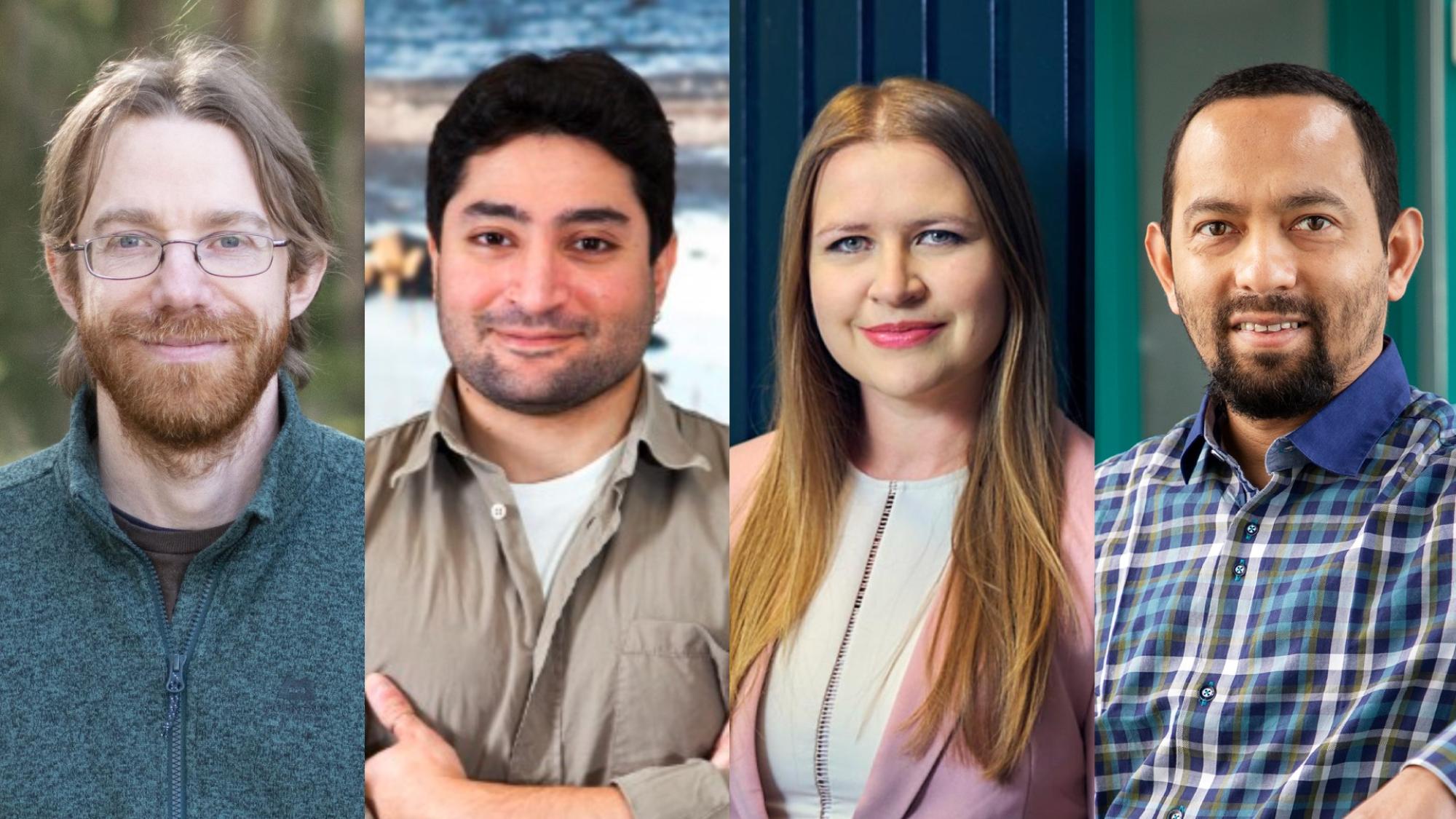
The research focuses of the new Chairs at the University of Oulu are different but connected by an approach that considers local communities in the north. Antonio Calò studies smart, sustainable energy systems, Nurul Huda Mahmood resilient digital communications, Alexandra Middleton socio-economic transformation, and Stefan Prost biodiversity and conservation in the Arctic. The Chairs are also combined by their common task to promote research collaboration and interdisciplinarity within the Arctic Six alliance.
Indigenous perspectives and local voices need to be heard
Postdoctoral Researcher, Docent Alexandra Middleton works at the intersection of geopolitics, demographic changes, natural resources, and regional development.
“My research explores how global economic interest in the Arctic shapes Arctic communities’ futures,” Middleton says.
Recently, Middleton’s research interests have focused on Arctic security, critical minerals, and the growing geopolitical importance of the Arctic, particularly on how these developments influence local communities and governance.
“New industries in the Arctic, such as critical minerals mining and data centers, may create jobs and new opportunities; however, they can also raise questions about environmental protection, cultural heritage, and community well-being. On the other hand, demographic decline can make it more difficult for Arctic municipalities to maintain public services and attract workers,” Middleton describes.
Middleton is particularly interested in providing a balanced picture of the Arctic, helping to ensure that the voices of local people are heard and included in decision-making about the Arctic’s future.
“I want to build bridges between research, policy, and society. The Arctic requires dialogue across borders and sectors. I aspire to conduct research that contributes to a more sustainable and inclusive future for the North.”
Towards sustainable energy systems
University Lecturer Antonio Calò is a physicist who has, according to his own words, dedicated the senior part of his professional life to environmental engineering. He studies smart energy systems in northern conditions. Energy, indeed, is central to everyday life in the Arctic with long distances, harsh weather, and growing climate‑change‑related pressures.
“My work focuses on how the energy system can be decarbonised in a sustainable and practical way. I study how low emitting energy sources, smart systems, and distributed solutions can work together to create reliable and resilient energy systems”, Calò says.
Calò’s research looks at both existing and emerging technologies that support communities and strengthen energy security in changing northern conditions.
“It should be ensured that the energy transition is fair, just, and sustainable. My approach connects technical and technological solutions with societal needs to help communities navigate rapid environmental and technological change.”
As an Arctic Six Chair, Calò also aims to develop a structured Arctic graduate school model that brings students together around multidisciplinary themes, supporting a new generation of Arctic researchers equipped to work across disciplines and national borders.
Building resilient connectivity for the Arctic
Senior Research Fellow Nurul Huda Mahmood studies resilient digital communications and future wireless networks. His research focuses on ensuring that communication networks remain reliable in demanding conditions, particularly in remote areas.
Digital connections are increasingly important for people, industries, and public services across the Arctic. Mahmood's work explores how future 6G technologies can improve connectivity for remote communities while also ensuring resilient connectivity for critical Internet of Things (IoT) and industrial networks.
“Reliable connectivity is essential in the remote Arctic, where traditional communication infrastructure often fails. My research focuses on investigating alternative connectivity networks that can maintain stable connections even in challenging conditions,” Mahmood says.
As an Arctic Six Chair, Mahmood will study new ways of improving Arctic connectivity together with researchers at the Luleå University of Technology. The researchers explore how drones and high-altitude platforms in "airborne layer" could complement existing communication networks and provide coverage when needed.
“In the future, such solutions could help bring connectivity to remote areas and support communication during emergencies and other situations where reliable networks are especially important,” Mahmood explains.
Mahmood, too, hopes to strengthen collaboration in Arctic education by exploring novel collaborative and interdisciplinary learning opportunities for students across the Arctic Six universities.
Conserving Arctic biodiversity through collaboration and local knowledge
Assistant Professor (Tenure Track) Stefan Prost researches biodiversity and conservation. His work focuses on developing new tools for monitoring biodiversity and supporting the conservation of endangered species.
“My research aims to support informed conservation decisions. Collaboration between researchers, practitioners, and local communities is an important part of this work,” Prost says.
A key goal of Prost's research is to make biodiversity monitoring and conservation initiatives in the Arctic more accessible. He explores how local knowledge and scientific approaches can be brought together to support sustainable management of northern environments.
“Protecting biodiversity requires cooperation between different groups and disciplines. Through the Arctic Six collaboration, we hope to develop new initiatives that support both biodiversity conservation and the long-term well-being of Arctic communities.”
As an Arctic Six Chair Prost plans to focus especially on opportunities of transdisciplinary and biocultural restoration of Arctic biodiversity.
“Habitat restoration and biodiversity conservation can be polarising topics and therefore we plan several trans- and interdisciplinary events to overcome and utilise potential friction in building joint initiatives. This will hopefully enable the preservation of Arctic biodiversity and support conservation self-governance of Arctic regions,” Prost says.
The Arctic Six is an alliance of Nordic universities which aims to advance interdisciplinary research and education, share knowledge, and create innovations for the development of a sustainable Nordic Arctic region.