University of Oulu hosts first Restoration Day
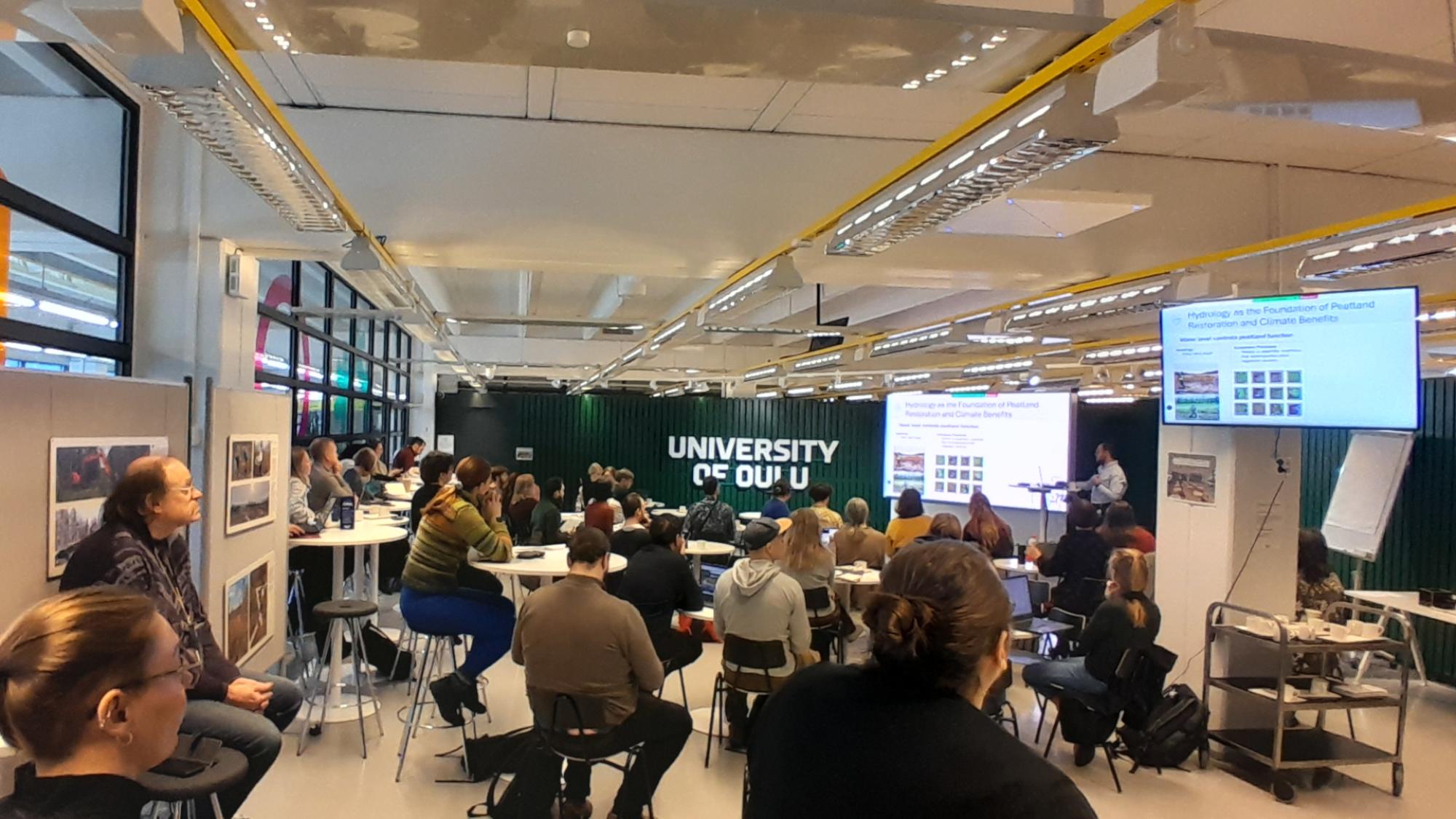
Restoration Day was organised by the SAFIRE project together with ANTS Biodiverse Anthropocenes with support from Arctic Six. Conceived as a transdisciplinary meeting, the event marked a step toward building Oulu as a meeting point for restoration research and dialogue in northern Europe.
Opened by Anna Krzywozyńska, co-leader of the SAFIRE project, and moderated by Monica Vasile, the programme combined talks with extended dialogue across disciplines. Presenters came from several institutions, including the University of Oulu, the Natural Resources Institute Finland (LUKE), the Finnish Environment Institute (SYKE), the Swedish University of Agricultural Sciences, Umeå University, and the University of Lapland. What emerged was not a single way to think about restoration, but a mosaic of approaches grounded in different landscapes and knowledge traditions.
Across the ten presentations, the programme moved through different ecosystems: peatlands, rivers, forests, and island habitats. Presentations showed how restoration is measured through remote sensing and field monitoring, how success and failure are negotiated inside organisations, and how climate policy is reshaping priorities. The keynote by leading expert Anne Tolvanen placed these questions in the context of the EU Nature Restoration Law, highlighting the debates now facing researchers and land managers across Europe. Several contributions went beyond technical perspectives. Talks explored Indigenous rights and knowledge in Arctic forest governance, participatory methods using food and storytelling, and creative practices such as ecological pilgrimage that invite people to experience biodiversity differently. The presentations abstracts can be found here.
One of the strengths of the day was precisely this mix. Over forty participants, among which hydrologists, geographers, ecologists, social scientists and practitioners spoke to one another rather than in parallel. What caught our attention across the day was how often discussions returned to questions of scale, value for people, and how success in restoration is framed and measured. Our debates revolved around shared tensions: what counts as evidence, how long restoration should take, who decides success, and how uncertainty is handled in practice. A photo exhibition from the Pallas-Matorovansuo peatland restoration project, created by Oulu-based scholars Hannu Marttila, Omar Nimr, and Anna Autio, provided a grounding visual anchor, reminding us of the realities of restoration field sites.
Why does this matter? Restoration has moved from a niche activity to a central environmental strategy, tied to biodiversity loss, climate mitigation, water quality and land-use policy. Yet the knowledge required to restore ecosystems does not sit within one discipline. It grows through interaction between monitoring technologies, local expertise, governance frameworks, and cultural values. Events like Restoration Day create the space where these connections can form.
The strong turnout and lively discussions suggested a clear appetite for this kind of exchange. Restoration Day aimed to produce a shared platform for thinking together about how damaged environments can be repaired, transformed, or reimagined. The organisers hope this first edition will become the start of an ongoing series that helps position Oulu as a transdisciplinary hub for restoration research — a place where we meet to address the environmental challenges of the coming decades.