We succeed together: How Assistant Professor Jianan Huang and Professor Shuai Li secured highly competitive EIC funding
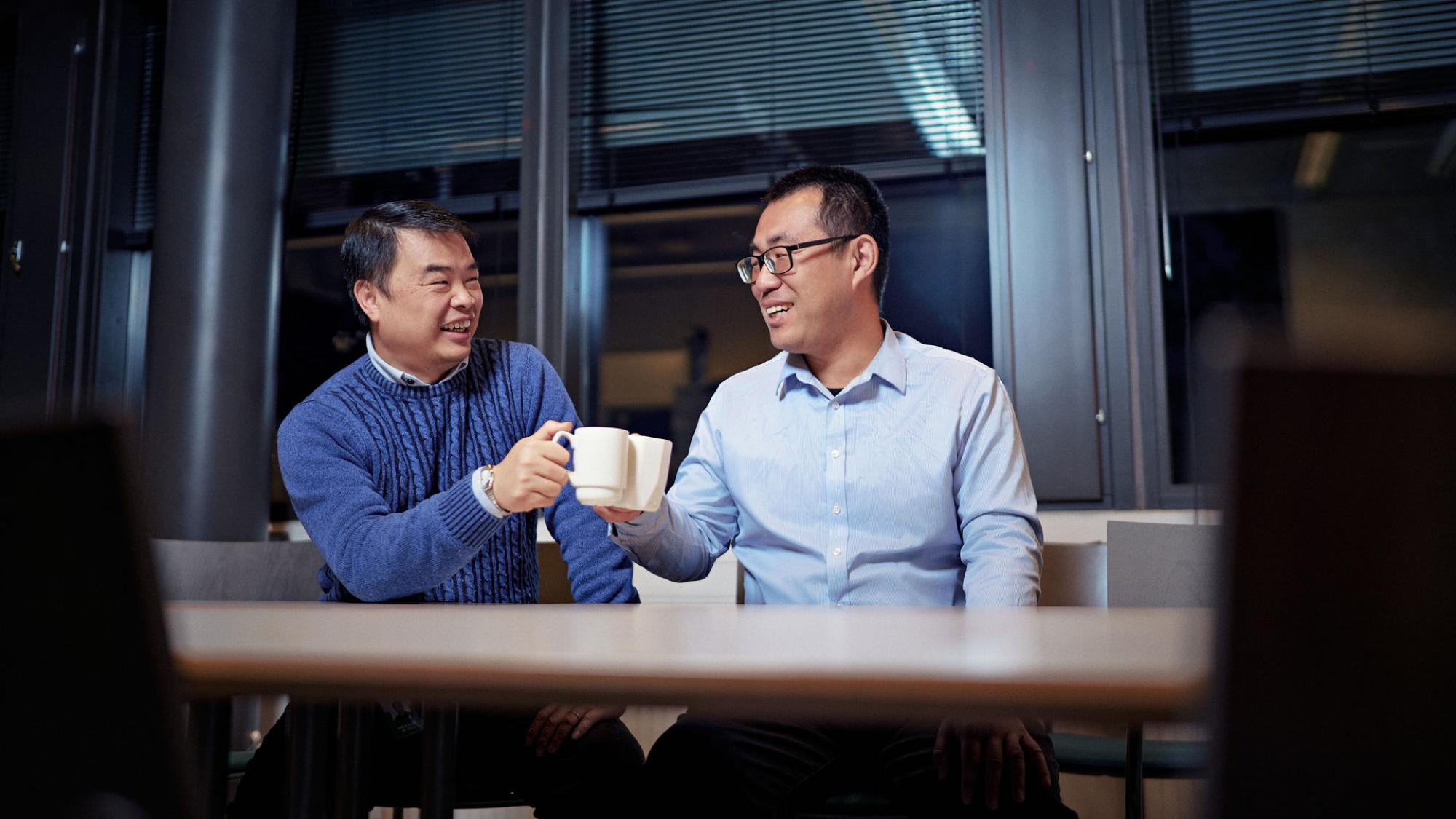
Assistant Professor Jianan Huang, who works as an Academy Research Fellow at the University of Oulu, believes that the Finnish research landscape has strong potential when it comes to competing for international funding. Specialising in nanophotonics and plasmonics, Huang speaks from experience: before moving to Oulu, he spent more than four years as a researcher at the Italian Institute of Technology.
“In Finland, scientific research has an excellent foundation because it is funded by the state, foundations and companies. Research is also expected to create economic value. In Italy, state support is primarily directed towards culture and the preservation of historic buildings,” Huang says.
Huang recalls that during the Covid-19 pandemic many European universities decided to postpone or even shut down research projects. At the University of Oulu, recruitment continued, which made it possible for him to move to Finland. He has been working at the university as an Academy Research Fellow since 2022.
Professor Shuai Li is also familiar with the international research environment. He arrived in Finland two years ago, after positions in the United States, Hong Kong and the United Kingdom.
“The University of Oulu is currently a frontrunner in future technologies and biosensor development, but above all I wanted to apply my expertise in joint research projects between the university and VTT Technical Research Centre of Finland.”
Multidisciplinarity in applications
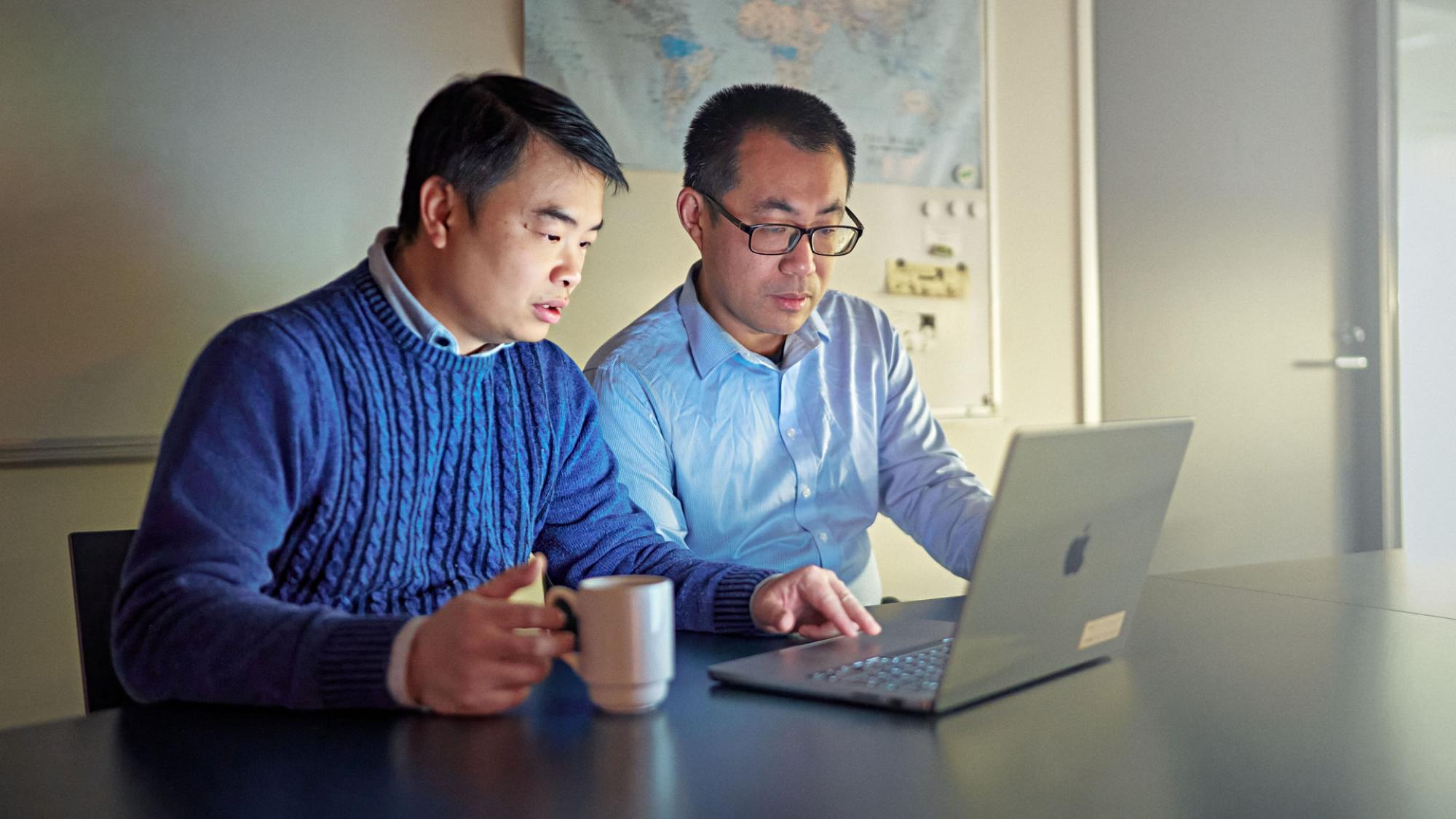
Currently, Jianan Huang and Shuai Li are working together on the RamanProSeq project, which aims to develop a new type of optical technology for sequencing single protein molecules. The goal is to create technology that could, for example, speed up the diagnosis of cancer and hereditary diseases.
“We had collaborated before, but in this project multidisciplinarity is a particular strength. Shuai is an expert in automation, artificial intelligence and software. My strenght lies on the hardware side, such as Raman instrument and biosensors. We complement each other,” Huang says.
However, two researchers alone would not have been enough to secure EIC Pathfinder Open funding. Eligible applicants must form multidisciplinary consortia with at least three partners from three European countries, as well as a balanced gender composition.
“Jianan has done tremendous work in identifying the right partners for this project across Europe. It is a huge advantage that he has a broad understanding of technology and different scientific disciplines,” Li notes.
In addition to the University of Oulu, the RamanProSeq consortium includes the University of Eastern Finland, Universidade Nova de Lisboa in Portugal, RWTH Aachen University in Germany, Istituto Italiano di Tecnologia in Italy, and Nottingham Trent University in the United Kingdom.
The importance of communication and networking
In 2025, a total of 2,087 applicants vied for EIC Pathfinder Open funding, with only 44 selected. Despite the fierce competition, Huang and Li encourage their colleagues to give it a try.
“We did not succeed on our first attempt either, but by the next round we knew better where to focus when preparing the application,” Huang says.
He emphasises that communication and relationship-building are crucial when applying for international funding.
“Research work is often quite solitary, but in projects like this you have to be willing to network and actively push your research partners forward. The coordinator’s role is to ensure that the work progresses systematically and that results are reported. It has helped me a lot that I have worked not only as a researcher at universities, but also as a project manager in industry before.”
Shuai Li hopes that Finnish research groups would focus less on isolated digital innovations and more on building complete ecosystems.
“This would also require a change from funders. In addition to software, they should invest more in hardware as well. Finland still has a strong tradition in developing machines and electronics. That could be a real competitive advantage.”
RamanProSeq will begin in May 2026. Huang believes that a multidisciplinary and international consortium has strong potential to secure follow-up funding in the future.
“From a researcher’s perspective, the best thing about such a broad project is that it makes the work truly fascinating. Every single day offers a chance to learn something new.”
Who
Jianan Huang
Job: Assistant Professor and Academy Research Fellow, Faculty of Medicine, Faculty of Biochemistry and Molecular Medicine. Employed at the University of Oulu since 2021.
Education: PhD in Physics and Materials Science, City University of Hong Kong.
Motto: Dare to walk towards the unknown and enjoy the journey. Whatever you do, it will give you direction and keep you moving.
Shuai Li
Job: Professor, Faculty of Information Technology and Electrical Engineering. Part-time Professor at VTT Technical Research Centre of Finland. Employed at the University of Oulu since 2023.
Education: PhD, Electrical and Computer Engineering, Stevens Institute of Technology, USA.
Motto: If you want to go fast, go alone. If you want to go far, go together.
This article is part of the "We succeed together" series produced by the University of Oulu Communications, which introduces university members who work together in different ways. Written by Sanna Wallenius, photographer Mikko Törmänen.