 Language
Corporate responsibility is built through collaboration – insights from Alumni Day
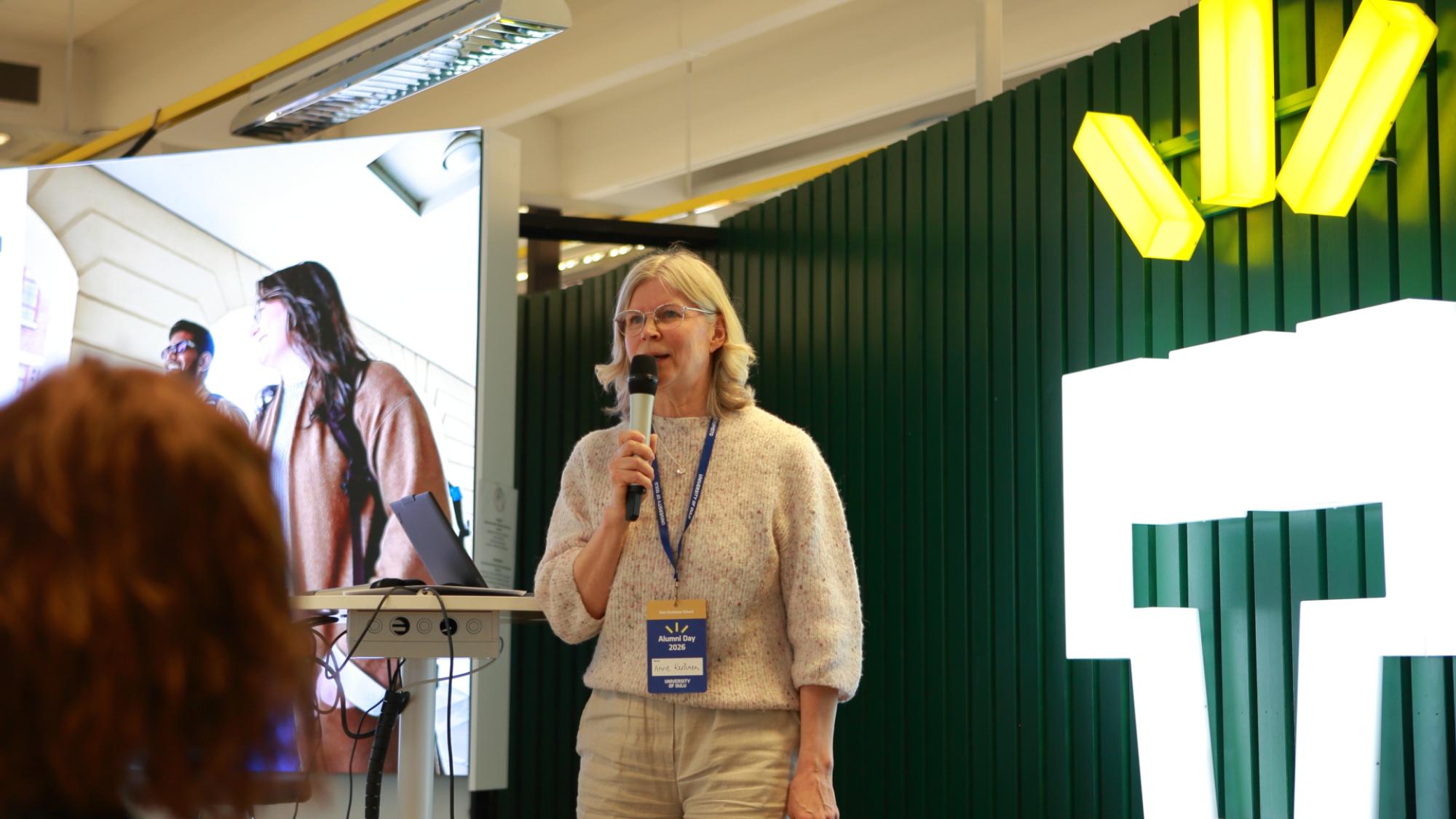
The University of Oulu’s Alumni Day, held on 24 April 2026, brought together alumni, students, staff and members of the University of Oulu Alumni Society. In line with the European Capital of Culture year themes, the event featured a diverse programme from morning to evening and provided a platform for timely discussions on society and working life.
One of the presentations was delivered by Adjunct Professor (Docent), D.Sc. (Econ.) Anne Keränen from the Martti Ahtisaari Institute at Oulu Business School. Her presentation, “Companies as carriers of societal responsibility? Current examples from Finland,” explored the role of companies in advancing societal well-being.
Collaboration at the core
A key message of Keränen’s presentation was that corporate responsibility does not take place in isolation. Social sustainability challenges are often complex and cross organisational boundaries, which is why solutions increasingly rely on collaboration between companies, the public sector and non-governmental organisations.
Social sustainability refers to how businesses relate to people and society, complementing the economic and environmental dimensions of sustainability. These dimensions are closely interconnected and require a broader understanding of societal impacts.
Concrete examples in practice
The presentation also highlighted practical examples from Finland where collaboration creates tangible benefits.
One example was the long-term collaboration between Fiskars, SOS Children’s Villages and public social services, supporting young people transitioning to independent living by providing essential everyday resources and support.
Another example focused on healthcare, where a pharmaceutical company, a university hospital and a patient organisation collaborate to develop digital care pathways. This model combines clinical expertise, technological capabilities and patients’ experiential knowledge to improve the quality and continuity of care.
Towards a more impactful societal role
According to Keränen, collaboration enables more effective use of resources and competencies while supporting the development of solutions that better respond to societal needs. At the same time, it can strengthen the role of companies as active contributors to society.
Collaboration also involves challenges, such as aligning different goals and identifying suitable partners. However, long-term cooperation creates opportunities for new social innovations and more impactful ways of working.
The presentation highlighted a broader shift in corporate responsibility: from individual actions towards shared impact built through collaboration and networks.