Relational Restorations through Art, Activism, and Research
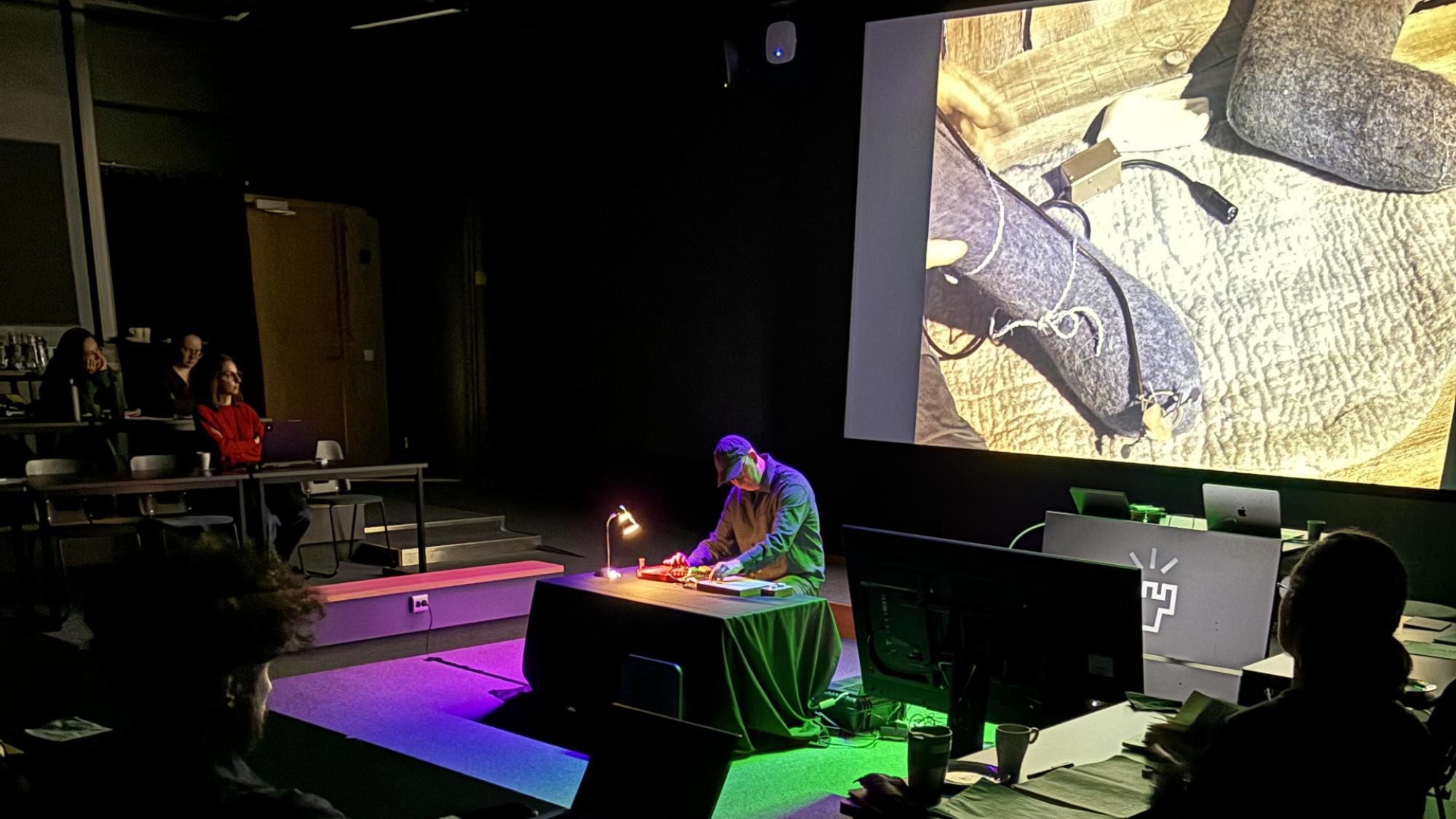
On March 20th 2026, the second event of the Thematic Semester organised by SAFIRE and Biodiverse Anthropocenes with support from Arctic Six brought together researchers, practitioners, activists, and artists to examine how different forms of environmental restoration work can be understood through relational activities with specific places. Conceived as a transdisciplinary cultural gathering, the event further promoted Oulu as a meeting point for restoration research and dialogue in northern Europe. Opened by co-leader of the SAFIRE project Anna Krzywozynska, and moderated by SAFIRE Project Coordinator Rebecca Carlson and Curator and Postdoctoral Researcher Neal Cahoon, the programme included six contributors who have been working in localities in Norway, Finland, Sweden, and Sápmi.
Presenters included: Britt Kramvig, Professor at the School of Business and Economics, UiT The Arctic University of Norway, Tromsø together with Tarja Tuulia Salmela, writer and postdoctoral research fellow (also from UiT); Hanna Parry, director of the Baltic Circle Festival, Helsinki; Ville Vasko, Specialist, Marine Environment Research Group, Turku University of Applied Sciences; Oslo-based composer and artist Espen Sommer Eide; and performance artist, poet, and environmental, climate and social justice researcher mirko nikolić from the Södertörn University, Institute for Aesthetics, Culture and Education, Sweden.
In Britt and Tarja’s opening talk the researchers focused on a Sámi landscape in the Umesámi region. It is in this political landscape, the stories of loss and grief of Miärralándda, as told by the Sámi people, meet neoliberal fantasies of sustainability that manifest themselves in the forms of new land-based salmon farms, offshore and onshore wind turbines in Sámi reindeer herding districts. In this context, Britt and Tarja discussed the potential of bringing together Indigenous Sámi knowledge and feminist posthumanisms through political acts of storytelling as a way of restoring relations with the land and the sea.
This talk was followed by a deep-dive discussion by Hanna Parry into the Baltic Circle festival’s collaboration with Snowchange Cooperative through a shared rewilding programme that brought environmental restoration in direct dialogue with cultural work at a dedicated site in Ähtäri, where the forest and energy industries affect local residents directly and personally. Since 2021, the festival has annually brought an international group of cultural professionals to the bogs to take part in this restoration work. These trips have offered urban audiences a meaningful way to engage with the land and contribute to ecological repair. Among several insights that were shared by Hanna, the need for art and artistic productions to change their form in order to engage meaningfully with the environmental issues we are facing in the contemporary moment stood out as a valuable lesson for both researchers and those involved in the arts.
In the second part of the day, Ville Vasko introduced us to the acoustic world of Finland’s bat species and the sonic markers that indicate improved bat populations following the restoration efforts at his study sites. Through recordings made using remote sensing technology (and slowed down to frequencies detectable by the human ear), we heard the voices of these bats as they hunted and communicated with each other in these settings, and together we learned of the surprisingly fast timescales that allow for populations to recover following the restoration of their habitats.
Ville’s talk was followed by a concert and video work by artist Espen Sommer Eide who presented his project Wild Music Reserve (Pasvik). This work has been a result of several years of artistic and musical interaction with the landscape of the Pasvik Valley in Northern Norway and Sápmi, and it was presented as a series of imaginative responses involving light and sound. As an effect of the circumstances of this place, the work also provokes speculation on policies of nature protection, especially with regard to the present geopolitical situation on both sides of the Pasvik river.
The event concluded with a workshop on documentary poetry by mirko nikolić where participants undertook a variety of readings, exercises, and word-gatherings based on contemporary environmental papers, policy documents, and news reports. The goal here was to examine the languages used in these reports and to find new and productive readings of these texts, to use these readings as ways to engage with issues of scale, priority, and power. The goal was to turn these texts into something performative that can help raise awareness, and draw attention to aspects of these documents that are perhaps less discussed and invite further conversations on these subjects.
Across all of these presentations, a recurring conversation centered around ideas of attention, sound and voice, silence, and silencing, as well as on the value of projects that question familiar perspectives, and which direct our attention to power relations and longer-term relations with place. What was abundantly clear is that the arts, as well as cultural work more generally, needs to be included in conversations about restoration practice from the beginning, and as a research community we need to find more, and more inventive ways, of engaging more-than-human communities, local audiences, and our own academic peers through forms of collaboration that can reach beyond the academy.
As organisers, SAFIRE wishes to thank all contributors and participants who attended and we look forward to continuing the discussions. The next SAFIRE Thematic Semester event will be held on 15th April as part of the universities Science Day. Registration for this event can be found here.